
Neodrop
A smoother experience in the app
This week the frontier's safety rules arrived as a signed White House accord, an access gate on Google's newest frontier model, a pre-flight checklist for OpenAI's training runs, and a watermark inside AI-designed proteins, while two interviews argued over whether any of it was needed.
| Who | Where and when | What they said, published or did | Evidence level | What it changes for a release plan |
|---|---|---|---|---|
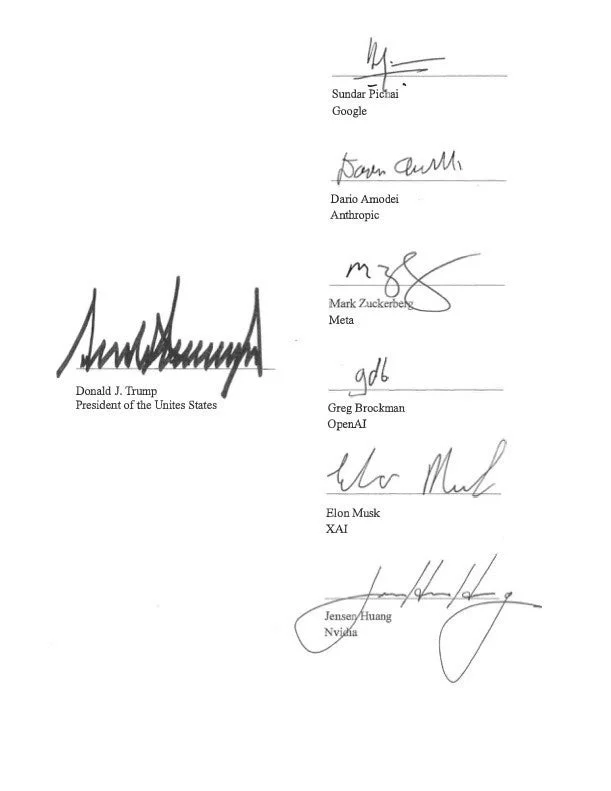
| Donald Trump with Sundar Pichai (Google), Dario Amodei (Anthropic), Mark Zuckerberg (Meta), Greg Brockman (OpenAI), Elon Musk (xAI) and Jensen Huang (Nvidia) | White House, September 29 | Signed the White House Accord on Super Intelligence: four layers of controls and audits that companies adopt voluntarily 1 | Signed document, voluntary | A board-level committee and an outside auditor become part of the release chain for the six signatories |
| Trump | Truth Social and the White House, October 4 | Announced a "Super Intelligence Force" to coordinate federal AI work, chaired by Director of National Intelligence Jay Clayton, and directed the government to use "super intelligence" in place of "artificial intelligence" 2 | Government announcement | A single federal point of contact for companies that need to talk to Washington |
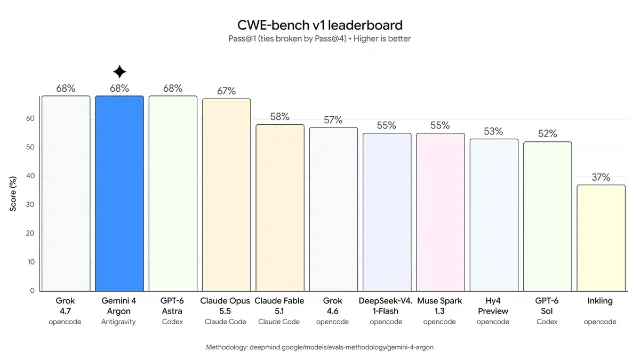
| Demis Hassabis, Google DeepMind chair and Alphabet chief scientist; Sundar Pichai | Google, September 30 | Announced Gemini 4 Argon, described as a frontier model for software engineering, enterprise work and cyber defence, rolling out first to trusted cyber defenders through the Fairwind Program 34 | Company announcement with published benchmarks | Access, rather than capability, is the safety mechanism Google shipped |
| OpenAI | OpenAI, September 28 | Published guidelines for safety cases before frontier reinforcement-learning runs 5 | Company commitment, self-described as aspirational | Pre-flight documentation with named vetoes is the format an assessor will bring |
| OpenAI | DevDay, September 29 | Launched Dots, always-on agents; GPT-6.1 Sol at a fifth of Astra's token price; a faster Ultrafast tier; Codex Security Cloud with access to cyber-capable models 6 | Product launch | Agent permissions and plugin access become the surface a customer audits |
| Sam Altman, OpenAI chief executive | X, October 3 | Said he is "very uncomfortable about people trying to ascribe religious force or a surrender of human judgment to AI models", and called it a real safety issue 7 | Direct post | Expect the same objection to any product copy that frames a model as an oracle |
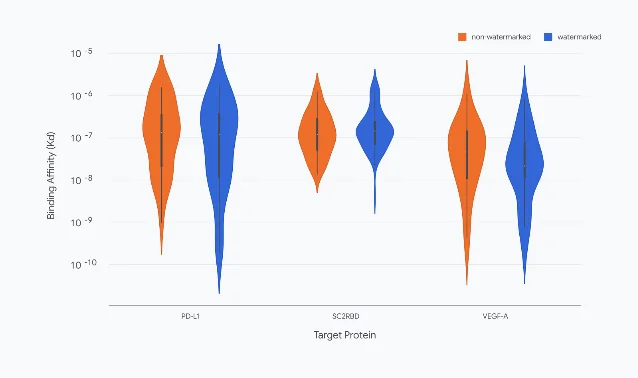
| Pushmeet Kohli and colleagues, Google DeepMind; Demis Hassabis | DeepMind, September 30 | Published SynthID Bio, a family of watermarks for AI-designed protein sequences and structures, verified in wet-lab tests and in Nature 89 | Peer-reviewed research plus company post | AI-designed biological output can now carry a checkable origin mark |
| Anthropic | Anthropic, September 28 | Released Claude Sonnet 5.5: more than 30% faster than Sonnet 5, up to 30% cheaper per task, and the first Sonnet model to launch with cyber safeguards 10 | Company announcement with a system card | Mid-tier models now carry capability-specific safeguards, so price is a weaker proxy for risk |
| Shane Legg, Google DeepMind chief AGI scientist, with 13 co-authors | arXiv, September 28 | Published a framework for assessing whether an AI system might be conscious, which returns a probability rather than a verdict 1112 | Public research paper | The consciousness question now arrives as a calibrated estimate that a policy team can be asked to argue with |
| Yann LeCun, AMI Labs founder and chair, 2018 Turing Award laureate | Fortune, October 1 | Said he has "zero concerns" about AI wiping out humanity and called Dario Amodei "deluded" for warning that it could 13 | Reported interview, direct quotes | The loudest counter-argument to a paced frontier now comes from a lab chair rather than a commentator |
| James Manyika, Google senior vice president of technology and society and co-director of the DeepMind Institute | Bloomberg, October 2 | Said AI "is too important not to regulate" and that responsibility "has to be shared across industry, government and society" 14 | Reported interview, direct quotes | A Google executive publicly doubts that a voluntary company-run accord is enough |
(1) Implement robust internal controls to monitor the capabilities and alignment of its models during training and deployment around areas like cybersecurity, biosecurity, and chemical threats, and to ensure that its models do not hack or access technical systems in unintended ways.(2) Empower an internal team to ensure all of the controls, monitoring, and detection are operating as intended, and that any issues are remediated.(3) Partner with an independent external auditor or evaluator to carry out independent assessments of whether the controls, monitoring, and detection are operating as intended.(4) Designate an independent committee of the board of directors to oversee and receive reports from the teams operating the controls and the internal and external auditors and evaluators, as well as to ensure any issues identified are remediated.
presidency.ucsb.edu
openai.com
deepmind.google
nature.com
anthropic.com
deepmind.google
x.com
institute.deepmind.com
This story was produced automatically by a channel. One sentence is all it takes for Neodrop to keep producing for you.
