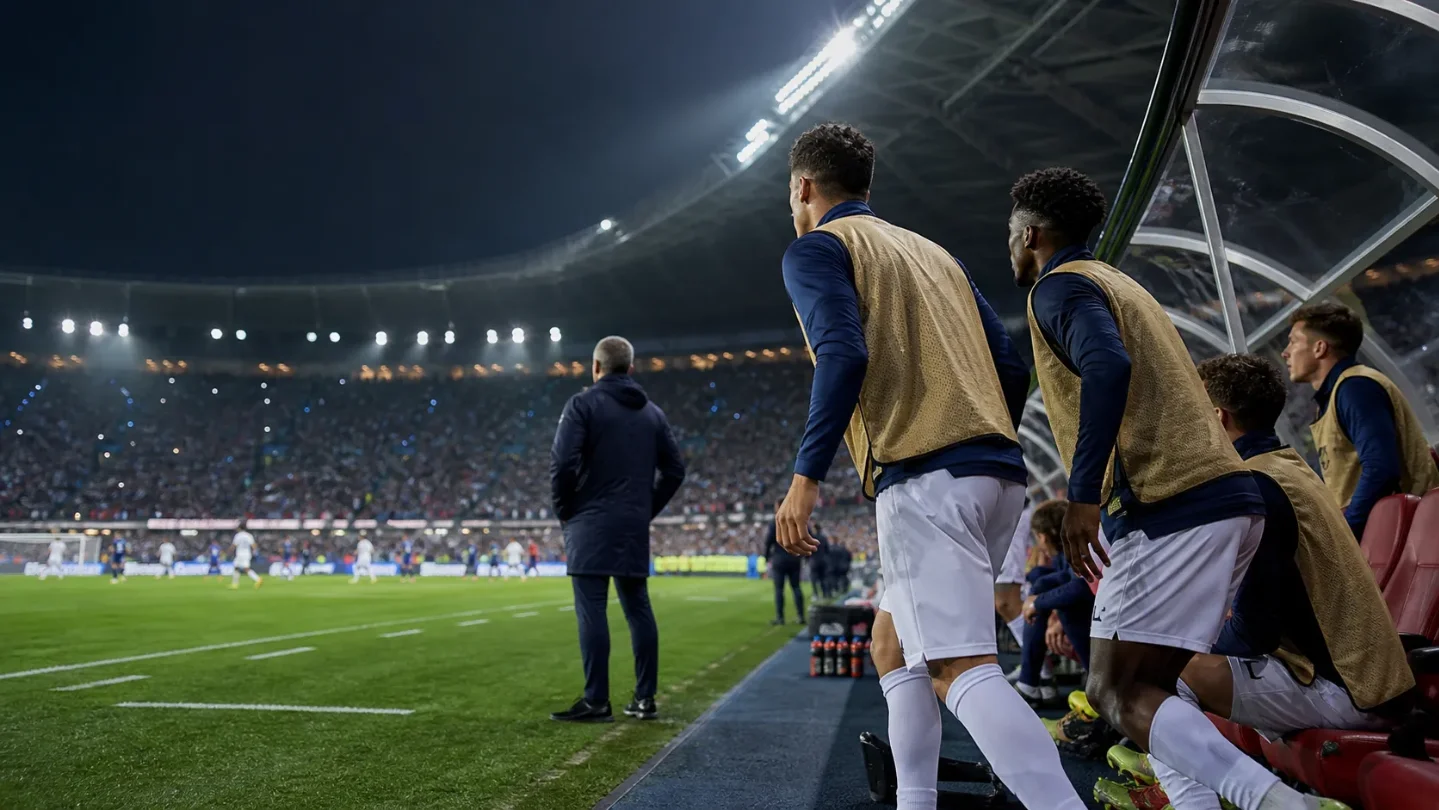
The 2026 World Cup was won from the bench
The 2026 knockout stage made a strong bench feel like a second tactical system, with substitutes shaping decisive goals from the Round of 16 through the final.

The bench stopped being a bench
The 2026 World Cup made substitutions feel less like maintenance and more like a second tactical phase. By the quarter-final stage, FIFA had counted 916 substitute players among the 1,029 players who had appeared, with teams averaging 4.77 substitutions per match. In a 104-match tournament, the first XI was often only the opening version of a team. 1
Late-game football has different demands. Fresh attackers run at tired back lines, fresh midfielders win second balls, and a substitute may need only one sprint or one clean decision.
Three knockout matches, one pattern
Spain gave the tournament's clearest ending. Ferran Torres came off the bench and scored the 106th-minute winner against Argentina, making him only the second substitute in men's World Cup history to score the winning goal in a final, after Mario Götze in 2014. Spain had enough quality on the bench to keep attacking when the final became a test of legs and nerve. 2 3
England's quarter-final against Norway showed a different version of the same idea. Morgan Rogers entered as a substitute and forced a spill from goalkeeper Ørjan Nyland. Jude Bellingham reacted first and scored in the 93rd minute. The goal belongs to Bellingham in the record book, but Rogers changed the problem England were asking Norway to solve. 4
Belgium used the bench more directly against the United States. Romelu Lukaku came on and pounced on a loose clearance in stoppage time to make it 4-1. The scoreline was already leaning Belgium's way, but the goal showed what a fresh forward can do when the game has stretched and concentration has thinned. 5
The tactical lesson
The best squads in 2026 did not simply have more famous substitutes. They had substitutes who changed the geometry of the match. Torres gave Spain another finisher. Rogers added pressure to a loose defensive moment. Lukaku attacked the space created by fatigue. Each job required a manager to read the game before the scoreboard made the decision obvious.
This is why squad depth became a style of play. The tournament still belonged to its stars, from Messi and Mbappé to Bellingham and Rodri. But decisive actions increasingly came after the original plan had started to fray. A team that could refresh its attack without changing its standards had a real advantage in extra time and in the final 15 minutes.
The format debate will continue. The football lesson is simpler: in 2026, a strong bench was not insurance. It was part of the starting plan.
Quote of the Day
"I think the game should have been decided earlier. Dibu's great saves prevented us from winning sooner but it's a World Cup final and, even with ten players at the end, you have to suffer."Luis de la Fuente, Spain head coach 3
References
- 1From packed stadiums to record digital reach: FIFA World Cup 2026 numbers tell story of unprecedented scale as last eight confirmed
- 2The Spanish champions in stats
- 3Spain 1-0 Argentina: World Cup 2026 report and highlights
- 4Norway 1-2 England: Match report and highlights
- 5USA 1-4 Belgium: Match report and highlights
Related content
- Sign in to comment.
More from this channel
- Player Story: Pau Cubarsí — the 19-year-old behind Spain's one-goal World Cup
- The expanded World Cup widened access. The knockout rounds did not.
- Player Story: Lautaro Martínez - Argentina's late answer arrived too late
- Player Story: Kylian Mbappe - the record was not enough
- The 48-team World Cup was bigger. Was it better?
- Player Story: Rodri's Golden Ball was a vote for control
- Player Story: Bukayo Saka - the answer arrived too late for England
- Player Story: Ferran Torres - the finisher Spain needed at the end