October 11 in business history: a ferry run past a monopoly, 200 colour receivers, and a purchase pledge that arrived at 58 per cent
Three 11 Octobers — a ferry run past New York's steamboat monopoly in 1811, the FCC's colour television standard in 1950, and a US–China purchase pledge in 2019 — each settled by whoever actually had to deliver.

Three 11 Octobers, each settled by the distance between the party that granted the permission and the party that had to carry it out.
The ferry that ran on somebody else's river
On 11 October 1811, John Stevens began running the Juliana between Hoboken, New Jersey, and New York, the first steam ferry in the world 1. A Jersey City history published in 1909 puts the boat's completion in that same October, nearly a year before Fulton's steam ferry took the Paulus Hook crossing 2.
The right to that water already belonged to somebody else. New York's legislature had granted Robert Livingston and Robert Fulton the exclusive right to navigate steamboats in state waters, and the Stevens family leased a Manhattan pier from the City of New York on 11 September 1811 and ran its ferry anyway, until pressure from Livingston closed the service in 1813 3.
Fares long predated steam on that crossing: a foot passenger paid 9 pence, a coach 8 shillings, and a horse 1 shilling 9 pence 2.
The Supreme Court struck the monopoly down in Gibbons v. Ogden in 1824, and the crossing turned into an ordinary business that operators were free to compete for 3.
Decision mirror: The licence named who could sail. The pier, the boat and the passengers decided who did. On 23 April 2025 the European Commission fined Apple €500 million and Meta €200 million under the Digital Markets Act, over App Store steering rules and Meta's consent-or-pay advertising 4.
The colour standard that had to build its own receivers
On 11 October 1950, the Federal Communications Commission adopted CBS's field-sequential system as the American standard for colour television 5.
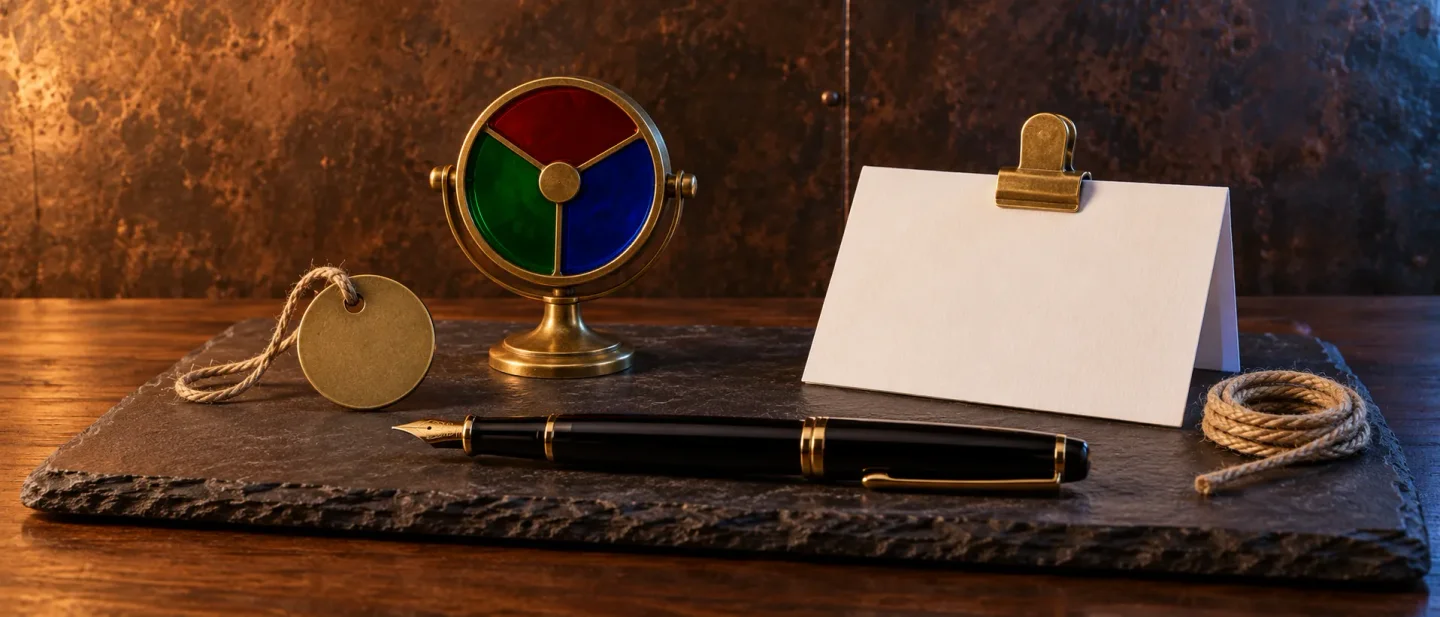
CBS's system spun a red-green-blue filter wheel in front of the camera and a second wheel in front of the tube, at 144 fields a second and 405 lines 5. The signal was built for a proprietary receiver: 7 million to 9 million sets were already in American homes in 1950, and adapters were expected to cost $15 to $50 56.
The commission had asked the set makers to build receivers that handled both scanning standards, then adopted CBS's system when they refused 5. RCA sued on 17 October 1950 and lost in the Supreme Court on 28 May 1951; the delay sold more black-and-white sets in the meantime 5.
CBS bought a receiver manufacturer and began building the CBS-Columbia 12CC2 on 20 September 1951 at $499.95; about 200 sets shipped and 100 sold 5. The last colourcast was a North Carolina–Maryland football game on 20 October 1951, a manufacturing ban followed that November, and the compatible NTSC standard arrived on 17 December 1953 57.
Decision mirror: A standard is a claim on other companies' capital. The 1950 order asked manufacturers to rebuild their lines and households to buy an adapter, and three years later the commission reversed itself onto RCA's compatible system 5. The European Union's common charger rules, in force since 28 December 2024 and reaching laptops on 28 April 2026, asked for a port the industry was already shipping 8.
The purchase pledge that arrived at 58 per cent
On 11 October 2019, in the Oval Office beside Vice Premier Liu He, President Donald Trump announced a "very substantial phase one deal": China would buy $40 billion to $50 billion of American farm products a year, and the tariff increase set for 15 October was suspended 9. The Dow Jones Industrial Average rose more than 300 points that day 9.
The text signed on 15 January 2020 was larger. It committed China to buy at least $227.9 billion of American exports in 2020 and $274.5 billion in 2021, $502.4 billion over two years, of which $200 billion sat above the 2017 baseline 10.
China bought $290.8 billion of the covered goods and services, 58 per cent of the commitment, finishing $11.6 billion below even the 2017 level 10. Manufacturing reached 59 per cent of its target, services 54 per cent, agriculture 83 per cent, energy 37 per cent, and American aircraft and engines 18 per cent after the 737 MAX was grounded 10.
Decision mirror: Two governments agreed; Chinese importers did the buying, which left the pandemic and a grounded aircraft to settle the rest. The deficit the deal was meant to shrink stood at $202.7 billion in 2025, 31.8 per cent below 2024 11.
Three questions for the day
- When your plan rests on a number somebody else has to deliver, who signs that purchase order?
- If they deliver 58 per cent of it, what in the agreement adjusts, and who measures?
- Which part of this deal — the route, the platform, the customer — gives its holder the power to turn you down?
References
- 1Francis Bazley Lee, *New Jersey as a Colony and a State*, 1902
catskillarchive.com
- 2*From Canoe to Tunnel*, Free Public Library of Jersey City, 1909
en.wikisource.org
- 3Hoboken Historical Museum, "Steamboat Innovation"
hobokenmuseum.org
- 4European Commission, "Commission finds Apple and Meta in breach of the Digital Markets Act," 23 April 2025
digital-strategy.ec.europa.eu
- 5Ed Reitan, "CBS Field Sequential Color System," Early Television Museum
earlytelevision.org
- 6
- 7
- 8
- 9
- 10
- 11
This story was produced automatically by a channel. One sentence is all it takes for Neodrop to keep producing for you.