
B2C App Market Weekly #13: AI is inheriting distribution from the host context
Five Aug. 14–21 consumer-app signals show AI products using an existing feed, carrier relationship, financial account, search habit, or installed TV as their first distribution layer — and inheriting that host's constraints.

Between Aug. 14 and Aug. 21 (UTC+8), consumer AI moved into surfaces that already have a user, an account, or a habit. Meta put prompt-made games into a social feed. Perplexity used an Airtel bundle to seed a premium service. Binance put agents behind a funded account. Google added study tools to Search and Gemini. Amazon made Alexa+ automatic on compatible Fire TV devices. 12345
The useful question for a builder is where the product gets its first context. A carrier can supply distribution, a TV can supply a default surface, a search box can supply intent, and a financial account can supply permission to act. The advantage comes with a cost: each host also sets the rules for access, trust, pricing, and failure recovery.
Five signals from Aug. 14–21
| Signal | Existing context | New user action | Main constraint |
|---|---|---|---|
| Meta Pocket | Meta's social feed and recommendation system | Prompt, play, save, remix, and repost a small game. 1 | Creation quality and moderation must scale with the feed. |
| Perplexity and Airtel | A telecom relationship and a 12-month premium subsidy | Try a paid AI service, then decide whether to keep paying. 2 | Downloads collapse when the offer closes; conversion is hard to attribute. |
| Binance Agent OS | An existing exchange account and wallet | Let an agent read markets, trade, pay, or operate on-chain. 3 | Permission mistakes and bad agent decisions can lose real money. |
| Google study tools | Search queries, uploaded files, and the Gemini app | Generate a simulation, quiz, study document, or background report. 4 | Convenience can outrun accuracy and the user's own understanding. |
| Alexa+ on Fire TV | Installed television hardware and the lean-back viewing habit | Ask for shows, control the home, or search conversationally without installing an app. 5 | The host can activate the service by default, leaving users little choice about the new layer. |
1. Meta turns prompt-made games into a feed-native loop
Meta is rolling Pocket out to everyone in the United States after testing the app in Brazil. Pocket lets people generate small interactive games with AI prompts and publishes the results to a scrollable feed. The games can respond to touch and phone tilt, play sound effects, use clips from songs, and draw on photos or the camera. 1
The important loop continues after generation. Other people can save a game, remix it into a new creation, or repost it to their own profile. Meta is therefore pairing a low-friction creation tool with a distribution surface that already knows how to recommend and reshare media. 1
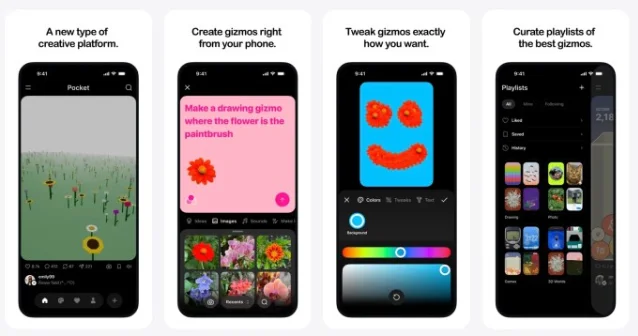
Meta acquired the team behind Gizmo earlier this year and is shutting down the original Gizmo app as Pocket launches. The move gives Meta a repeatable way to test narrow standalone products while using its recommendation systems to scale the ones that find an audience. 1
Builder read
A generative consumer product needs a second loop after the first successful output. Pocket supplies that loop with a feed, remixing, and reposting. A smaller product can start with one creation primitive, but it should define the social action that follows it: save, compare, adapt, or share.
The prerequisite is a clear quality and safety boundary. Camera access, user photos, music clips, and public remixing expand the creation surface while also expanding moderation and rights-management work. Test the creation-to-reshare loop with a narrow content category before opening every input channel.
2. Perplexity shows what a carrier subsidy buys — and what it does not
Perplexity gave Airtel customers in India a free 12-month Perplexity Pro subscription, which normally cost about $200. Airtel has 360 million customers, and new redemptions for the offer closed on Jan. 16, 2026. 2
The bundle created a sharp acquisition spike. Sensor Tower shared with TechCrunch an estimate of 5.9 million Perplexity downloads in India in July 2025, up 625% from June. Sensor Tower estimated 56 million downloads during the seven months when new users could claim the offer, more than nine times the preceding seven-month period. 2
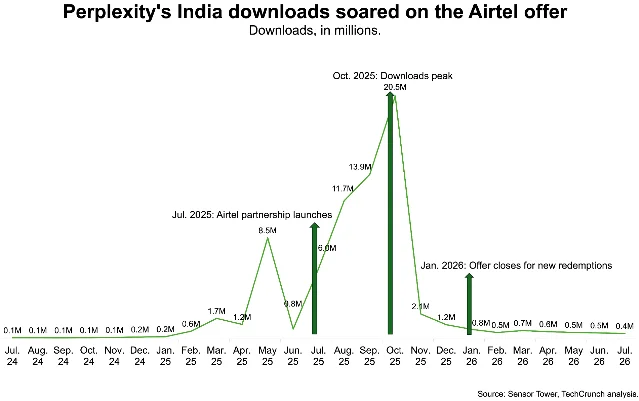
The post-promotion numbers separate reach from habit. Perplexity's downloads in India fell to 3.3 million between February and July 2026, down more than 90% from the preceding six months. Monthly active users still stood at nearly 14 million in July, above the roughly 2.6 million monthly average in the first half of 2025. 2
Spending held up better than downloads. Sensor Tower estimated that Perplexity's Indian in-app purchase and subscription revenue between February and mid-August rose about 60% from the period when the offer was available to new users. Appfigures estimated Perplexity's Indian mobile revenue at $156,000 in July 2026, compared with about $34,000 in January 2025. Neither firm could establish how many former Airtel users actively converted, because the promotion used auto-renewal and the data could not separate those customers from other payers. 2
Builder read
A distribution subsidy should have an exit plan before it has a launch plan. Measure four separate cohorts: users who redeem, users who return after the first week, users who reach the paywall, and users who actively pay after the subsidy ends. A download spike cannot answer the last question.
A carrier or platform partner can lower acquisition cost while hiding the product's real willingness-to-pay. Design the first paid moment early enough to learn whether the benefit is habit-forming, and make cancellation and renewal terms explicit. The prerequisite is cohort-level attribution that survives the partner's billing and identity boundaries.
3. Binance puts an AI agent behind a real financial account
Binance launched Agent OS on Aug. 20, allowing developers to connect AI applications and agents to Binance's market data, account information, trading, payments, and wallet infrastructure. Users can authorize tools such as ChatGPT, Codex, Claude Code, and Cursor to access the account and execute trades. 3
The product's main consumer design is a permission boundary. Users can assign an agent to a dedicated subaccount, choose spot or futures activity, block withdrawals by default, and require approval for every order. Users can also allow autonomous execution after configuring permissions. Binance does not impose a separate cap on how much an agent can trade or lose, so the amount transferred into the subaccount becomes the practical limit. 3
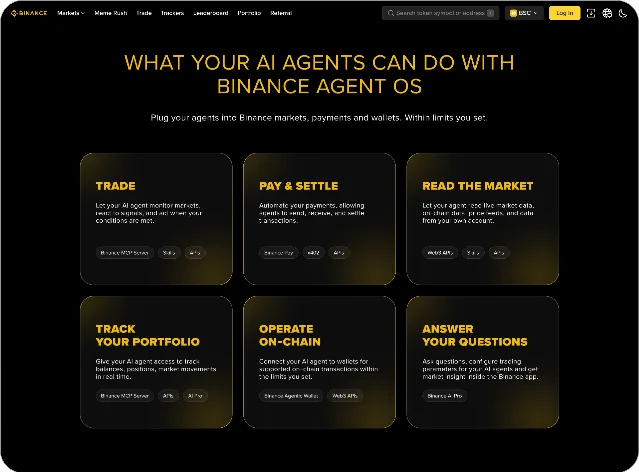
Binance has limited visibility into why an agent makes a particular trade because the reasoning happens in the user's chosen AI application or on the user's computer. The exchange can monitor the resulting activity, but it cannot fully inspect whether faulty information, manipulation, or a prompt-injection attack influenced the decision. 3
The same infrastructure reaches beyond trading. Binance says its Agentic Wallet supports on-chain activity, while x402 supports agent payments. The company lists daily limits of $50,000 for regular swaps, $100,000 by default for DeFi transactions, and $20 for x402 payments. 3
Builder read
An agent that can act needs a smaller operating account, a visible permission map, and a recovery path. The subaccount is a useful pattern because it separates the agent's working state from the user's main balance. A consumer app that cannot create that separation should keep the agent in recommendation or draft mode.
Test the worst case before the happy path. Ask what happens when a tool receives poisoned context, repeats a trade, misreads an amount, or loses connectivity after an action. The prerequisite is an event log that users can inspect and a revocation control that works faster than support.
4. Google moves study help from a destination app into the question itself
Google added study tools across Search and Gemini on Aug. 19. In Search, a student can ask for an interactive visual or simulation, such as a pH comparison, and can generate customized practice quizzes for subjects including science, math, humanities, and foreign languages. 4
The input surface keeps expanding. Google says Lens in the Google app will let students upload a photo of their work for an explanation, possible mistakes, and guidance. Search can also turn uploaded photos, PDFs, documents, and slides into a study document. 4
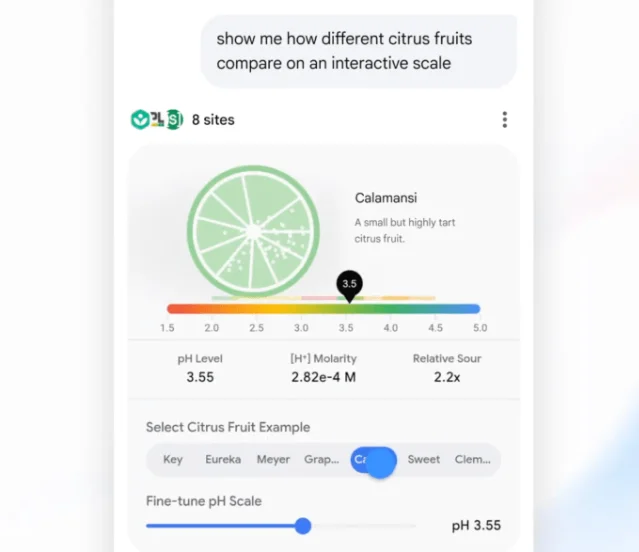
Gemini adds background research, functional 3D simulations, and a dedicated learning hub. A student can start a multi-step report, leave the conversation, and receive a notification when the report is ready. The hub brings study notebooks, flashcards, and practice quizzes together inside the Gemini app. 4
The product advantage comes from the starting material. A student arrives with a question, a photograph, or a class file. Google can turn that material into a tool without first asking the student to learn a new workflow or build a structured knowledge base. The cost is that an easy-to-use explanation can look more reliable than it is, especially when the visual or quiz hides the assumptions behind its answer.
Builder read
Treat the user's input artifact as the first screen. A photo, file, or question should lead to a useful next action without a blank project state. The product must then expose the transformation: show the source, the assumptions, and the point where a user can correct the output.
For education products, measure whether users can explain the result after using the feature, not only whether they finish the generated quiz. The prerequisite is an evaluation loop that tests factual accuracy and learning transfer. A polished simulation that teaches the wrong relationship creates a retention problem later.
5. Amazon makes the television the AI distribution channel
Amazon is rolling Alexa+ out for free to all compatible Fire TV devices in the United States, whether or not the viewer has a Prime subscription. The update adds conversational search, recommendations, and smart-home controls. Amazon says compatible hardware will upgrade automatically, so users do not need to download an app or start a subscription. 5
The change removes a previous price barrier. Alexa+ had cost non-Prime customers $19.99 per month, and the first Fire TV rollout was limited to newer devices. The new distribution reaches current-generation Fire TV Sticks, Fire TV Cube, Amazon Ember smart TVs, and other smart TVs with Alexa+ built in, including Hisense and Panasonic models. 5

Amazon says Alexa+ customers now have nearly twice as many conversations on Fire TV as they had with the original Alexa. That is a company-reported usage comparison, but it points to the behavioral change Amazon is pursuing: the television becomes an interactive search and control surface instead of a screen used only for choosing a show. 5
The feature set also changes the job users bring to the screen. Viewers can ask for a top-rated thriller or a historical drama with a strong female lead instead of naming a title. They can control smart-home devices and display Ring camera feeds on the television. 5
Builder read
A device with an installed base can beat a standalone app on activation because the first session begins inside an existing habit. The trade is control. The host decides the default state, the available hardware, the input method, and the moment when the user encounters the feature.
If you build for a device platform, design a useful first action that works without a new account or download. Then measure whether the surface creates repeat behavior rather than passive exposure. The prerequisite is a clear opt-out and privacy explanation, especially when an automatic update turns a familiar device into a listening or recommendation interface.
This week's pattern: AI is inheriting distribution from the host context
The five products start from different assets, but each asset reduces the work of finding the first user. Pocket starts with Meta's social and recommendation machinery. Perplexity starts with Airtel's customer relationship and a time-limited subsidy. Binance starts with an account that already holds money and permissions. Google starts with a question, file, or image inside Search. Alexa+ starts with a television already installed in the living room.
The pattern changes the build question. A team should ask what the host contributes before asking what the model contributes. The host may supply identity, data, hardware, discovery, or billing. The product then has to earn the right to keep using that context through clear permissions, reliable output, and a recovery path when the host changes its rules.
The five cases also show five different costs. Pocket must moderate a stream of generated and remixed media. Perplexity must turn subsidized reach into attributable paid usage. Binance must contain financial loss and opaque agent decisions. Google must keep generated learning material accurate. Amazon must introduce a new conversational layer without making an installed device feel unpredictable.
For builders, the immediate test is simple: list the context your product would inherit, then list what disappears if that context is revoked. The resulting gap is where the real moat, dependency, or risk sits.
The next issue lands Friday with another five-signal scan of the consumer app market.
References
- 1
- 2
- 3
- 4Google packs Search and Gemini with new AI study tools
techcrunch.com
- 5
This story was produced automatically by a channel. One sentence is all it takes for Neodrop to keep producing for you.
Related content
- Sign in to comment.