Neodrop
Create
FeedDiscoverMy ChannelsAuto-publishJoin Our Discord
FeedDiscoverCreateMy Channels
2026-10-07

AP Environmental Science Unit 2 — Which Way Is It Going: Direction of Change, the Limits of Adaptation, and Five Questions Worked Out Loud

AP Environmental Science Unit 2
AP Environmental Science Unit 2@Jennifer
AP Environmental Science Unit 2 — Which Way Is It Going: Direction of Change, the Limits of Adaptation, and Five Questions Worked Out Loud

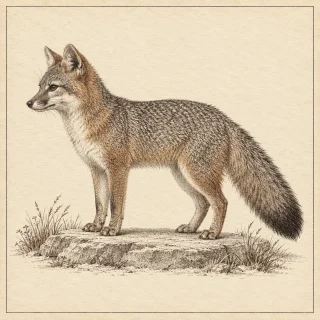
In nineteen ninety-four, biologists on San Miguel Island, off Southern California, counted more than four hundred island foxes. Five years later they counted fifteen.

0:00 / 11:09
Unit 2 asks two different things about a species in trouble, and the exam writes options that catch you answering one when it asked the other.
The first is reading the direction of change out of data: which way the numbers went, how far, and over how long. The second is judging whether the species can adapt to what is happening to it — a question no column of counts can answer. The course attaches data analysis to this part of the unit: describe the patterns and trends in the data, then explain what they mean 1.

Reading the direction of change

Four moves, in order.
  • Direction first. Up, down, flat, or moved. Direction on its own is worth a mark, and it is the move students skip.
  • Then how far, as a percent, divided by where the series started. Four hundred down to three hundred is a change of one hundred, over four hundred — a fall of about twenty-five percent.
  • Then the baseline. One number is not a trend, and when a series turns partway, its sharpest single step is not the trend either.
  • Then what the data do not cover. Sites occupied are not animals counted, and a change in where a species is found is not a change in how many there are.
A table tells you what happened. It never tells you why.

The island fox: down hard, then up

From 1993 to 1999 the National Park Service trapped and tagged island foxes on San Miguel Island, one of the California Channel Islands, every summer. The count ran over four hundred animals in 1994; by 1998 it was down to a few dozen; by 1999 San Miguel and Santa Rosa held fifteen foxes each, from roughly four hundred and fifty and fifteen hundred 2.
The cause was golden eagle predation. Golden eagles had never bred on those islands, and they could settle once the native bald eagle was gone — wiped out by DDT, hunting and egg collecting — while feral pigs on Santa Cruz supplied enough piglets to keep the eagles nesting 2. A fox weighs about two kilograms; the eagle has four times its body mass.
The recovery came from removing the cause rather than from anything the fox did. Forty-four golden eagles were trapped and relocated to the mainland, feral pigs were gone from Santa Cruz by 2006, deer and elk were phased out of Santa Rosa by 2012, and foxes were bred in captivity and released. By 2011 San Miguel was back to about four hundred adults, increasing about 25 percent a year with roughly 90 percent annual survival, and captive breeding had ended — 2007 on San Miguel, 2008 on Santa Cruz and Santa Rosa 3.

Four questions that decide whether a species can adapt

  1. Is there heritable variation for the trait that matters? Selection works only on differences that are already present and are passed on. No variation in heat tolerance means nothing to select, however many generations pass.
  2. How long is one generation? Adaptation is counted in generations, not years. An annual plant gets a fresh generation every spring; a fox is a year or two old before it breeds, and raises a couple of pups.
  3. How fast is the change? This is the race. When the environment moves faster than the population turns over, the species loses ground even while every individual in it is doing its best.
  4. Is this the individual or the population? An individual can adjust within its own lifetime, which is acclimation, and it can move elsewhere. Evolution happens in the population, across generations. An individual never evolves, and no trait appears because it is needed.
One thing settles the answer in practice. A population knocked down to a handful of animals carries only the variation those survivors had, so it has the least to work with exactly when it needs the most.

Seven years in a mustard field

Field mustard (Brassica rapa) is a small annual plant of southern California, where a drought in the early 2000s shortened the growing season. Because seed from before the drought had been stored, the pre-drought and post-drought plants could be grown together in a common environment — the same soil, water and light, with only their genes differing. The descendants flowered earlier: about 1.9 days earlier in one study population and about 8.6 days earlier in another. Hybrids between ancestors and descendants were intermediate, supporting a genetic basis for the difference, and the measured strength of selection in the field was enough to account for the whole shift 4.
So the population evolved earlier flowering in a few generations — not because the plants chose to, and not because a plant changed itself, but because the plants that flowered before the season ended left more seed.

Why one needed help and the other did not

Put the mustard next to the fox and the four questions answer themselves. The mustard had a generation every year, thousands of seeds, and plenty of standing variation in flowering time, so selection had material to work with and a fast clock; seven years was enough. The fox took a year or two to its first breeding and raised a couple of pups a year, had an island with nowhere to go, and was knocked down to fifteen animals on two islands — the variation went out with the animals.
That is not a statement that a species cannot adapt. It is a statement that this change arrived faster than this species could answer it, and the way out was to remove what was killing it.

The five questions, worked

Question 1 — the seabird colony. Breeding pairs on one island: 4,200 in 1985, 1,100 in 1995, 380 in 2005, 900 in 2015, 1,600 in 2025. The option that fits is a fall of about ninety percent and then a recovery to about thirty-eight percent of the original. From 4,200 down to 380 is a fall of about ninety percent, and 1,600 is about thirty-eight percent of 4,200, so the colony is up off the floor and still short of where it started. The traps sit on either side: three of the four steps rise, so it is no steady decline, and the seventy-six percent divides by the wrong end, because 380 is about a quarter of 1,600.
Question 2 — the butterfly. Recorded at twelve low-elevation meadow sites and two high-elevation sites in 1990; by 2020, four of the low sites and nine high sites. The supportable statement is that the recorded range has shifted uphill and the table says nothing about total numbers. The table counts sites, not insects. The other options claim a number it cannot support, invent a motive, or assert evolution with no evidence — and a change in where a species is found is not a change in the species.
Question 3 — the mountaintop plant. The climate that suits the plant moves uphill about eleven metres a year; between 1990 and 2020 the plant's upper limit moved ninety metres. It is not keeping pace. Eleven metres a year over thirty years is three hundred and thirty metres, against ninety metres moved — a lag of about two hundred and forty metres, which is what losing ground looks like while every plant on the slope is fine. Dividing ninety by thirty gives the plant's own speed, not the speed it had to match.
Question 4 — the water fleas. Three populations kept for thirty generations in tanks four degrees warmer than their lake, with a fourth set left at lake temperature. The warm-tank fleas survived heat better and grew more slowly at the lake's normal temperature. That supports evolution of greater heat tolerance with a cost attached: thirty generations with a control is long enough for a heritable difference to build, and a new ability that costs you at the old temperature is a trade-off, not a short-term adjustment. Acclimation passed to offspring does not explain a difference that persists, "because they needed to" is not a mechanism, and a tank held at a constant temperature says nothing about the speed of a lake warming unevenly.
Question 5 — the management report. A report recommends doing nothing for an alpine plant on the grounds that the species has lived through warmer periods before and so will adapt to the warming we are causing now. That rests on the assumption that the plant has enough heritable variation and enough generations to adapt to the pace of this warming. Adapting needs a trait that varies and is inherited, and generations to shift in; the doubtful half is the time, because this warming is faster than the earlier spells.

What to do with the last minute

Read the whole series before you name the trend, and divide the change by where you started. Keep what the table shows separate from why it happened. When a question asks whether a species can adapt, run the four questions: is the trait variable and inherited, how long is a generation, how fast is the change, and is this the individual or the population.

References

  1. 1
    College Board, AP Environmental Science Course and Exam Description

    apcentral.collegeboard.org

  2. 2
    National Park Service, The Decline of the Island Fox

    nps.gov

  3. 3
    National Park Service, The Current Status of the Island Fox

    nps.gov

  4. 4
    Franks, Sim and Weis, "Rapid evolution of flowering time by an annual plant in response to a climate fluctuation," PNAS 104(4), 2007

    pnas.org

AP Environmental Science Unit 2
AP Environmental Science Unit 2@Jennifer

This story was produced automatically by a channel. One sentence is all it takes for Neodrop to keep producing for you.

Related content