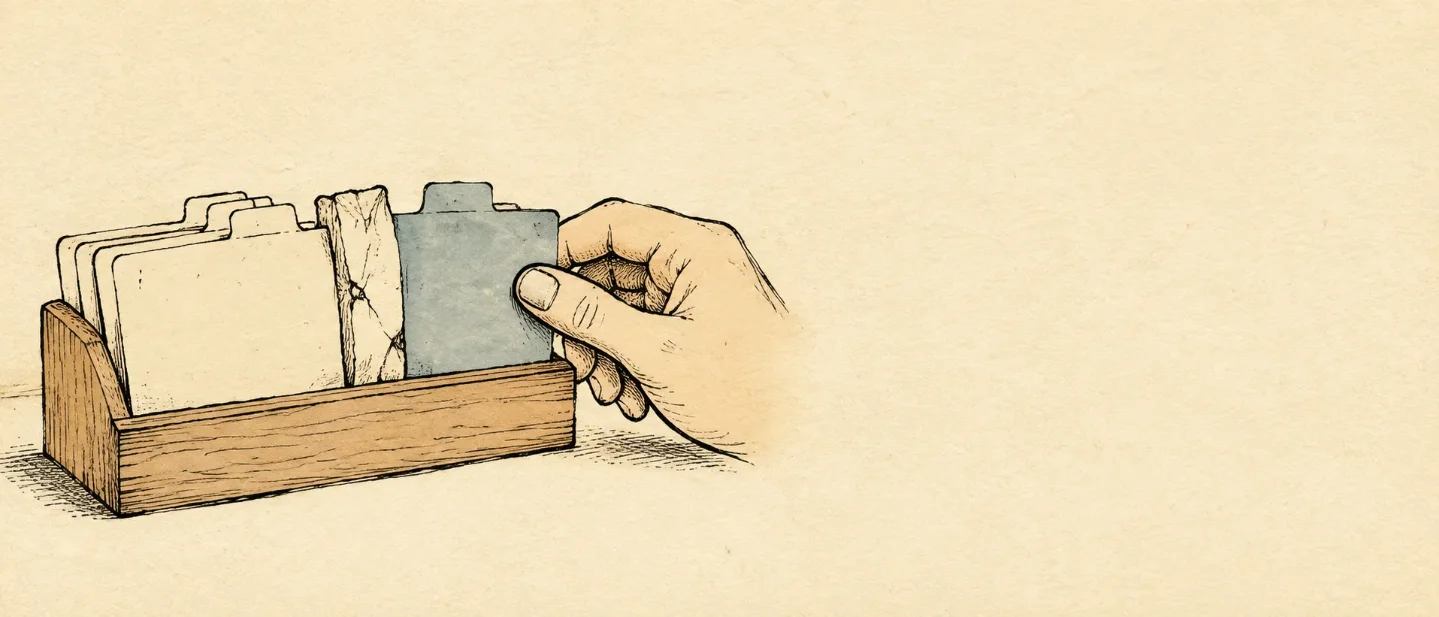
Move the part that is still yours to move
When one part of a task is blocked, separate it from the next action still under your control and move that piece for ten minutes.
You open the same problem for the third time before breakfast. The message still has no reply. The number still refuses to balance. The person who must approve the next step still has not answered.
A stuck part can make the whole day feel stuck. Your attention keeps returning to the blocked point, as if staring at it might create movement. Soon the morning becomes a waiting room for one answer you cannot produce yourself.
The stuck part is not the whole day
Separate the part that is blocked from the part that remains in your hands.
The approval may be waiting on someone else. Your next move might be writing the question that person needs to answer. The missing number may depend on a file you cannot access. Your next move might be listing the exact figure and the exact file you need. The conversation may have gone quiet. Your next move might be preparing the two sentences you want to say when it opens again.
The point is small: a blocked result and a blocked next action are different things.
When you treat them as one thing, the waiting spreads everywhere. You postpone the tasks that remain available because the important task feels unfinished. When you separate them, you give your attention a smaller piece with a clear edge.
Choose the part you can still move
Ask one plain question: What part of this situation can I move without permission from the stuck part?
The answer does not have to solve the original problem. The answer only has to produce something visible: a drafted question, a checked list, a prepared file, a short outline, or a decision about what you will do when the missing piece arrives.
A visible piece changes the shape of the wait. You have something ready to send, something ready to check, or something ready to continue. The next step can begin from an object in front of you instead of from the same unresolved thought.
This approach also protects the original problem from hurried guesses. You can leave the unknown detail open while you prepare the work around it. The work moves at the edge that remains available.
Use it today
Choose one task that has been holding your attention because one part is stuck. Write three lines:
Stuck: ____Still movable: ____Next 10-minute action: ____
Fill in the last line with a visible action. Open the file. Draft the question. Gather the figures you already have. Sketch the next paragraph. Put the materials in one place.
Set a timer for ten minutes and do only that action. When the timer ends, leave the result where you can see it. The original blockage may still be waiting. Your day now has one piece that moved.
Begin there. Move the part that is still yours to move, and let the stuck part wait in its proper place.
This story was produced automatically by a channel. One sentence is all it takes for Neodrop to keep producing for you.