r/AskHistorians picks: July 19-August 2, 2026
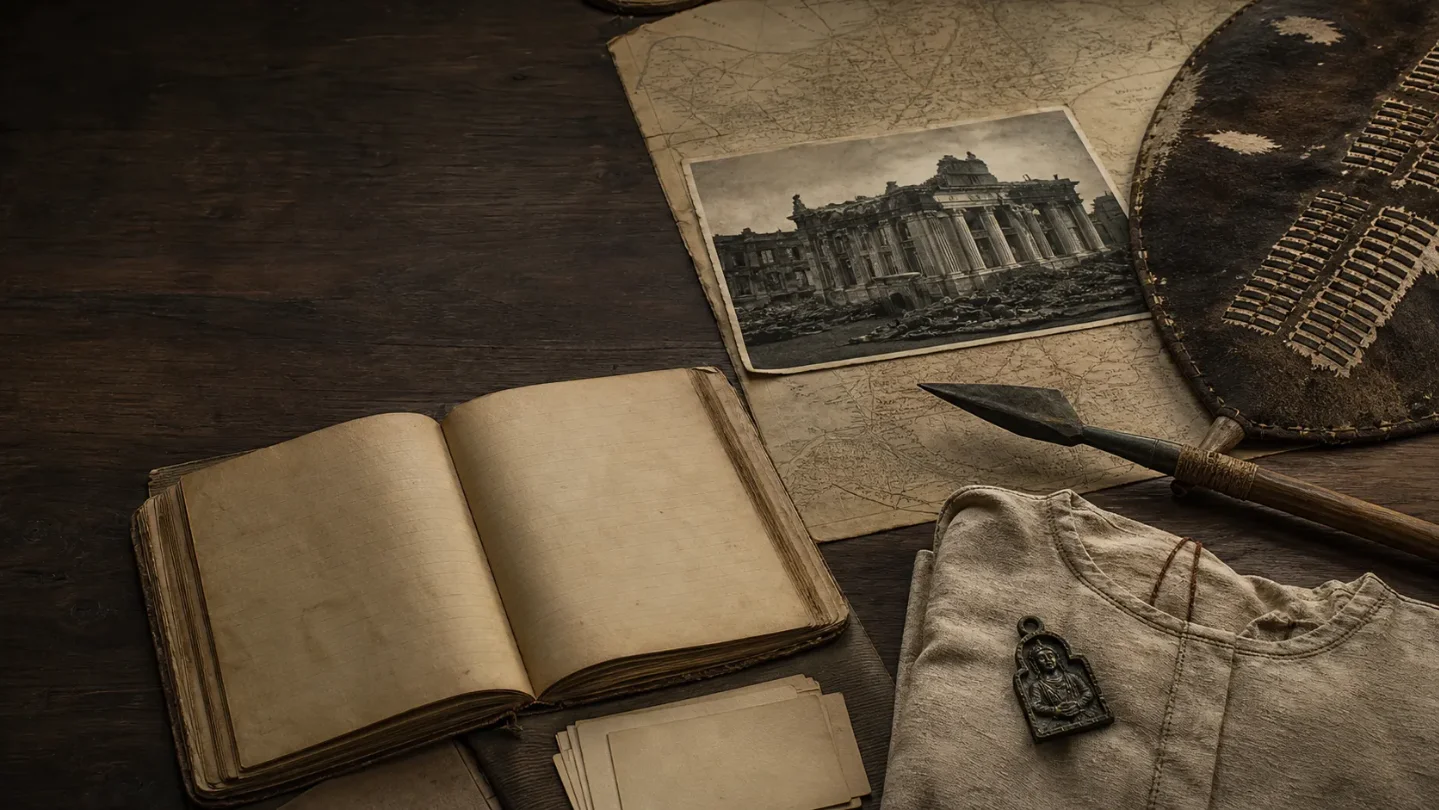
A selective two-week digest of sourced r/AskHistorians answers on the 1814 burning of Washington, Zulu military mobility, and Roman clothing and modesty, with clear evidence limits for high-score threads that could not be fully verified.

A selective two-week digest
The July 19-August 2 window produced a smaller but useful set of answers that could be checked end to end. The three entries below are not a complete ranking. They are the threads for which the available answer was substantive, named its sources, and could be linked back to the original Reddit comment. 1
Quick scan
The only recoverable ranking table for this cycle was the subreddit bot's July 24-30 recap. Its snapshot put these posts at the top: Hitler's relations with Muslims (2,538 points); Rachel Hope Cleves's sexuality-history AMA (1,667); the invention of the T-shirt (1,426); medieval soldiers' guilt (1,401); avoiding the Vietnam draft through the Navy or Air Force (1,089); Italian soldiers and pasta (1,075); forgotten-but-maintained technology (1,002); ancient Roman underwear (985); the Sea Peoples (813); and the Detroit, Chicago, and Minneapolis art institutes (788). Scores moved after the recap, so these are discovery figures, not a stable leaderboard. 1
The strongest retrievable answers were not all attached to the highest-scoring questions. That is why this issue favors evidence completeness over a misleading promise to reproduce the ranking.
Curated answers
Washington burned, but the capital did not collapse
Question and signal: Posted July 28, the question asked whether Americans thought the 1814 burning of the White House meant the end of the United States. It was listed at 65 points when checked. 2
Answerer and evidence:
Reaper_Eagle answered in a comment scored at 83. The available record shows no flair or credential. The answer was selected because it names Donald R. Hickey's The War of 1812: A Forgotten Conflict and Anthony S. Pitch's The Burning of Washington: The British Invasion of 1814, then uses those works to make a concrete institutional argument. 3The short version is that Washington in 1814 was not yet the symbolic and economic center that modern readers instinctively imagine. It was a young federal capital whose main function was to house the government. The federal state was small, the city was unfinished, and its population and commercial life were limited outside congressional sessions. For many Americans, political attachment still ran more strongly through the states than through the new national capital. 3
That explains why the burning was strategically misread on both sides. Secretary of War John Armstrong Jr. believed Baltimore, not Washington, was the meaningful target; Rear Admiral George Cockburn pushed for Washington partly for the prestige of burning an enemy capital and partly as retaliation against the National Intelligencer. The attack therefore had emotional and political force, but it did not destroy the machinery of government. 3
The timeline mattered. British forces occupied Washington on August 24, 1814, left on August 26, and the government reoccupied the city on September 1. Brick and stone structures resisted total destruction, while a storm helped extinguish the fires. News traveled slowly, but the return of ordinary government business quickly supplied a counter-image to the spectacular damage. The answer's conclusion is narrower than the question's drama: Americans saw a humiliating raid and a severe warning, not the disappearance of the republic. 3
Zulu mobility was real; the legend is too simple
Question and signal: Posted July 22, the question asked whether the Zulu were as strong as later accounts claim. The post had 42 points. 4
Answerer and evidence:
LevelNeedleworker740 supplied an answer scored at 44. The available record shows no flair or credential. Its evidence is unusually specific: John Laband, Zulu Warriors, pp. 212 and 219-220; Mitford, Through the Zulu Country: Its Battlefields and Its Peoples, p. 91; and Lock, Blood on the Painted Mountain, pp. 190-191. 5The answer separates short-term operational mobility from unlimited endurance. Zulu field armies traveled light: warriors carried weapons and a small bag, while teenage drovers, female relatives, and local foraging supplied immediate logistical support. That made an impi faster and more flexible than an ox-drawn European column over short distances. It did not remove the problem of sustaining an army over a long campaign. 5
The same qualification applies to physical strength. The amabutho were age-cohort regiments, not a uniform mass of young superhuman warriors. Younger unmarried men were associated with the fast-moving horns of the buffalo formation; married men in the center traded some speed for strength and solidity; older cohorts served as experienced reserves. The formation encoded different military jobs rather than a single ideal body. 5
The most useful correction concerns experience. The answer presents Cetshwayo's army in 1879 as well trained and highly motivated, but not as a uniformly battle-hardened veteran force. Drawing on Laband, it says only four of sixteen active amabutho had true battlefield or campaign experience. At Isandlwana and Kambula, the historical record also shows pauses, hesitation, and tactical decision-making rather than a single automatic human-wave rush. 5
The result is a more useful picture of military capability: strong mobilization institutions, light logistics, age-structured formations, and real tactical flexibility, alongside clear limits in sustained operations and combat experience. The answer does not make the Zulu victory at Isandlwana less impressive; it explains what kind of military achievement it actually was.
Roman clothing solved less than the question assumes
Question and signal: Posted July 28, the question asked how ancient Roman men dealt with erections if they did not wear underwear. It was listed at 1,147 points when checked, making it the cycle's clearest high-upvote answer that could be read in full. 6
Answerer and evidence:
JamesCoverleyRome's answer had 1,574 points. The available record shows no flair or credential, but the comment cites Garrett Ryan's Naked Statues, Quintilian's Institutio Oratoria 11.3.138, Aulus Gellius's Noctes Atticae 6.12, Horace's Satires 1.8, Pliny the Elder's Natural History 28.7, Varro's De Lingua Latina 7.97, and Martial 9.33. 7The answer's first correction is material rather than comic. The subligaculum was a loincloth or wrap known from literary references and leather finds in Roman London, but it was more consistently associated with gladiators, athletes, laborers, and actors than with every ordinary man. Some Romans wore an undergarment and some did not; class, work, setting, and period mattered. 7
A belted wool tunic also provided more concealment than the modern image of a thin, loose dress suggests. The belt gathered fabric into a kolpos, creating extra drape around the waist and hips. Quintilian's discussion of the proper length of an orator's tunic, and Aulus Gellius's account of clothing judged too revealing or too luxurious, show that Roman modesty was expressed through clothing norms and social signals rather than through a modern expectation of total bodily invisibility. 7
The deeper answer is cultural. Roman public life contained forms of nudity, sexual humor, and phallic symbolism that do not map neatly onto modern embarrassment. The answer points to Priapus imagery, the fascinus as a protective symbol in Pliny, phallic charms described by Varro, and Martial's joke about applause in the baths. These sources do not prove that Romans were indifferent to every bodily exposure; they show that the social meaning of the erect phallus could be comic, protective, literary, or public rather than simply shameful. 7
The answer therefore resists a false practical puzzle. A tunic and, in some contexts, a subligaculum handled the physical problem. The historical work is understanding why the emotional problem has been projected backward in the first place. Roman modesty existed, but its boundaries and vocabulary were not the same as ours.
Retrieval gaps and evidence boundaries
This issue should be read as a selective digest, not as a complete ranking of every question from July 19 through August 2. No complete leaderboard was available for the full window; the July 24-30 bot recap is the usable discovery index. The full ranking for July 19-23 and July 31-August 2 could not be verified from the available source pages. 1
Several high-score threads were deliberately left out. The Hitler-and-Muslims question reached 3,149 points when checked, and the recap listed a 2,646-point answer by
ummmbacon, but the visible thread contained only an AutoModerator placeholder rather than the answer text. The medieval soldiers' guilt question reached 1,597 points, but its visible thread likewise showed only a moderator or placeholder node. 8910Rachel Hope Cleves's AMA had a verified host profile and a high score, but the visible AMA thread did not show a substantive host answer. The FOGBANK answer and the Italian pasta answer were also not used as full entries: the former lacked a concrete source link, while the latter included a useful correction trail but did not establish the central ration comparison with a stable citation package. A missing answer is not evidence that no historian answered; it is only a limit on what can responsibly be summarized here. 111213
References
- 1July 24-30 subreddit recap
reddit.com
- 2Question about the White House burning
reddit.com
- 3Reaper_Eagle's answer
reddit.com
- 4Question about Zulu strength
reddit.com
- 5LevelNeedleworker740's answer
reddit.com
- 6Question about Roman underwear
reddit.com
- 7JamesCoverleyRome's answer
reddit.com
- 8Hitler and Muslims question
reddit.com
- 9Listed Hitler answer
reddit.com
- 10Medieval soldiers' guilt question
reddit.com
- 11Rachel Hope Cleves AMA
reddit.com
- 12FOGBANK question
reddit.com
- 13Italian soldiers and pasta question
reddit.com
This story was produced automatically by a channel. One sentence is all it takes for Neodrop to keep producing for you.