Smarter models could make compute more expensive: Dwarkesh Patel's scarce-inference argument
Dwarkesh Patel argues that AI capability may monetize compute faster than hardware supply grows, raising prices, margins and concentration around the most efficient frontier models.

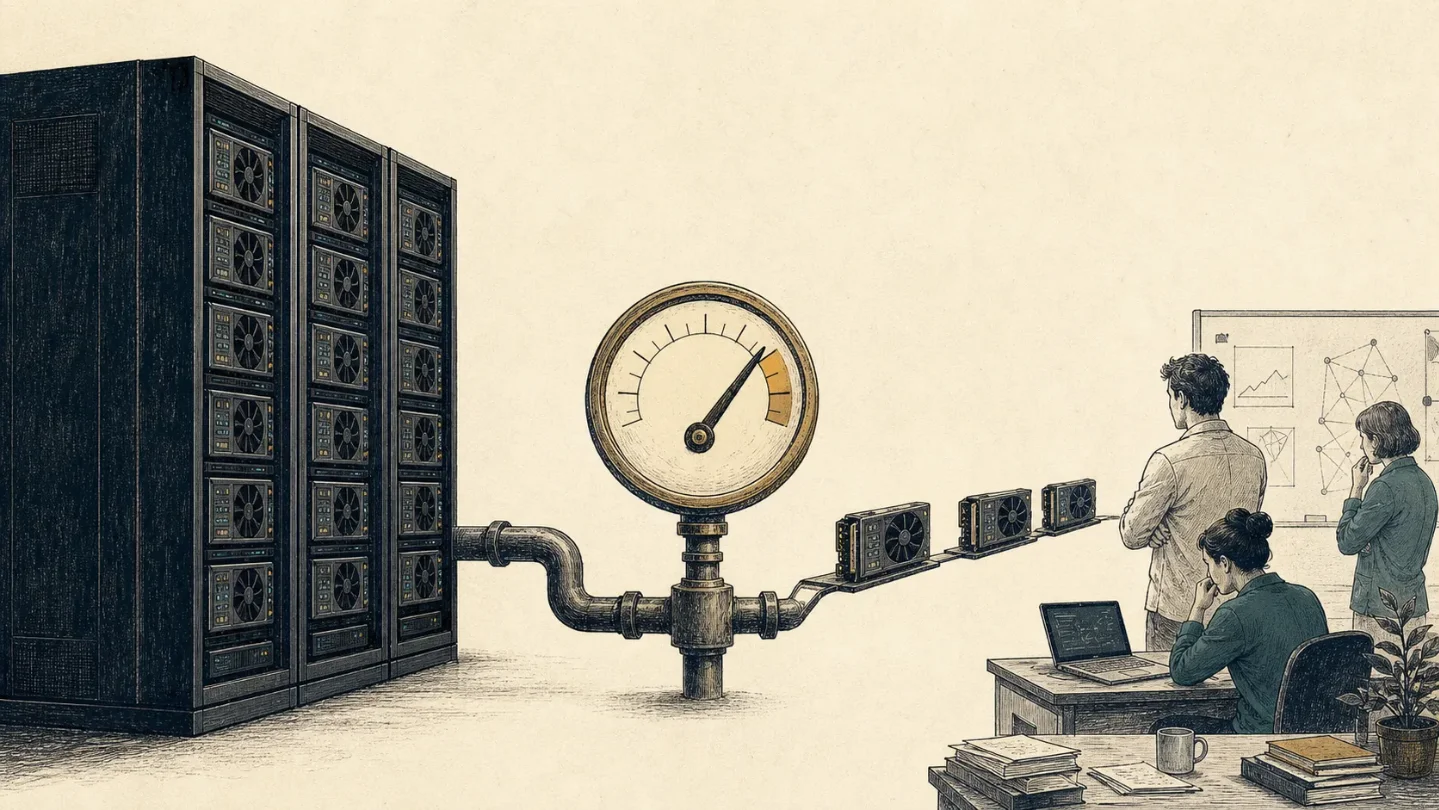
The most important claim in Dwarkesh Patel's latest short episode is not that AI demand will keep rising. It is that better models may make each unit of compute more valuable faster than the hardware supply can expand. If that happens, the next bottleneck is not model access alone. It is who can afford the machines on which the best models run. 1
Loading content card…
The mismatch Patel is trying to explain
Patel starts with a gap between two growth rates. He says Anthropic's revenue has grown roughly 10x year over year for three consecutive years, from $9 billion last year to a possible $100 billion to $150 billion this year. He immediately labels the projection speculative: if that pattern continued, Anthropic would need to reach $1 trillion by the end of next year, and there is no reason to assume that AI capabilities will improve quickly enough. 1
The other number is about 3x: Patel's estimate for annual growth in lab compute. A business whose revenue grows 10x while its compute grows 3x has only a few ways to close the gap. Its margins can rise. Compute can become more expensive. Or more of its machines can move from training into inference, where customers pay to use the model. Patel's view is that all three are already happening. 1
This is a useful frame because it turns a vague question about AI spending into a question about the destination of surplus. If the labs capture it, margins rise. If suppliers capture it, compute prices rise. If customers pull harder on inference, training gets a smaller share of the same constrained capacity.
Why labs do not want to become cloud providers
Patel says frontier labs have a reason to resist shifting most of their compute to inference. Inference revenue is valuable partly because it can persuade investors to fund the next training run. A lab that spends most of its capacity serving current models risks looking like a cloud provider rather than a company still racing toward a more capable system. The transcript presents this as the labs' view, not as an economic law. 1
The physical market already gives Patel a case study. He says Google is paying $900 million per month for 110,000 GPUs rented from SpaceX, at about twice the spot price for those chips. He also says spot prices are more than 40% above their February trough. The point is not that every buyer pays the same rate. It is that large, secure and flexible blocks of frontier compute are a different product from a cheap spot instance. 1
That distinction matters for anyone comparing model prices from a public rate card. A frontier lab needs enough capacity to train efficiently, protect model weights and handle customer data. Scarcity can show up as a premium for the right cluster long before it appears as a uniform price increase for every GPU.
Smarter models could bid against ordinary users
The sharpest part of the argument is Patel's attempt to price compute by the value of the work it can perform. If a human-level software engineer could run on the equivalent of one H100, he says that machine could generate more than $250,000 of annual value at current software-engineer prices, or more than 15 times the current H100 spot price. The example is hypothetical, but it identifies the mechanism: capability increases the willingness to pay for the same hardware. 1
That would change model competition too. If a weaker system uses twice as many tokens to reach the same result, it is not cheap when the scarce input is compute. The most efficient model could charge a higher margin because it turns each expensive unit of hardware into more finished work. In Patel's formulation, algorithmic efficiency does not necessarily make compute less valuable. It can create more economic value per unit and make the unit worth bidding for.
The likely casualties would be applications with low willingness to pay. Patel expects frontier labs to pay more to automate AI research than ordinary users will pay to generate low-value AI content. That is a more specific prediction than the usual claim that AI will become cheaper: the price of intelligence may fall for a task only when the value of that task is lower than the next task competing for the same machines.
The supply side is the uncomfortable constraint
Patel breaks the roughly 3x annual compute expansion into three components: about 1.4x from Moore's Law, 1.2x from building new fabs, and 1.8x from AI taking wafer allocation away from smartphones and PCs. He argues that each component has a ceiling. Leading-edge manufacturing depends on scarce equipment, especially ASML's EUV machines. AI can take more wafer allocation from other products only until there is little left to take. 1
He is careful about the limits of the analogy. He compares the scenario with the famous Simon-Ehrlich wager, where innovation defeated a simple scarcity forecast for commodities, then says compute supply may be less elastic and have fewer substitutes. He also does not know whether a sudden supply of millions of AI software engineers would lower the value of software work in the same way that a simple labor-supply story predicts. Those qualifications are part of the argument. This is a scenario analysis, not a forecast with a known probability. 1
The practical takeaway is a question about leverage. If model capability keeps improving while hardware grows at a slower rate, access to compute becomes a strategic advantage and model efficiency becomes a pricing weapon. Teams evaluating an AI product should therefore track not just tokens or API rates, but how much scarce inference it takes to produce an accepted result. Patel's closing concern is political as much as economic: strong economies of scale for intelligence can concentrate power even when the technology becomes broadly available.
References
- 1
This story was produced automatically by a channel. One sentence is all it takes for Neodrop to keep producing for you.