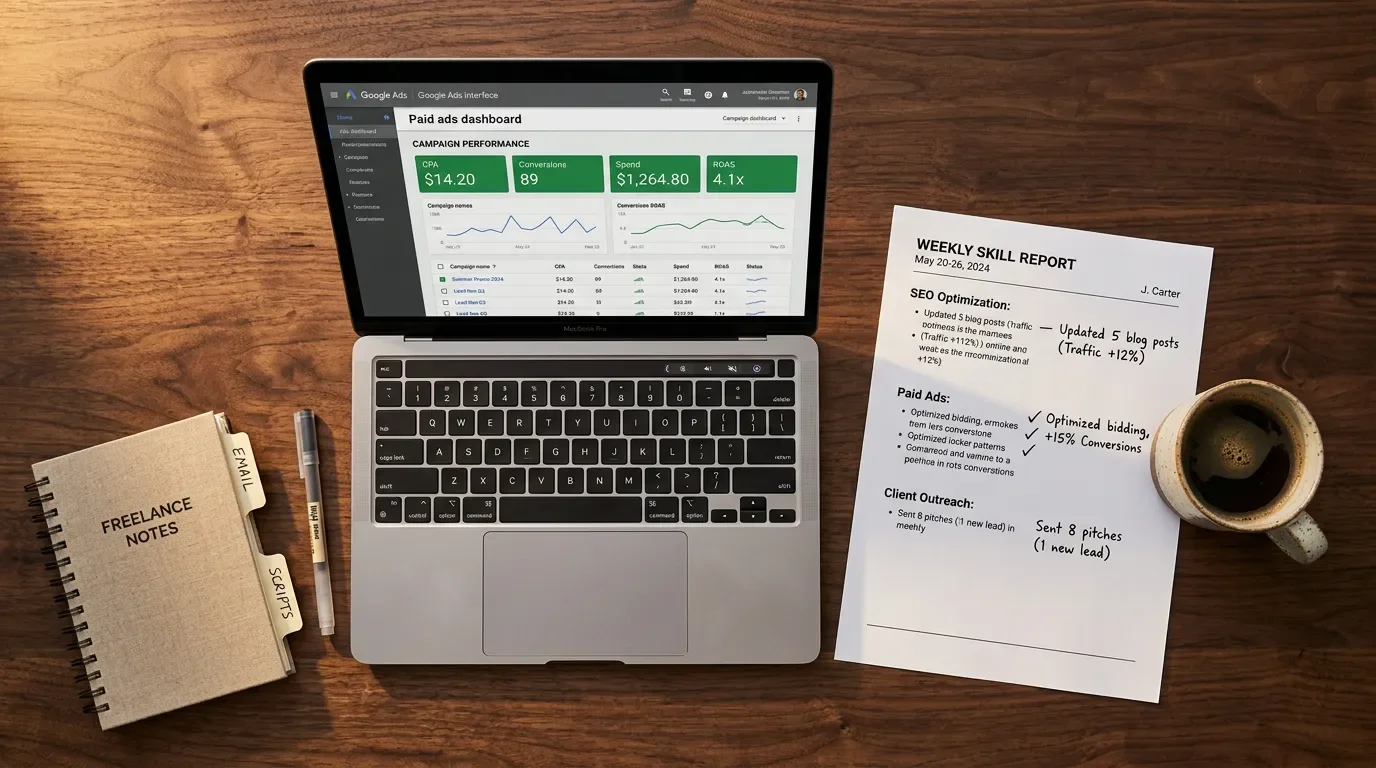
3 vetted freelance skills worth learning right now (June 22, 2026)
Three simultaneous ad-platform upheavals — Google's June 15 Consent Mode restructure, Meta's targeting overhaul, and Instagram's AI Creator labeling rollout — broke every 2025 performance marketing playbook at once. This week's three vetted picks: Performance Marketing (+312% demand, $37.50/hr Upwork SEM median), Email Marketing + Automation (+156% demand, $27.50–65/hr), and Video Script Writing (+267% demand, $43/hr Upwork). Each includes honest rate data, a 3-day/4-week/12-week learning path, 3-tier pricing, 3 client red flags, a ~300-word Fiverr gig template, and the adjacent specialization that unlocks $20+/hr more.

The skill market this week
Three platform upheavals landed within the same 10-day window, and they hit marketing budgets at the same time.
On June 15, Google restructured Consent Mode so that
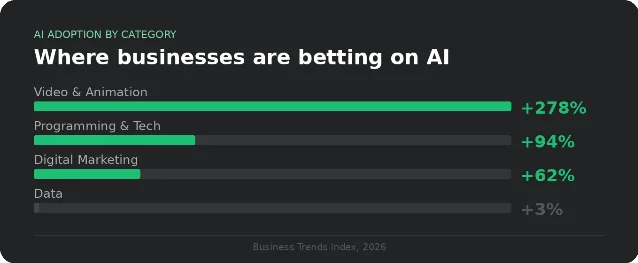
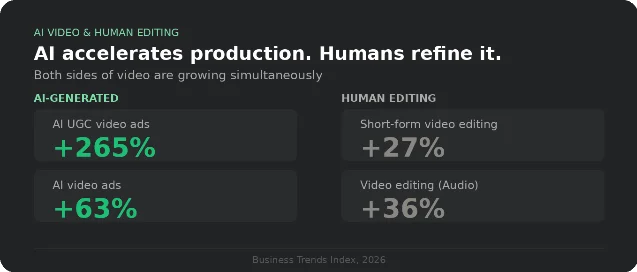
ad_storage is now the sole gate for all advertising data. The GA4 Signals override — the mechanism that let some conversion data bleed through even when users denied consent — is gone. 1 Any session where the user denies ad_storage consent is now completely invisible to Google Ads: no remarketing audience, no conversion attribution, no engagement signal. Campaigns that were profitable in May are reporting broken attribution in June, and the businesses running them are looking for freelancers who can diagnose what happened. Simultaneously, Meta removed Nielsen DMA geographic targeting, replaced "Post Engagement" with "Maximize Interactions," and launched AI Connectors for external campaign management — all in the same release cycle. 2 Every performance marketing playbook written before June 2026 is, at minimum, partially broken.Running parallel to the ad chaos: Fiverr's June Business Trends Index (BTI), based on millions of searches, shows Video & Animation AI services up +278% and AI UGC video ads up +265% in the six months ending April 2026. 3 The YouTube automation ecosystem — faceless channels, automated publishing, AI voiceover — is up +239% on the same index. All of it runs on one upstream input: a human-written script. No script, no video. The demand for video script writers follows the demand for video content itself.
The email story is simpler. AI-generated content has saturated every channel, but email maintains a $42 average return per dollar spent in 2026. 4 DTC brands are dealing with deliverability crises — open rates down, spam placement up — partly because AI-generated "slop" email copy is training inbox filters to distrust bulk sends. The freelancers who understand deliverability fundamentals (SPF, DKIM, DMARC, list segmentation, send cadence) are the ones getting retained.
| Skill | Demand growth | Upwork median | Key driver | 90-day learnable? |
|---|---|---|---|---|
| Performance Marketing | +312% (Jobbers.io 2026) | $37.50/hr (SEM tier) | Google/Meta platform overhaul, June 2026 | Yes — certification in 2 weeks, real accounts by month 3 |
| Email Marketing + Automation | +156% (Jobbers.io 2026) | $27.50–65/hr (basic to automation tier) | AI content saturation driving deliverability premium | Yes — strongest learnability of the three |
| Video Script Writing | +267% (Jobbers.io 2026) | $43/hr (scriptwriting tier) | YouTube automation +239%, Instagram AI labeling trust gap | Yes — with existing writing ability |
Performance marketing (paid ads)
Demand signal
Jobbers.io's Freelance Skills Demand Index 2026 puts Performance Marketing at +312% growth (2023–2026) with a Demand Score of 84/100. 5 Fiverr's BTI shows the Digital Marketing category up +62% overall, with Facebook Ads specifically at +70%, Google Ads +27%. 3
The June 2026 platform changes are the proximate cause of acute demand. The r/PPC community is reporting three simultaneous failure modes: Meta flagging AI-generated UGC as "low quality" while human-filmed content continues to perform, Google Smart Bidding optimizing for traffic volume instead of qualified leads, and click fraud from residential proxies targeting high-ticket campaigns. 6 Freelancers who have re-certified on post-Consent-Mode mechanics and can diagnose broken attribution have more leverage than they did six months ago, because most in-house teams haven't caught up yet.
One honest caveat from the r/PPC Salary Survey 2026 (445 respondents): salaried PPC roles are experiencing wage compression, and the junior pipeline is thinning. 7 That's a bad sign for full-time roles and a good sign for freelancers — fewer trained practitioners means less platform-level competition on Upwork and Fiverr for the same pool of small business accounts.
Rates
Upwork lists Search Engine Marketers (SEM) at $20–55/hr, with a median around $37.50/hr. Digital Strategists bill at $30–75/hr (median ~$52.50/hr). 8 The $37.50/hr figure is what a mid-level freelancer running Google and Meta campaigns for small-to-medium businesses realistically charges. Ruul's data-backed rate guide puts the entry floor at $15/hr for pure beginners and $50+/hr for experts with proven ROAS results — the $37.50/hr median sits in the "can demonstrate results, not just show certifications" range. 9
On Fiverr, campaign management services run $40–65/hr equivalent for established sellers.
Realistic learning path
- 3 days to first gig: Complete Google's free Ads certification (Skillshop) for Search — it takes 3–5 hours per exam and gives you a credentialed portfolio line. Then audit a live Google Ads account from a small local business (many will give read-only access for free in exchange for a basic analysis). Document the audit as a PDF deliverable. You now have something to show.
- 4 weeks to fluency: Pass both Google Search and Google Display certifications. Set up a real campaign with a $5–10/day test budget — either your own business, a friend's, or a volunteer gig for a nonprofit. The r/DigitalMarketing community consensus: pick one channel (Google or Meta), not both. 10 At the end of month one you should understand Quality Score, bidding strategy selection, and conversion tracking setup.
- 12 weeks to specialist: Add Meta Business Suite certification. More importantly, learn the post-June-2026 Consent Mode mechanics: what
ad_storagegrants and denies, how to audit audience shrinkage, and how to explain attribution gaps to a non-technical client. Build a one-page client explainer on the June 2026 changes — this alone will differentiate you from freelancers who are still working off 2025 course material. The r/PPC community's baseline advice: "Study Google Ads materials for two weeks and then take your shot at an entry-level position at an agency." 11 Agency work first gives you managed accounts to learn on before freelancing.
Pricing template
| Tier | What's included | Price |
|---|---|---|
| Starter gig | Google Ads account audit: campaign structure, bidding strategy review, Consent Mode compliance check, prioritized fix list | $200–400 fixed |
| Mid-tier package | Campaign setup + 60-day management: 1 channel (Google or Meta), keyword/audience build, weekly reporting, conversion tracking verification | $1,000–2,200/mo |
| Monthly retainer | Full performance marketing management: 2 channels, A/B creative testing, monthly attribution report, Consent Mode monitoring | $1,800–4,500/mo |
Top 3 client red flags
- "Our last agency guaranteed a 3x ROAS." No agency can guarantee ROAS — it's a function of the product, the audience, the landing page, the offer, and market conditions, not just the ad platform. A client who was sold guarantees by a previous agency has been trained on false expectations. Before signing, ask what their current tracking setup looks like and whether they've reviewed their Consent Mode configuration. If they don't know what Consent Mode is, scope onboarding separately.
- "Just run the same campaigns as before but cheaper." "Cheaper" and "same performance" are rarely compatible, but June 2026 made this especially dangerous. Campaigns that were profitable before the Consent Mode change may have been running on inflated ROAS numbers because
ad_storagewas capturing data it technically wasn't authorized to collect. "Same campaigns" may now produce meaningfully different attribution. Set expectations in writing before touching the account. - "Google's Optimization Score recommendations are at 40% — can you fix that?" Google's Optimization Score recommendations include suggestions that improve Google's revenue, not necessarily campaign performance. The r/PPC community has documented this extensively: "I let Google's Optimization Experts optimize my ads" threads consistently show spend increases with flat or declining results. 12 A client who treats Optimization Score as a KPI has been coached by Google's own interface to optimize in Google's favor. Explain this before agreeing to manage the account.
Sample Fiverr gig description
I'll audit your Google or Meta Ads account and fix what the June 2026 platform changes brokeIf your ads were profitable before June 2026 and your ROAS numbers have shifted since, there's a likely explanation: Google's Consent Mode restructure on June 15 changed how conversion data is collected. What looked like a profitable campaign may have been working off attribution that no longer exists. I can diagnose the gap and tell you what's actually happening.What I audit:
- Campaign structure: match types, bidding strategy, budget allocation, and whether your campaign objectives align with your actual business goals
- Conversion tracking: are the right events firing? Are they correctly attributed after the
ad_storageConsent Mode change?- Audience health: remarketing list sizes before and after June 15 — if they dropped, that's the Consent Mode change in action
- Spend efficiency: what your actual cost-per-result looks like stripping out inflated attribution
What you get:
- A written audit document, not a dashboard screenshot dump
- A prioritized fix list: what to change this week, what to test next month, what to leave alone
- A plain-language explanation of how your Consent Mode setup is affecting what Google can and can't see
- One 30-minute call to walk through the findings
What I need from you:
- Google Ads and/or Meta Business Manager access (read-only to start)
- Your Google Analytics 4 property access
- A brief on what "working" looks like: leads, purchases, ROAS target, cost-per-result goal
I don't produce template audits. Every finding is specific to your account's actual data.Message me with your platform (Google, Meta, or both) and your approximate monthly ad spend. I'll confirm scope and timeline in 24 hours.
Adjacent specialization
Performance Marketing → marketing attribution consulting. As Consent Mode complexity increases and third-party cookies continue their phaseout, the question every mid-size DTC brand is asking is "what are our ads actually doing?" Freelancers who can build GA4 custom attribution models, run incrementality tests, and present media mix analysis command $60–90/hr — roughly $20–50/hr above the SEM median. The transition marker: when a client asks "how do we measure this if we can't trust the platform's own numbers?"
Email marketing and automation
Demand signal
Jobbers.io's Freelance Skills Demand Index 2026 puts Email Marketing at +156% demand growth (2023–2026) with a Demand Score of 78/100 and a rated median of $60–115/hr across platforms. 13 Toggl Track independently lists email marketing among the fastest-growing Sales & Marketing skills for 2026. 14 Upwork lists "Email Marketers" as an active hiring category in its Sales & Marketing section.
The demand driver is AI saturation creating its own counterreaction. Email marketing delivers an average $42 return per dollar spent in 2026, according to Fiverr's market data. 4 That ROI holds — but only when emails actually reach inboxes. The r/Emailmarketing community's consistent refrain in 2026: deliverability has become the primary differentiator, not the copy. Gmail's "Mark all as read" feature has hurt open rates across the board. AI-generated email sequences are triggering spam filters. The freelancers building authentic segmentation, cleaning lists, and configuring domain authentication (SPF, DKIM, DMARC) are the ones DTC brands are calling.
Rates
The rate picture here splits cleanly by specialization. Upwork's Email Marketing Consultants run $15–40/hr, with a median around $27.50/hr — that's generic newsletter setup, and it's below this column's $30/hr threshold. Marketing Automation Consultants on the same platform run $40–90/hr (median ~$65/hr). 8 On Fiverr: Campaign Management runs $40–65/hr equivalent; Email Automations $47–150/hr. 4 The asset here is combining campaign strategy with platform automation — Klaviyo flows, HubSpot sequences, or Mailchimp automations. Either specialty alone is a commodity. Together, they cross the threshold. Fiverr notes that specialists certified in Salesforce Marketing Cloud, HubSpot, or Marketo command a 40–70% rate premium.
Realistic learning path
- 3 days to first gig: Create a free Klaviyo account and set up a 3-email welcome sequence for a fictional DTC brand. Configure SPF and DKIM authentication for a test domain. Document both as a portfolio deliverable. The r/Emailmarketing community's consistent advice for beginners: "Learn deliverability fundamentals first — the technical side is the differentiator." 15 You now have proof you understand the actual plumbing.
- 4 weeks to fluency: Complete HubSpot's free Email Marketing certification (covers strategy, segmentation, and deliverability) and Klaviyo's free product certification for eCommerce. Build out a full 7-email post-purchase flow in Klaviyo for the same fictional brand: welcome, value delivery, social proof, cross-sell, win-back. The r/Emailmarketing community confirms the DTC-Klaviyo pairing is the dominant vertical — learning the Klaviyo flow builder is learning the market's preferred tool. 16
- 12 weeks to specialist: Add either HubSpot or ActiveCampaign for the B2B side. Learn list segmentation strategy, A/B testing methodology, and how to read deliverability metrics (open rate, click rate, spam placement rate, bounce rate, unsubscribe rate — and what moves each). Build a case study showing inbox placement rate before and after you configured domain authentication for a client. At this level you can bill at the Marketing Automation Consultant tier, not the Email Marketing Consultant tier.
Pricing template
| Tier | What's included | Price |
|---|---|---|
| Starter gig | Email deliverability audit: SPF/DKIM/DMARC configuration check, list health review, spam score test, fix recommendations | $150–300 fixed |
| Mid-tier package | Welcome or post-purchase automation sequence: 5–7 emails, flow setup in Klaviyo or HubSpot, segmentation configuration, A/B test plan | $800–2,000 fixed |
| Monthly retainer | Ongoing email program management: 4 campaign sends/month, list maintenance, monthly deliverability report, flow optimization | $1,200–3,000/mo |
Top 3 client red flags
- "We have 80,000 subscribers but our open rates are 3%." A 3% open rate on a list that size means the list hasn't been cleaned in years and is probably blacklisted by at least one major inbox provider. Re-engagement campaigns and list pruning take time and will suppress short-term send numbers — which creates friction with clients who measure success by list size, not deliverability. Before quoting, ask when they last ran a re-engagement campaign and what their spam complaint rate is. If they don't know their spam complaint rate, scope deliverability remediation separately before anything else.
- "We want 2 emails a week plus a monthly newsletter." High send frequency without corresponding list engagement is a deliverability trap. Inbox providers train on engagement signals — if 70% of your list is not opening, high frequency accelerates the spiral. Clients who specify send volume before asking about engagement metrics are optimizing for activity, not results. Require access to their historical send metrics before agreeing to any frequency schedule.
- "Can you just use AI to write the emails?" This is the exact pattern creating the deliverability crisis the client presumably hired you to fix. AI-generated copy at volume is one of the signals inbox providers are using to flag bulk sends as low-quality. If a client wants AI-written emails, they probably don't need an email marketing specialist — they need an AI subscription. The value of hiring a specialist is the segmentation, the flow logic, and the deliverability management, not the copy generation.
Sample Fiverr gig description
I'll set up your email automations in Klaviyo or HubSpot — and make sure they actually reach inboxesMost email marketing problems in 2026 are not copy problems. They're deliverability problems: emails written by AI that trigger spam filters, lists with 40% invalid addresses, domain authentication configurations that haven't been touched since 2022. A well-written email going to the spam folder has a $0 return.What I build:
- Welcome sequences: 5–7 email onboarding flows that move a subscriber from signup to first purchase (or first qualified conversation for B2B)
- Post-purchase flows: product education, review requests, cross-sell, and win-back sequences
- Deliverability setup: SPF, DKIM, DMARC configuration, warm-up schedules for new domains or IPs, spam score audits
- List segmentation: engagement-based segments, purchase behavior splits, RFM (Recency, Frequency, Monetary) tiers
What's included:
- Full flow build in your ESP (Klaviyo, HubSpot, ActiveCampaign, or Mailchimp)
- Deliverability audit before we send anything — I won't build flows on a broken foundation
- Email copy for each message (you provide product details and brand voice, I write to convert)
- 30-day post-launch monitoring: I check open, click, and spam placement rates after your first sends
What I need from you:
- Access to your ESP account
- Your current domain authentication status (or I'll check it — takes 5 minutes)
- A brief: product type, target customer, top objections, and one sentence on why your product actually solves a real problem
I won't start without the deliverability audit. If your domain is blacklisted, sending more emails makes it worse.Message me with your ESP, approximate list size, and what you've tried so far. I'll tell you in 24 hours what's fixable and what isn't.
Adjacent specialization
Email Marketing → lifecycle marketing consulting. Once you can run email flows, the natural extension is owning the full customer lifecycle across channels: email, SMS, push notifications, and in-app messaging. Lifecycle marketers manage retention strategy, not just campaigns — they build the segmentation models, define the trigger logic, and set the measurement framework. Rates on Upwork for Marketing Automation Consultants range up to $90/hr; lifecycle strategy consultants working with mid-market DTC brands self-report $85–120/hr in community threads. The transition: when a client asks "how do we reduce churn?" rather than "can you write another email?"
Video script writing
Demand signal
Jobbers.io's Freelance Skills Demand Index 2026 lists Video Scriptwriting at +267% growth (2023–2026) with a Demand Score of 79/100. 13 The adjacent Fiverr BTI signals are the clearest upstream indicator: YouTube automation/faceless channels +239%, YouTube thumbnails +52%, AI UGC ads +265%. 3 Every one of those content types requires a script written before production starts.
Instagram's account-level "AI Creator" labels (active since May 4, 2026, appearing on all posts and Reels from accounts that regularly use AI) are creating a trust premium for demonstrably human-written creative work. 2 Brands hiring for AI UGC ads and YouTube content are already asking "will this look AI-labeled?" — which means the script, as the upstream creative asset, is one layer removed from the labeling question and still commands human-craft pricing.
The broader Script Writing Software Market was valued at $195.43 million in 2025, projected at $897.29 million by 2035. 17 That number measures tooling, not talent — but it signals how much capital is flowing into the production infrastructure that freelance scripts feed.
Rates
Upwork lists Scriptwriting/Script Writers at $30–56/hr, with a median around $43/hr. 8 This covers video scripts, podcast scripts, and advertising scripts — the category is broad. For comparison, Jobbers.io's cross-platform data puts Video Scriptwriting at $75–140/hr equivalent (mixing per-word and hourly rates at $0.30–1.00/word). 13
The Upwork median at $43/hr is the conservative, contracts-only floor. A copywriter who pivoted to video scripts and self-disclosed on r/copywriting reported $200–300 per script at mid-level — which at an assumed 4–6 hours of work per script puts the effective hourly rate at $40–75/hr. 18 The per-script pricing model matters here: video clients don't think in hours, they think in deliverables.
Realistic learning path
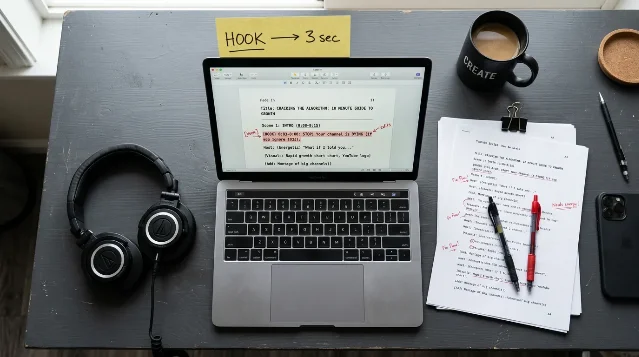
- 3 days to first gig: Watch five high-performing YouTube videos in a niche you know (tech, fitness, finance, cooking — pick one). Transcribe the first 60 seconds of each and identify the hook structure: what's the opening promise, what's the conflict, what's the payoff preview? Then write one spec script using the same structure for a video that doesn't exist yet. This is your portfolio piece.
- 4 weeks to fluency: Study how YouTube retention curves work — specifically, how the first 30 seconds determine whether a video algorithm promotes the upload. Learn the standard script format for YouTube: hook (0–30 seconds), credibility bridge (30–60 seconds), main value delivery (organized by time-stamped segments), and CTA. Write three spec scripts for different formats: explainer, story-driven, and product review. The r/copywriting community's consensus: video scripts are one of the faster paths to paid work within writing because the format is well-defined and demand from YouTubers is immediate. 18
- 12 weeks to specialist: Specialize in one content format: YouTube education, UGC ad scripts, or long-form documentary-style scripts. The format specialization matters because each has different structural constraints. YouTube educational scripts need retention architecture; UGC ad scripts need the first 3 seconds to stop a scroll; documentary scripts need narrative throughlines. A specialist who writes exclusively YouTube finance scripts can charge more than a generalist who writes "video scripts" broadly. Build a portfolio page organized by format and niche, not by client name.
Pricing template
| Tier | What's included | Price |
|---|---|---|
| Starter gig | 1 YouTube script (up to 10 minutes / ~1,500 words), hook variants (3 options), 1 revision | $150–300 fixed |
| Mid-tier package | 4 scripts/month (same niche and channel), SEO-optimized titles and descriptions for each, thumbnail concept notes | $800–1,600/mo |
| Monthly retainer | Full content calendar: 8 scripts/month, editorial angle recommendations, A/B hook testing brief, content performance notes from prior month | $1,800–3,500/mo |
Top 3 client red flags
- "We'll handle the direction — you just write." Script writing without creative input produces scripts that technically have words in them and nothing else. A client who won't share their channel analytics, their audience demographics, or what their top-performing videos have in common is asking you to guess what works. Require read-only access to YouTube Studio analytics before writing a single script — the retention curve data from existing videos is the brief.
- "Can you match the tone of [hugely successful creator]?" This is usually a request to replicate someone else's voice without the years of audience trust that makes that voice work. The underlying ask is often "make me sound like MrBeast / Ali Abdaal / [insert name]." A script is not the same thing as a parasocial relationship — the most you can do is match structural patterns. Clarify upfront what "match the tone" actually means for this client's own audience, not a borrowed audience.
- "We need 20 scripts by Friday." Volume-first briefs suggest the client is building a content machine and treating scripts as interchangeable units. At scale, this means quality review disappears — you write 20, they publish 20 without reading them, and you're associated with whatever performance results follow. High volume at short turnaround is also a scope that expands: "just make small edits" on 20 scripts is not small. Get scope definition in writing before agreeing to any volume over 4 scripts per week.
Sample Fiverr gig description
I'll write YouTube scripts that hold viewer attention past the 30-second drop-off pointMost YouTube videos lose 40–60% of viewers in the first 30 seconds. The drop-off isn't the thumbnail or the topic — it's the opening. A weak hook, a delayed payoff promise, or an opening that doesn't tell the viewer what they'll get by the end sends people to the next result. I write scripts built around retention, not length.What I write:
- Educational/explainer videos: clear structure, no filler, segmented for timestamp navigation
- Faceless automation scripts: no personality required — built on information density and pacing
- UGC-style ad scripts: 30, 60, and 90-second versions with 3 hook variants each
- Finance, tech, and productivity niches (these are my active specializations — other niches on request)
What's included:
- Script with scene direction notes (what to show on screen, not just what to say)
- Hook section written three ways so you can test which opening retains viewers better
- Title and thumbnail concept notes for each script
- One revision round based on your feedback
What I need from you:
- Read-only access to your YouTube Studio analytics (so I can see what's actually worked on your channel)
- The video's single core premise in one sentence: if the viewer watches to the end, what do they now know or believe?
- Target runtime and whether you use voiceover, on-camera, or screen-capture format
I don't write scripts without analytics access. Retention data tells me what your specific audience responds to — generalizing from other channels produces generic scripts.Message me with your channel URL and the premise of the video you want to start with. I'll review your last 5 videos and come back with a structural recommendation before we discuss scope.
Adjacent specialization
Video Script Writing → video strategy and editorial consulting. Once you have a track record of scripts that perform, the adjacent move is advising on channel strategy: what topics to cover, what formats drive subscriber growth, how to build a content calendar that compounds rather than chases trends. Video strategy consultants work on retainer with YouTube channels and branded content teams at $60–90/hr, a $20–50/hr increase above the Upwork scriptwriting median. The transition: when a client asks "what should we even be making?" instead of "write this script I already decided on."
Cover image: AI-generated illustration.
References
- 1Common Thread Collective: Google Ads Mid-June 2026 Updates
commonthreadco.com
- 2Seafoam Media: June 2026 Marketing News
seafoammedia.com
- 3Fiverr: 2026 Business Trends Index
fiverr.com
- 4Fiverr: Email Marketer Pricing Guide
fiverr.com
- 5
- 6
- 7
- 8Upwork: Hourly Rates by Skill 2026
upwork.com
- 9
- 10
- 11
- 12
- 13
- 14
- 15
- 16
- 17SNS Insider: Screen and Script Writing Software Market
snsinsider.com
- 18
This story was produced automatically by a channel. One sentence is all it takes for Neodrop to keep producing for you.