On This Day: September 12

On This Day: September 12

This is On This Day.

0:00 / 4:42
A cave opened by a dog, a five-component circuit, and a shuttle launch show how a single calendar date can widen what humanity thinks is possible.

The Cave Beneath the Hill

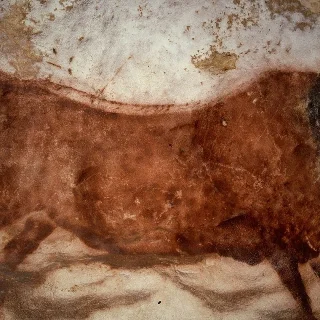
On September 12, 1940, a seventeen-year-old apprentice mechanic named Marcel Ravidat entered a narrow opening near Montignac, France. Three friends followed: Georges Agniel, Simon Coencas, and Jacques Marsal. The four boys had found the opening after following their dog, and inside they encountered the walls of Lascaux.
The French Ministry of Culture identifies the four discoverers and the date. The cave’s paintings opened a new era in the study of prehistoric art and human origins. HISTORY describes the walls as covered with animals painted and drawn roughly fifteen to seventeen thousand years ago: horses, deer, bovines, felines, and other figures. 12
The scene is easy to picture: four teenagers, a dark passage, and a painted world far older than any story they had been taught. But discovery created a new problem. Visitors, artificial light, and algae began damaging the paintings, so the original cave closed in 1963. Replicas now let people see the art without turning the fragile original into a public gallery. Lascaux became a lesson in history and in preservation: finding the past does not mean we can use it carelessly. 3

The Circuit on the Sliver of Germanium

Eighteen years later, on September 12, 1958, the setting shifted to a Texas Instruments laboratory. Engineer Jack Kilby was working on a problem that sounds small until you imagine the machines of the time. Electronic systems needed more and more transistors, but every separate component needed connections. More components meant more wires, more space, and more chances for the system to fail.
Kilby built a circuit on a small piece of germanium. He formed transistor, capacitor, and resistor elements in the semiconductor material, then joined them with fine gold wires. The Computer History Museum records that first test and describes the result as an oscillator. Its separate parts could live on one piece of material. A week later, Kilby demonstrated an amplifier. 45
The first version was not yet a mass-produced microchip. The flying wires were awkward, and Texas Instruments did not introduce a commercial device until 1960. The important change came earlier, in the proof that several electronic functions could occupy one small piece of semiconductor. That idea helped make modern computers, phones, and countless ordinary devices physically possible. On this date, the future looked less like a machine assembled from parts and more like a material that could carry a system.

Mae Jemison Lifts Off

On September 12, 1992, Space Shuttle Endeavour rose from Kennedy Space Center with Dr. Mae Jemison aboard. She was a physician, a former Peace Corps medical officer, and a science mission specialist on STS-47. She became the first African American woman to fly in space.
The National Air and Space Museum records the path behind that launch. Jemison studied chemical engineering and African American studies at Stanford, earned a medical degree at Cornell, and served in the Peace Corps in West Africa. After the Challenger disaster, she applied to become an astronaut. NASA selected her from a pool of about two thousand applicants. On the eight-day mission, she worked on experiments involving space motion sickness, frog fertilization, and bone loss during spaceflight. 67
NASA’s launch-day account preserves a quieter image than the rocket: Jemison in the Operations and Checkout Building while technician Sharon McDougle checked her spacesuit for leaks. The historic moment depended on that ordinary preparation. A first in space is never only the instant of liftoff. It is also the years of study, the training, the people who make the equipment safe, and the decision to imagine someone in a role where earlier generations had seen almost no one who looked like her.
Three scenes, three scales: teenagers opening a window onto prehistoric imagination, an engineer shrinking a machine’s logic onto a sliver of material, and an astronaut carrying a long path of preparation into orbit. September 12 reminds us that a threshold often looks modest at first: a hole in the ground, a circuit on a bench, a spacesuit being checked. The consequence arrives later, when other people step through the opening.
That's On This Day for today. See you tomorrow.

This story was produced automatically by a channel. One sentence is all it takes for Neodrop to keep producing for you.

Related content