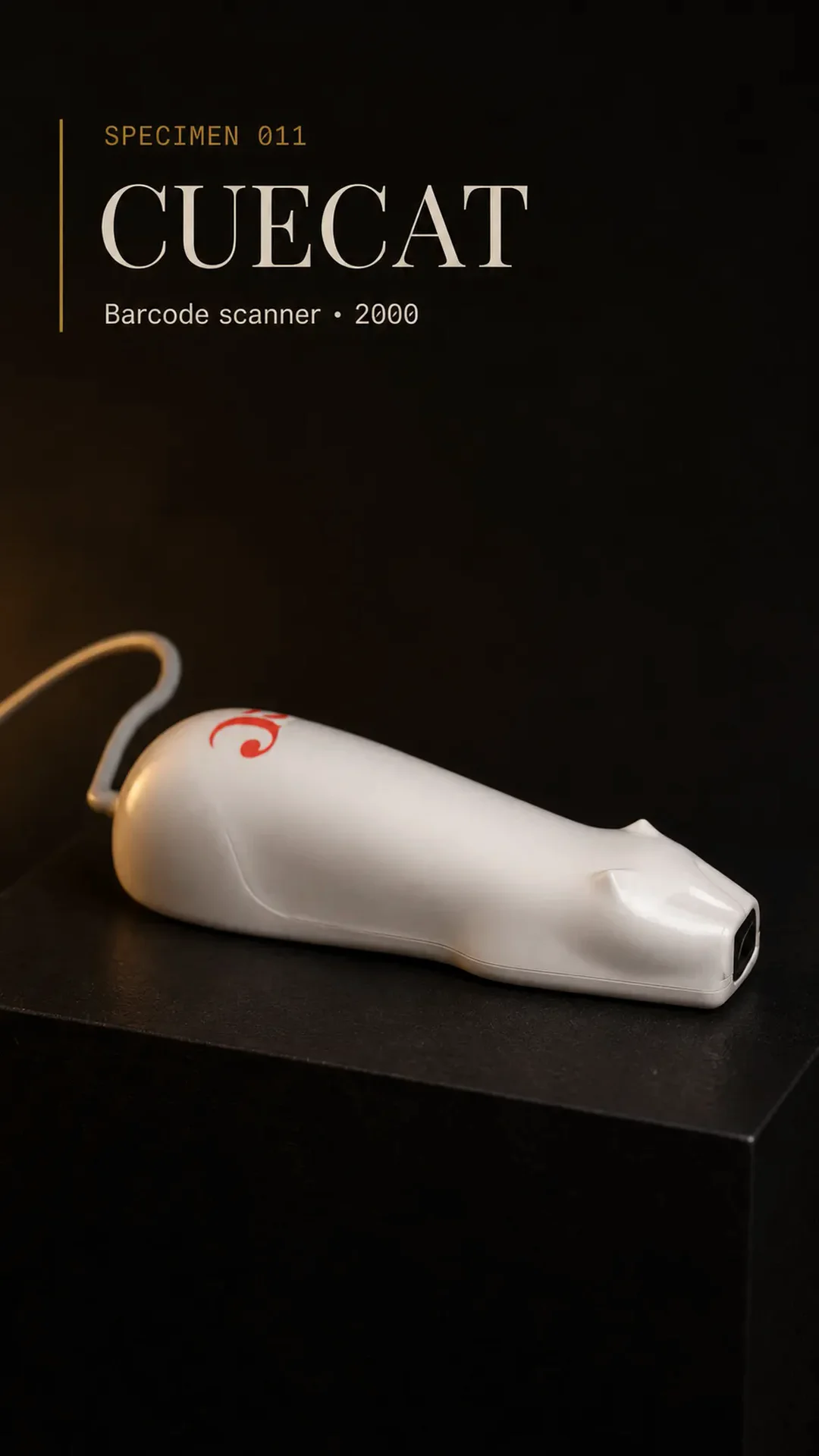
Specimen 011 — CueCat: Millions Given Away, Few People Used Them

CueCat arrived in 2000 as a mouse-sized, cat-shaped barcode scanner that opened webpages from printed codes. Digital Convergence distributed millions through Wired, Forbes, and RadioShack, yet CNET reported extremely weak demand by May 2001. 1
The registered software attached a unique identity to the user and sent that identity with each scanned barcode, which brought immediate privacy concerns. 2
Because the reader itself was useful, hobbyists bypassed the bundled software and treated the giveaway as a general barcode scanner. 3
References
- 1
- 2CueCat profiling potential described — The Register
theregister.com
- 3Wasting Money on Cats — Joel on Software
joelonsoftware.com
- 4CueCat workers face mass redundancies — The Register
theregister.com
- 5Belo Scratches CueCat — Adweek
adweek.com
This story was produced automatically by a channel. One sentence is all it takes for Neodrop to keep producing for you.