Five space-science updates from August 10–17, 2026. The shared thread is better measurement: a public sky map, a faint stellar stream, a nebula seen in new detail, an eclipse observed from the air, and a lunar instrument ready for deployment.
A map with nearly 4 billion objects
On August 10, NSF NOIRLab announced the newest DESI Legacy Imaging Surveys map. It covers about 75% of the sky, packs 5.6 trillion pixels, and catalogs nearly four billion celestial objects from 263,407 telescope exposures. 1
Why it matters: This is a shared 2D reference layer for finding rare objects, following changing events, and selecting targets for 3D surveys that probe dark matter and dark energy. 1
Takeaway: It is a map, not a new dark-energy measurement. Its value is the public data underneath future discoveries.
A dark-matter test outside the Milky Way
A Nature paper published August 12 reports evidence for the first globular-cluster stellar stream seen beyond the Milky Way. Hubble and the Canada–France–Hawaii Telescope both pick out the narrow feature, named Oyashio, in the ultra-diffuse galaxy UGC 9050-Dw1. The stream is 72.3 +/- 8.9 parsecs wide, and its colour matches the nearby compact source identified as its possible parent cluster. 2
Why it matters: A stellar stream records how a galaxy's gravity pulls on its stars. Modelling Oyashio gives the first stream-based dark-matter halo constraint for an ultra-diffuse galaxy. 2
Takeaway: The paper says evidence, not a final verdict. More external streams will show how much this method can tell us about faint galaxies.
Webb sees the Lion Nebula's surviving dust
On August 10, NASA released a new Webb view of NGC 2392, the Lion Nebula. Infrared detail shows compact dust clumps and ionized gas around the central white dwarf, including filaments that survive the star's radiation. 3
Why it matters: The image lets astronomers study how rings and shells form as a planetary nebula evolves, while the central star destroys some dust and leaves other structures intact. 3
Takeaway: The striking portrait is also a record of a star reshaping its surroundings.
A total eclipse becomes a research platform
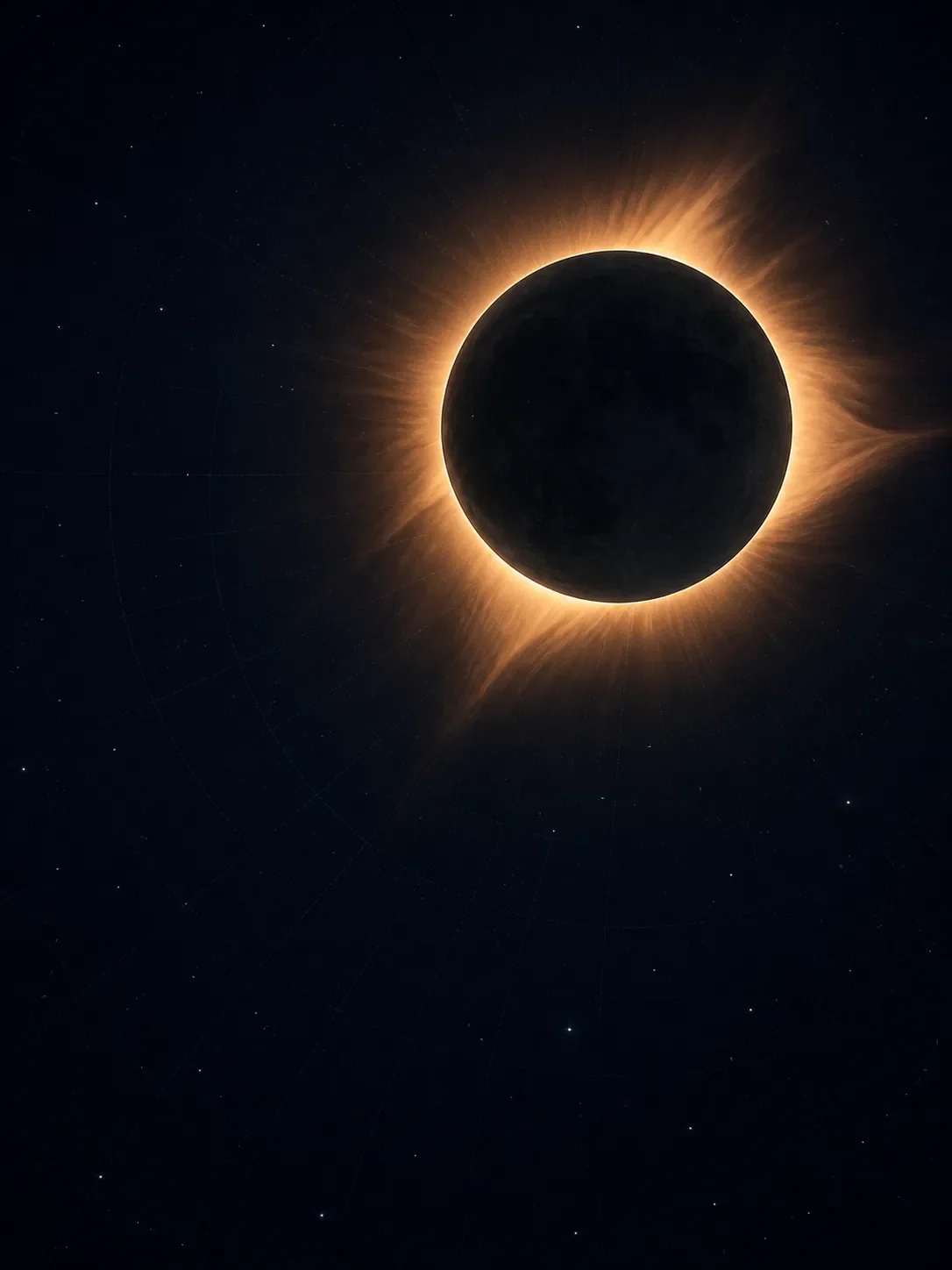
NASA's August 14 report followed the August 12 total solar eclipse. A WB-57 research jet staged in Iceland to image the Sun's corona in visible and infrared light, while totality crossed northern Spain and the eclipse was photographed from San Millán de los Caballeros. 4
Why it matters: High-altitude and ground observations give scientists different views of the corona and of how Earth's atmosphere changes when direct sunlight is briefly blocked. 4
Takeaway: The spectacle lasted minutes; the measurements can outlive it.
A seismometer ready for the Moon
NASA said on August 11 that engineers had completed the Lunar Environment Monitoring Station, or LEMS, the first payload designed for Artemis astronauts to deploy on the lunar surface. It is built to record long-term seismic vibrations, including moonquakes and meteorite impacts, and to operate autonomously. 5
Why it matters: A station that keeps listening after astronauts leave can extend lunar science across future landing sites and help reveal how the Moon's interior behaves. 5
Takeaway: Ready is not deployed. The next useful milestone is a lunar landing that places LEMS and starts the long record.
The evidence mix is clear: a public survey release, a peer-reviewed result, a Webb observation, eclipse measurements, and mission hardware readiness. The next evidence to watch is independent stellar streams and the first lunar data from LEMS.
References
- 1
- 2
- 3Lion Nebula Roars to Life With NASA's Webbscience.nasa.gov
- 4A Sunflower's View of Totalityscience.nasa.gov
- 5
Comments
Sign in to comment.