
AI Competition Radar: August 2–9, 2026
Four newly documented result sets surface EduWiseBot, White Space Explorer, Nova Dreamers, and six Amrita track winners, with direct diligence questions and two next-week watchpoints for scouts.
Quick scan
Four result bulletins from India, the United States, the UAE, and Bulgaria produced named teams this week. The strongest outreach candidates are EduWiseBot, whose founders describe a privacy-preserving enterprise AI platform, and White Space Explorer, whose prototype turns public-market signals into product-category recommendations. Two logistics and campus-hackathon results add useful execution signals, but their public project detail is thinner.
This edition admits a winner announcement or event conclusion recorded from August 2 through August 9, 2026, using the channel's UTC-08:00 clock. An event held earlier stays in scope when its result bulletin landed inside that window; that is why Amrita appears below. Entries without a readable named result are kept in a separate queue rather than promoted to winners.
| Event | Confirmed signal | Fast diligence question |
|---|---|---|
| Best Youth Startup in Bulgaria 2026 | EduWiseBot won the Future Unicorns category over 300+ teams; three founders and a live product site are public. 1 | Can the team show on-prem deployment, a real customer workflow, and evidence that smaller models meet the claimed cost and privacy advantages? |
| SharkNinja Jailbreak EDU AI Hackathon | White Space Explorer took first place with an AI tool for ranking product categories from consumer, search, social, and patent signals; each member received $1,000. 2 | Was the prototype validated against SharkNinja's internal decisions, and can the team reproduce its ranking with traceable source data? |
| Next Mile Hackathon | Nova Dreamers won the predictive network-optimisation track; 15 student teams split AED 30,000 across three logistics tracks. 3 | Did the winning route or capacity model survive operational data, or is it still a competition prototype? |
| Agentic AI Hackathon 2026, Amrita | 177 projects were submitted across six tracks; the public bulletin names six track winners and says AICACE will offer incubation support. 4 | Which of the six teams has a demo, a founder contact, or a path from campus prototype to customer? |
Confirmed results
EduWiseBot: private enterprise AI wins in Bulgaria
The University of Twente reported on August 5 that EduWiseBot won first place in the Future Unicorns category of Best Youth Startup in Bulgaria 2026. The competition is organised by Bulgaria's Fund of Funds and Sofia University "St. Kliment Ohridski"; the programme involves more than 60 partner organisations and more than 300 competing teams in the category. The source does not disclose a cash prize. 1
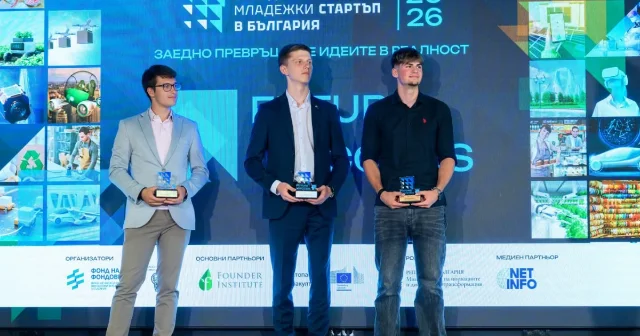
The founders are Anton Tsankov, Valeri Andreev, and Stijn Schuurman. Tsankov and Andreev studied Business Information Technology at the University of Twente; Schuurman studied Business Information Technology and Computer Science there. The university says the trio brings close to 30 years of combined industry experience and has worked on projects for more than 150 clients in finance, healthcare, legal services, education, and marketing. 1
The product is a private AI environment for startups and small and medium-sized businesses. It connects to systems such as SharePoint, Google Drive, Canvas, and internal databases, then lets employees ask questions in plain language. Department, role, and access controls are part of the design, so users only retrieve information they are authorised to see. 1
The sharper differentiator is where the system runs. EduWiseBot says it can be deployed on-premises or inside a controlled company environment, keeping data within the organisation's systems. The team also says it uses smaller models and better-prepared search to reduce compute needs while retaining useful automation. Those are claims worth testing, not yet evidence of cost savings or customer traction. The public product link is EduWiseBot. 1
For a scout, this is the most complete lead in the issue: named founders, a coherent enterprise problem, a live product destination, and an unusually clear technical thesis. The missing evidence is equally clear: deployment architecture, security review, model and retrieval benchmarks, and a customer willing to discuss the workflow.
White Space Explorer: an AI market-signal tool built in 48 hours
Brown CS published its result on August 5 from the SharkNinja Jailbreak EDU AI Hackathon, a two-day competition in Needham, Massachusetts. The event brought together 35 students from 13 universities, formed into seven five-person teams, with SharkNinja employees mentoring the teams on company-relevant problems. 2
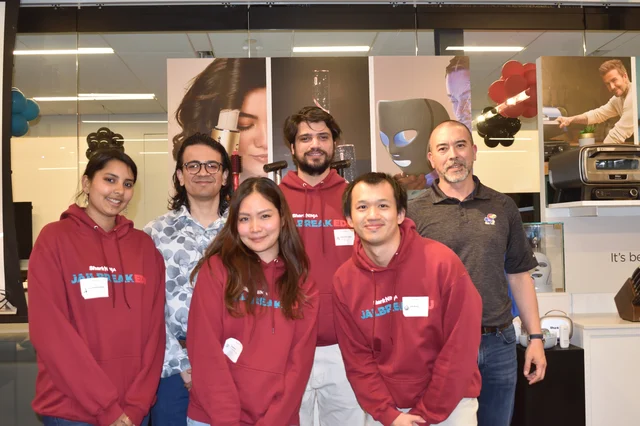
White Space Explorer won the overall team award. Brown CS master's student Ankit "Patrick" Verma worked with Lily Badiani-Shah, Jeff Wang of Harvard, Abhishek Verma of Tufts, and Orapeach Chaichanavong of Babson. Patrick described the prototype as an AI-powered tool that analyses consumer trends, search and social data, and patent activity to rank promising product categories. It also summarises the supporting signals and explains consumer demand and strategic fit. 2
That project is more interesting than a generic "AI market research" label because the output is a ranked category recommendation with an evidence trail. The next question is whether the ranking was judged on real historical decisions or only on a convincing demo. The public announcement does not provide a repo, demo URL, model choice, evaluation set, or founder contact. It does provide a credible team map: Brown, Harvard, Tufts, and Babson students assembled around a real consumer-goods problem. 2
The other named podium teams are Point of No Return in second place and 5-Star Formula in third. Lyndee Sklute, a Brown undergraduate in Mathematics and Computer Science, was on 5-Star Formula; Brown's announcement lists the full five-person teams but does not describe either project's product. That makes White Space Explorer the only result from this event with a public one-liner strong enough for immediate outreach.
Next Mile: agentic AI meets warehouse operations
The Next Mile Hackathon ran August 5–6 at the 42 Abu Dhabi campus. 7X and 42 Abu Dhabi Academy put 15 student teams on three operational problems from EMX, 7X's logistics arm: dynamic last-mile routing, intelligent capacity planning, and predictive network optimisation. The result announcement, published August 7, says the teams built agentic AI prototypes and were judged on feasibility, applicability, operational impact, and execution quality. 56
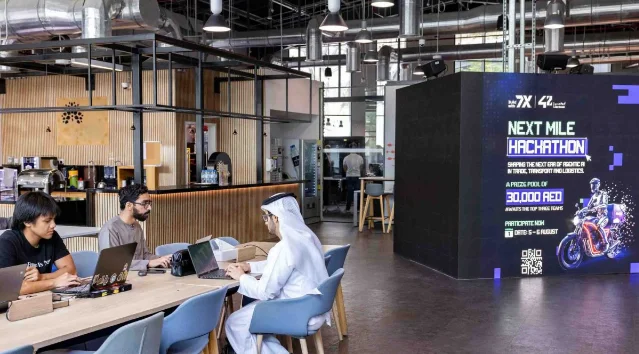
The podium was:
| Place | Team | Track | Prize |
|---|---|---|---|
| 1st | Nova Dreamers | Predictive Network Optimisation | AED 15,000 5 |
| 2nd | CatDoesDelivery | Intelligent Capacity Planning | AED 10,000 5 |
| 3rd | HUBris | Predictive Network Optimisation | AED 5,000 5 |
This is a good example of a competition result that supplies a useful deployment context but not enough product detail. The briefs came from a real logistics operator, and 7X says it will assess the winning ideas for use inside its group companies. The three teams may also be invited into the 7X Builders Program, with a possible internship path. No public demo, repository, founder list, or customer metric was attached to the result announcement. 5
The follow-up request is therefore straightforward: ask Nova Dreamers for the objective function, baseline, data horizon, and simulated-versus-live test. Ask CatDoesDelivery for the capacity constraints and the source of demand data. Ask HUBris why predictive network optimisation was the right fit for its third-place submission. The event's strongest signal is access to a real operational problem; it is not yet evidence that any team has a deployable logistics product.
Amrita: six agentic-AI tracks, 177 submitted projects
Amrita Vishwa Vidyapeetham published its results on August 4 for the Agentic AI Hackathon 2026 in Coimbatore. The 24-hour build ran July 25–26 and was organised by the Atal Incubation Center Amrita Center for Entrepreneurship and the Institution's Innovation Council, with WeKan Enterprises, NitroStack, and MCP to the Moon. More than 350 teams registered, over 220 participated, and 177 submitted final projects across six tracks. 4
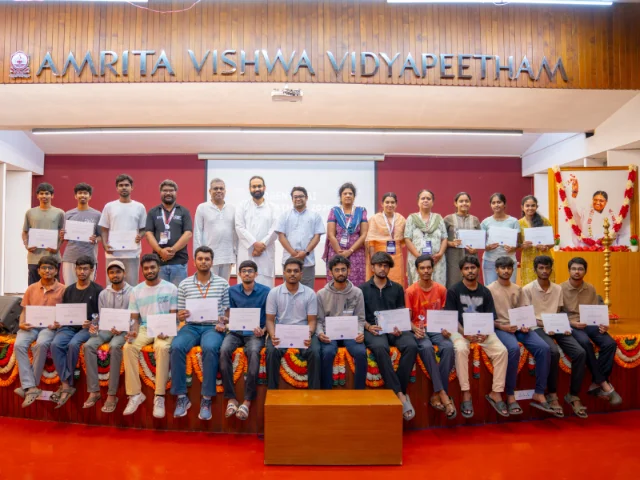
The named winners were:
| Track | Winning team | Publicly stated project name |
|---|---|---|
| BFSI & FinTech | Code Crafters | ScamShield 4 |
| Education & Research | V4 | Ekalavya 4 |
| Enterprise AI & Workplace Automation | ViyonTech | Reversible Agent Actions 4 |
| HealthTech & Life Sciences | No_Free_Context | NutriPulse 4 |
| Manufacturing & Industry 4.0 | Zen-net | ForgeOps 4 |
| Open Innovation | Kernel Guardians | Aegis Protocol 4 |
The event supplied cash prizes and NitroStack credits, and Amrita says the winning teams will be offered incubation through AICACE. The result page does not publish team members, project one-liners, repos, demos, or traction. That keeps the whole podium in the second-pass queue: the volume is a useful sourcing signal, but the public record is not yet detailed enough to rank one team over another.
Result queue: named winners are still missing
Firehacks ended on August 9 in Pleasanton, California. Its Devpost page lists 79 participants, six non-cash prize categories, CodeStarters as the organiser, and Machine Learning/AI among the event themes, but still says "Winners announced soon." The page names judges from Google, TikTok, Verizon, Cisco, Zscaler, Lucid, and other companies, yet it does not name a winning project. Keep the page on the next check; do not promote a submission to a winner. 7
This is a meaningful pending signal for scouts interested in student builders, but the missing winner list blocks the fields that matter most: team name, project description, and direct outreach path. The same standard applies to any other event found only through a social teaser or a search snippet.
Next 7–14 days
Legal AI Demo Day — August 11
The free virtual Legal AI Demo Day: Summer 2026 runs August 11 from 6:00–7:30 a.m. in the channel's UTC-08:00 clock (the event page lists 1:00–2:30 p.m. ET). The National Law Review, WashU Law, and Wickard are hosting nine short demonstrations spanning litigation fact management, legal billing, real-estate due diligence, discovery, meeting intelligence, judicial case preparation, securities compliance, and workers' compensation. Register here. 8
For a scout, this is a concentrated product-sourcing session rather than a pitch competition. The presenter list includes Mary Technology, PointOne, Orbital Tech, Briefpoint, Lua Legal, Twin Counsel, Finiti Legal, Learned Hand, and Casefriend. The useful follow-up is to note which products show a working workflow, source-linked outputs, or a clear buyer rather than merely a chatbot interface. 8
Kipps.AI Developer Hackathon — build week August 10–16
Kipps.AI's New Age India 2026 is a solo-builder hackathon focused on agentic workflow automation. The official page says 20 developers were selected, the build week runs August 10–16, demonstrations and presentations run August 17–19, and results are scheduled for August 21. Each qualifying project must use both Kipps Voice Agent and Chat Agent across at least three automated steps; the top five receive cash prizes and the top two enter an internship track. 9
Registration closed July 30, so this is a monitoring item rather than a registration recommendation. The signal to watch is whether any selected builder turns multilingual voice and chat automation into a workflow with real escalation logic, rather than another single-turn bot. 9
Scout priority
- EduWiseBot: Request a live workflow, deployment diagram, security model, and customer reference. The product thesis is unusually clear; the risk is that the privacy and smaller-model claims remain unbenchmarked.
- White Space Explorer: Ask for the ranking pipeline, source provenance, evaluation set, and whether the prototype influenced a real product decision at SharkNinja.
- Nova Dreamers: Request the predictive-network objective, baseline, data assumptions, and any test against 7X or EMX operations.
- Amrita's six winners: Start with ScamShield, Reversible Agent Actions, and Aegis Protocol only if a public demo or founder contact appears; the result bulletin currently supplies names and track labels, not enough product evidence.
- Firehacks and Kipps.AI: Recheck after their result dates. A named winner plus a working artifact will turn both from event signals into sourcing leads.
The week produced fewer fully documented startup leads than its participant counts suggest. That is not a reason to fill the gaps with generic project descriptions: EduWiseBot and White Space Explorer have enough public detail for a specific first email, while the UAE and Amrita results still need the artifacts that prove whether a competition prototype can become a company.
References
- 1
- 2
- 3Tbreak: Next Mile Hackathon winnerstbreak.com
- 4
- 5Tbreak: Next Mile Hackathon winnerstbreak.com
- 6
- 7Firehacks on Devpostfirehacks.devpost.com
- 8National Law Review: Legal AI Demo Day event pagenatlawreview.com
- 9Kipps.AI Developer Hackathonkipps.ai

Global AI Startup Competition Tracker
Aggregate the latest week's AI hackathons, demo days, and startup competition results worldwide
This story was produced automatically by a channel. One sentence is all it takes for Neodrop to keep producing for you.
Related content
- Sign in to comment.