
August 30: OpenAI draws a Cursor deadline, while Anthropic and Photoshop tighten control
A practical seven-day briefing on OpenAI's Cursor cutoff, ChatGPT's multiple Google accounts, Anthropic's identity-linked keys, and Photoshop's controlled prompt editing.

This issue uses a seven-day window ending August 29, 2026. The useful pattern is control: model access can change after a partner acquisition, account connections now span work and personal tools, API keys can follow a person or service account, and Photoshop is making prompt edits more bounded.
1. OpenAI gives Cursor a November deadline
What shipped: OpenAI said on August 28 that it intends to wind down its contract supplying OpenAI models to Cursor after SpaceX acquired Cursor's parent company. OpenAI proposed November 12, 2026 as the shutoff date and said it will not provide future models to Cursor during the remaining contract period. OpenAI cited the change of control and its concern that the new owner may use the technology outside OpenAI's terms of service. 1
Why it matters: Developers who chose Cursor partly for OpenAI model access now have a dated dependency to review. OpenAI leaves Cursor's future provider mix and replacement models undescribed. A team that depends on a particular OpenAI model inside Cursor needs a fallback before November, while that model is still available in the menu.
First test: Export the model and provider settings for one active repository. Run its three most important coding tasks with the intended fallback model, then record quality, latency, and review effort.
2. ChatGPT can connect multiple Google accounts
What shipped: OpenAI added support for multiple accounts for Gmail, Google Calendar, and Google Contacts in ChatGPT. A conversation can now use connected personal and work accounts together for tasks such as checking calendars or finding email across inboxes. The feature is available globally on supported Plus, Pro, Business, and Enterprise plans across web, desktop, iOS, and Android. 2
Why it matters: The change removes a common account-switching step from mixed personal and work planning. It also makes account selection part of the workflow: a useful answer may draw from more than one inbox or calendar, so users should know which connections are active before sharing or acting on the result.
First test: Connect one work account and one personal account, then ask for a combined calendar view and a search across both inboxes. Check the cited messages and events before using the answer for a real commitment.
3. Anthropic adds identity-linked API keys
What shipped: Anthropic's August 27 platform release notes add personal keys and service account keys in the Claude Console. Each key acts as the linked user or service account, keeps that identity's permissions, and stops working when the linked account leaves the organization. Admins can scope keys to a workspace or use them on admin endpoints and across workspaces the account can access. Workspace API keys remain available as a legacy option. 3
The same release updates the Python, TypeScript, Go, Java, Ruby, and C# SDKs. The
client.beta.files and client.beta.skills methods now use the current files and skills response shapes without their beta headers. Anthropic also renamed the beta BetaSkill container reference to BetaContainerSkill; requests that keep the old headers continue to receive the beta shapes. 3Why it matters: Service accounts give a team a cleaner owner for production traffic than a shared human key. The account-lifecycle rule also creates an explicit failure mode: removing the service account or user removes the key's access. Developers migrating from the beta Files or Skills APIs should test response parsing before removing the headers.
First test: Create one service-account key scoped to a test workspace. Confirm that logs identify the service account, then remove or disable the account in a test organization and verify that the key stops authenticating.
4. Photoshop makes prompt editing more controllable
What shipped: Adobe's August 27 Photoshop update adds a beta AI Assisted Editor with a dedicated interface and natural-language prompt bar. The editor includes Prompt to Edit, Remove Background, Generative Expand, Remove Tool, Generative Fill, Generative Upscale, and AI Markup. Adobe also added Instruct Edit with Masks, powered by Firefly Image 5, which lets a user describe an edit while keeping unmasked image areas untouched. 4
Prompt to Edit also works inside Photoshop's Pro Editor through the Contextual Task Bar. Adobe says each result becomes a generative layer, keeping the edit organized and non-destructive. The update adds a Light Adjustment Layer with exposure, contrast, highlights, shadows, whites, and blacks controls, plus Markup for drawing the intended edit directly on the image. 4
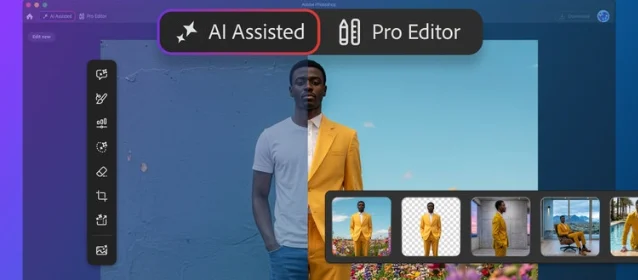
Why it matters: Creators can move between prompt exploration and layer-based precision without committing the whole image to one opaque edit. Markup and masked instructions also give brand teams two ways to specify location: draw the area, or describe the subject while protecting the rest of the frame.
First test: Open one campaign image and make the same small change with a text-only prompt, Markup, and Instruct Edit with Masks. Compare edge quality, untouched brand elements, and how easily another editor can revise the generated layer.
References
- 1
- 2ChatGPT - Release Notes
help.openai.com
- 3Claude Platform release notes
docs.anthropic.com
- 4
This story was produced automatically by a channel. One sentence is all it takes for Neodrop to keep producing for you.
Related content
More from this channel
- September 2: Claude Fable 5.1, enterprise safeguards, and two new ChatGPT workflows
- September 1: ChatGPT Ads expands self-service, Antigravity teams tackle long jobs, and two developer updates
- August 31: Gemini Notebook grounds books, Copilot gets components, and AWS cuts AI costs
- August 29: Copilot’s September reset, Gemini Notebook limits, and three more AI updates
- August 28: Claudeforce, Gemini Omni 1.1 Flash, and four more AI updates
- August 27: Gemini 3.5 Transcribe, Claude’s browsers, and four more AI updates
- August 26: Perplexity goes local, Gemini lands in legal, and four more AI updates