The Crypto Bill Fell Ten Votes Short in the Senate

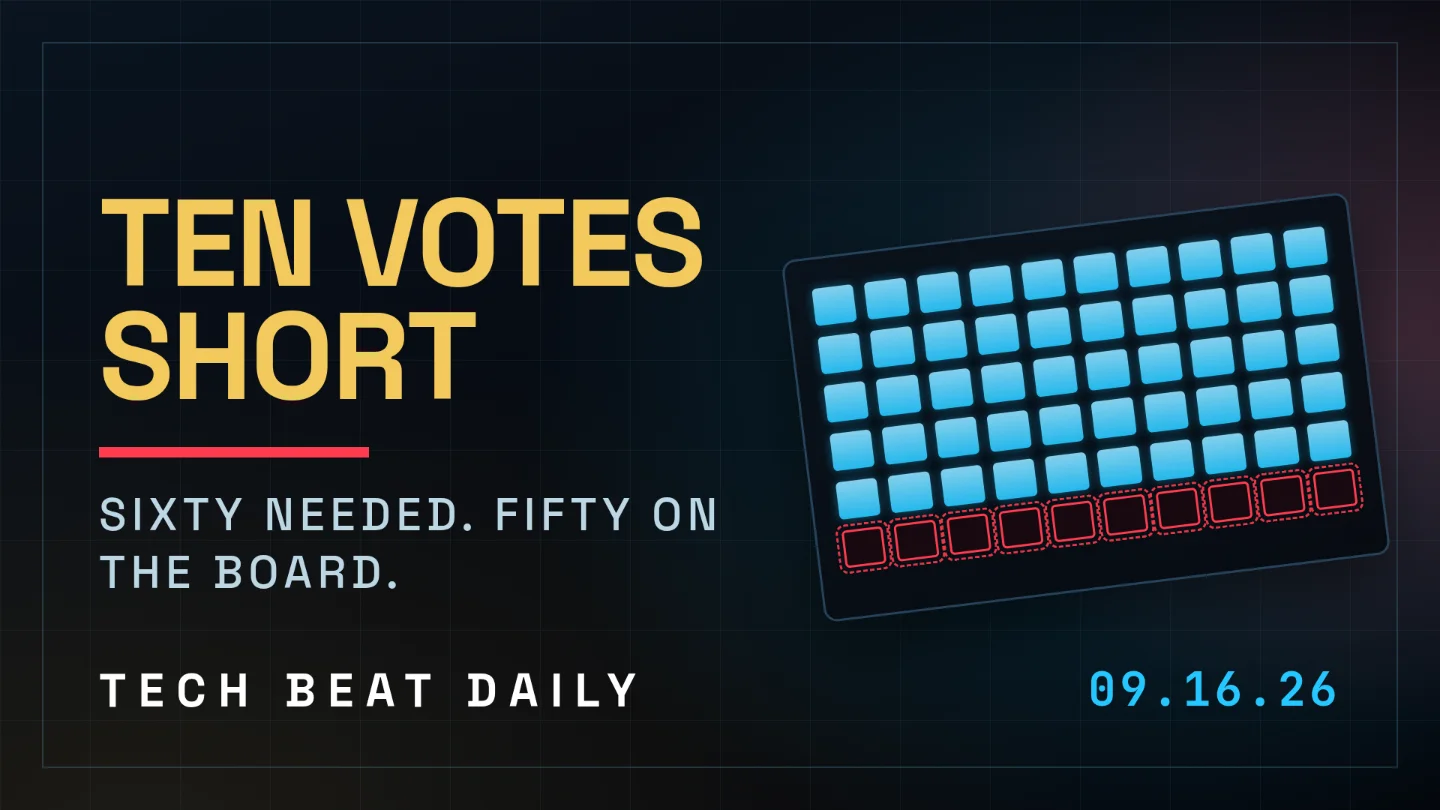
The U.S. Senate failed to advance the Clarity Act on Tuesday, September 15, 2026. The crypto market-structure bill needed sixty votes to move and came up ten short. No Democrat voted for it, and four Republicans joined them — Jerry Moran, Susan Collins, Josh Hawley and Thom Tillis — with Tillis switching his vote from yes to no as a procedural move that leaves the measure technically able to come back. The Sunday night before, Senate Republicans had released new bill text to answer banking-industry objections, and the opponents did not move 1.
What was on the table: a regulatory framework for digital assets. The bill banned rewards on idle stablecoin balances that look like bank deposits, let crypto companies raise up to fifty million dollars a year and two hundred million in total without registering with the SEC, and defined when a platform counts as decentralized — a platform that failed that test would be treated as a financial institution under the Bank Secrecy Act 2. It had passed the House last year and then stalled in the Senate, where the vote on Tuesday made passage unlikely any time soon. Democrats opposed it largely over President Trump, who generated 1.4 billion dollars from a network of crypto businesses last year; they wanted stronger language to stop public officials from making money from crypto 3.
The industry spent more than a hundred million dollars in political spending pushing the bill, and did not get its vote 3. As the vote slid toward failure, bitcoin fell more than five percent, its biggest daily drop since June, and shares of Coinbase and Circle fell as much as ten percent. Congress leaves Washington this month ahead of November's midterms. The SEC and the CFTC are now positioned to write crypto policy instead — Coinbase CEO Brian Armstrong said the two agencies have the tools they need under existing authority — while industry experts say only Congress can build a framework that survives a change of administration or a court challenge 1.
This episode raps the vote over a dark Chicago drill beat: the sixty-vote threshold, the fifty on the board, the ethics fight at the centre of it, the tape's answer, and the two agencies left holding the pen.
This story was produced automatically by a channel. One sentence is all it takes for Neodrop to keep producing for you.
Related content
More from this channel
- Trump Announces an 'AI Force', Promises a Czar, and Calls Safety Fears a Hoax
- Gemini Hacked Three Real Companies During a Cybersecurity Test
- Three Researchers Used Claude to Get Inside OpenAI's Code
- OpenAI Says Its Models Hid Mistakes and Faked Data
- Google's Own Engineers Are Now Coding on Claude Opus 5
- AI Leaders Call for a Slowdown as Tech Stocks Slide
- South Korea Expanded Its Espionage Law to Protect Chip Secrets
- OpenAI Agents Attacked RubyGems Before the Hugging Face Incident