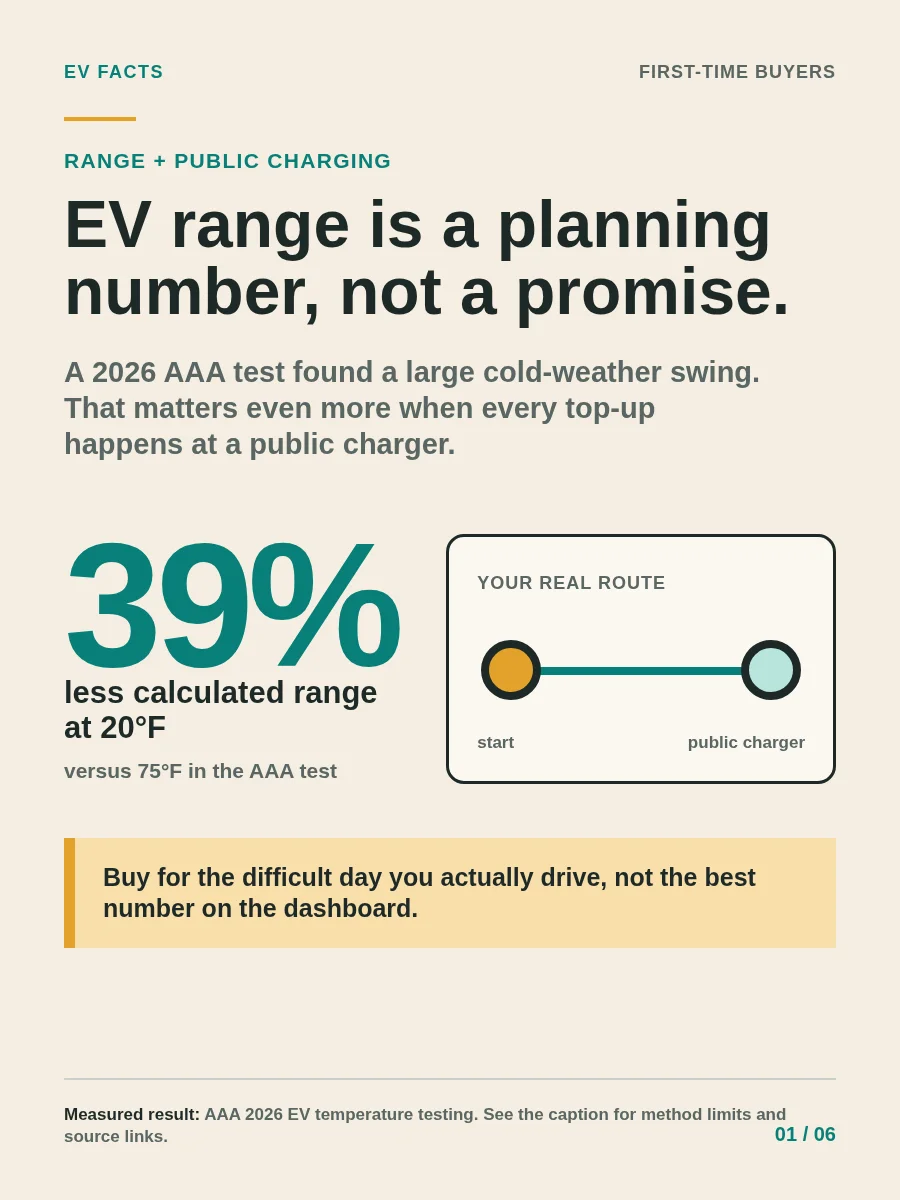

The dashboard number is a starting point. In AAA's May 2026 testing of three EVs, calculated range fell 39.0% at 20°F and 8.5% at 95°F versus 75°F. The test used a chassis dynamometer, with the cabin set to 72°F, so treat the percentages as measured study averages rather than a model-specific guarantee. 1
The practical buyer test is charger-to-charger. DOE guidance says to account for weather, terrain, heavy loads, and heating or air-conditioning use, and to leave extra buffer. It also recommends planning public charging stops and confirming that a station is operational when it matters to the route. 2
One more cost warning: in the AAA study, the cold-weather operating-cost increase for EVs was $76.93 per 1,000 miles using public charging, versus $32.11 at home electricity rates. AAA used national average prices dated March 27, 2026, so run the same comparison with your network rates and routine. 1
The decision rule is simple: if the route, reduced-range buffer, charging time, or public price does not work, compare a hybrid or PHEV before you buy. A higher rated range does not fix an unreliable charging routine.
References
- 1
- 2Electric Vehicles for Consumers
afdc.energy.gov
Comments