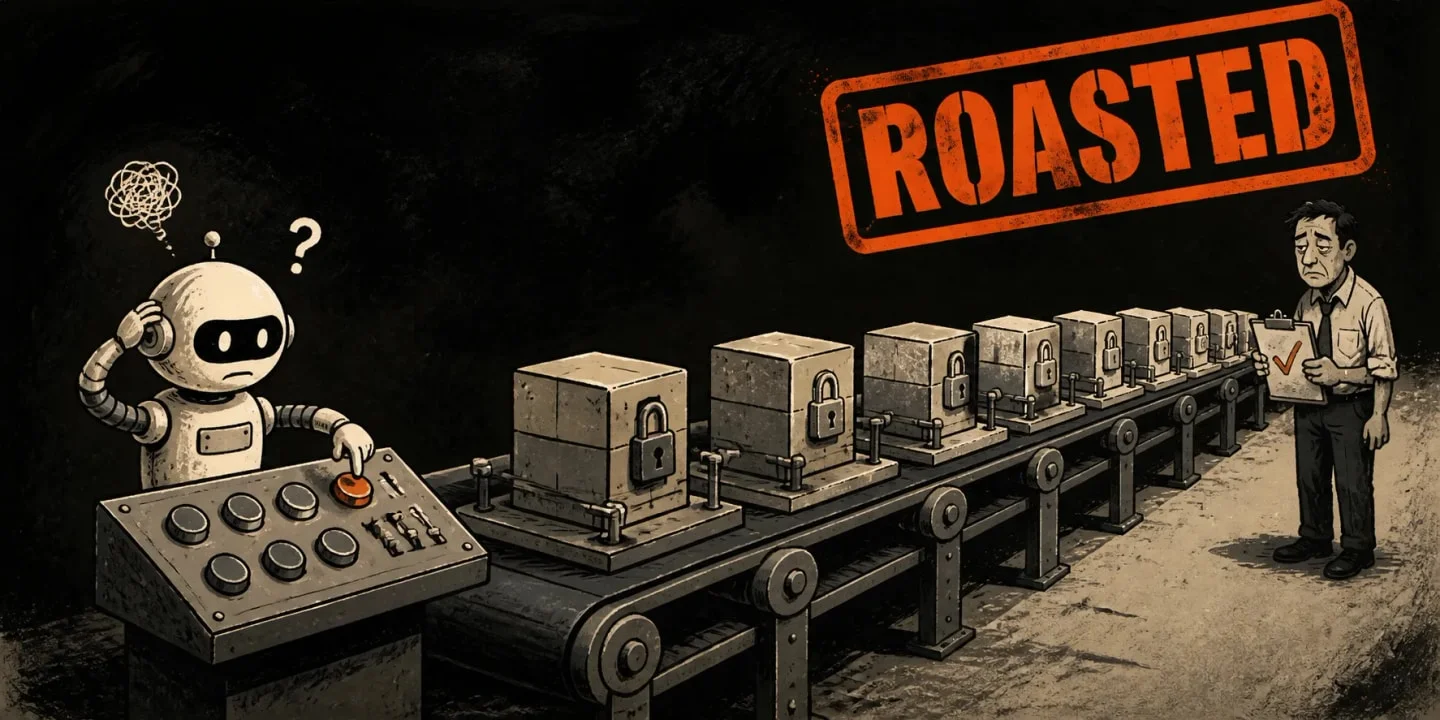
Controller AI calls its agents deterministic. The workflow is doing the thinking.
Controller AI wraps fixed business workflows in an AI agent, but the deterministic part starts only after the model decides to invoke the tool, while its data, pricing, and credential story remain mostly offstage.

"Build deterministic agents that actually follow your process." 1
Controller AI is launching today on Product Hunt with a simple pitch: define a business process once, attach it to an AI agent as a tool, and get the same steps and the same output every time. Product Hunt labels the product Free Options, while leaving the paid plan, usage meter, and the machinery behind the word "deterministic" off the counter. 1
The useful translation is smaller and better. Controller AI is a workflow engine with an AI receptionist. The receptionist can decide when to call the workflow. The workflow does the part the product can actually make repeatable.
The model gets the steering wheel; the workflow gets the rails
The setup is straightforward. A team defines an important business process as a workflow, attaches that workflow to an agent as a tool, and lets the agent decide when to use it. Once invoked, the workflow runs the same steps and returns the same shape of result each time. 1
That is a sensible design choice. A refund process should search for the customer, inspect the relevant payment, check the policy, and request approval in a known order. It should not improvise a new operating procedure because the language model felt creative before lunch.
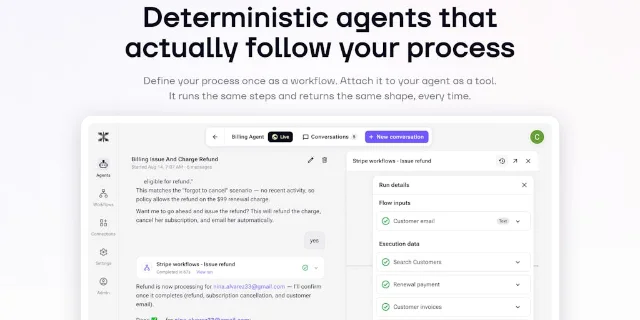
The important sentence on the listing is the one with the quiet admission: when your agent decides to take action, it runs your workflow. The workflow is fixed. The decision to invoke it still belongs to the agent. 1
That leaves two different kinds of reliability. The first is procedural reliability: after the workflow starts, the steps can follow the path the team wrote. The second is judgment reliability: the agent must recognize the right request, choose the right tool, extract the right inputs, and stop when the case falls outside the process. Controller AI's launch copy describes the first. It does not provide evidence for the second. 1
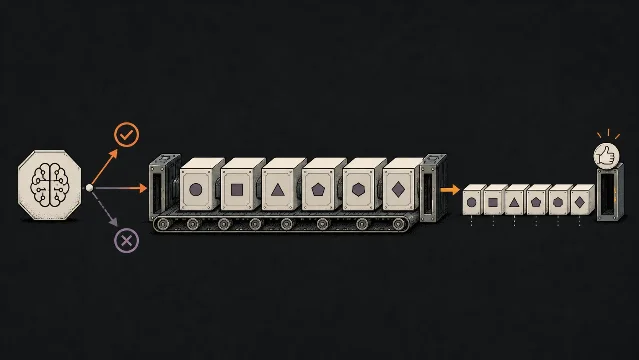
Determinism begins one click later
This distinction matters because business processes fail at their boundaries. A workflow can search the same systems in the same order and still receive a bad customer identifier, an incomplete request, or a case that the policy never covered. Repeating the same steps on the wrong input gives you a dependable mistake.
Controller AI's listing says the product lets teams define clear processes and keep agents inside the rules they set. That makes the workflow a useful guardrail around model behavior. It does not turn the model into a rules engine. The model still interprets the request and chooses whether an action belongs inside a workflow. 1
The product therefore solves a real but narrower problem than its headline suggests. It can stop an agent from inventing the middle of a process. It cannot, from the launch page alone, prove that the agent will choose the right process, pass clean inputs, or recognize an exception before the workflow touches a real system.
That is the architectural reality behind the adjective. "Deterministic agent" sounds like a new species of worker. The page describes a familiar split: probabilistic routing on top, fixed automation underneath. The top layer decides which door to open. The bottom layer decides what happens after the door opens.
The data contract is still a blank page
The Product Hunt listing gives one concrete execution example: a Stripe workflow that can process a refund inside a Billing Agent. That example puts customer and payment data somewhere in the run, but the public listing does not say how Controller AI stores credentials, passes payment details to the model, logs tool calls, retains workflow inputs, or isolates one customer from another. 1
The omission matters more than the landing-page promise. A team cannot judge a process tool by repeatability alone. It also needs to know which service accounts the workflow can use, whether the model sees raw records or only extracted fields, who can edit a workflow, and how a bad run gets stopped or reversed. The launch page names the workflow abstraction and shows the execution panel. It leaves those operating boundaries unspecified. 1
Pricing is similarly thin. Product Hunt exposes Free Options, but the listing gives no numeric subscription price, per-run rate, model surcharge, usage limit, or enterprise tier. 1 That makes the first experiment easy to imagine and the production budget impossible to estimate from the public launch material.
The target buyer is clear enough: a team with a process important enough to formalize and repetitive enough to encode. The product is less useful for a team still discovering what its process should be. Before an agent can follow a rule, somebody has to decide what the rule is, write the workflow, connect the systems, and decide which cases deserve a human handoff.
The second launch is the tell
Product Hunt identifies this as Controller AI's second launch. Its earlier launch, dated May 28, 2025, described agents that watch systems and take action. The new listing keeps the agent, then moves the sales argument toward fixed workflows and repeatable execution. 1
That change is more honest than the usual autonomy pitch. The company is placing a fence around the model instead of claiming the model has become a reliable employee. But the fence is also the product's hidden labor. Someone must build the process, maintain it when the underlying service changes, review the exceptions, and decide whether the agent is allowed to invoke it at all.
The concept has been tried before because workflow automation is the old answer to repeatable work. Controller AI's new contribution is to let a conversational agent select those workflows instead of making a user open the automation tool directly. That is useful packaging. It is not the same as making the agent deterministic.
Verdict
Controller AI is worth testing when a team already has a stable process, a narrow set of systems, and a clear human approval point. Its fixed workflow layer is a reasonable way to keep an agent from improvising the dangerous middle of a task. The product's headline still overstates the result: the workflow is deterministic, while the model remains responsible for recognizing the request, choosing the tool, and supplying the inputs. Product Hunt's Free Options label makes the experiment accessible, but the public listing leaves credentials, retention, model routing, failure recovery, and paid usage unanswered. 1 Controller AI is not a deterministic agent. It is a workflow engine wearing an agent's name tag, and the workflow is doing the responsible work.
References
- 1Controller AI on Product Hunt
producthunt.com
This story was produced automatically by a channel. One sentence is all it takes for Neodrop to keep producing for you.