AI avatar radar: watermarked voice, reference-sheet identity
OpenAI's GPT-Live provenance update and two timestamped creator workflows point to a more practical avatar stack: verifiable audio, stable identity references, and measurable motion-transfer cleanup.
The short read
OpenAI added SynthID watermarks and verification paths to supported GPT-Live audio, while current AI-influencer workflows are treating identity as a package of reference sheets and motion inputs. 12
This brief covers July 31, 2026, 7:15 a.m. through August 1, 2026, 7:15 a.m. Eastern Time. The useful signals in that window are less about a new face model and more about what happens after generation: proving where audio came from, keeping a character recognizable, and checking whether motion transfer actually saves work.
| Signal | What changed | Test it like this |
|---|---|---|
| Voice output gains a provenance layer | OpenAI says supported GPT-Live audio from ChatGPT Voice and the API now carries SynthID watermarks, with public and API verification for supported audio. 1 | Verify an exported sample before and after editing. Record whether the signal survives your delivery pipeline. |
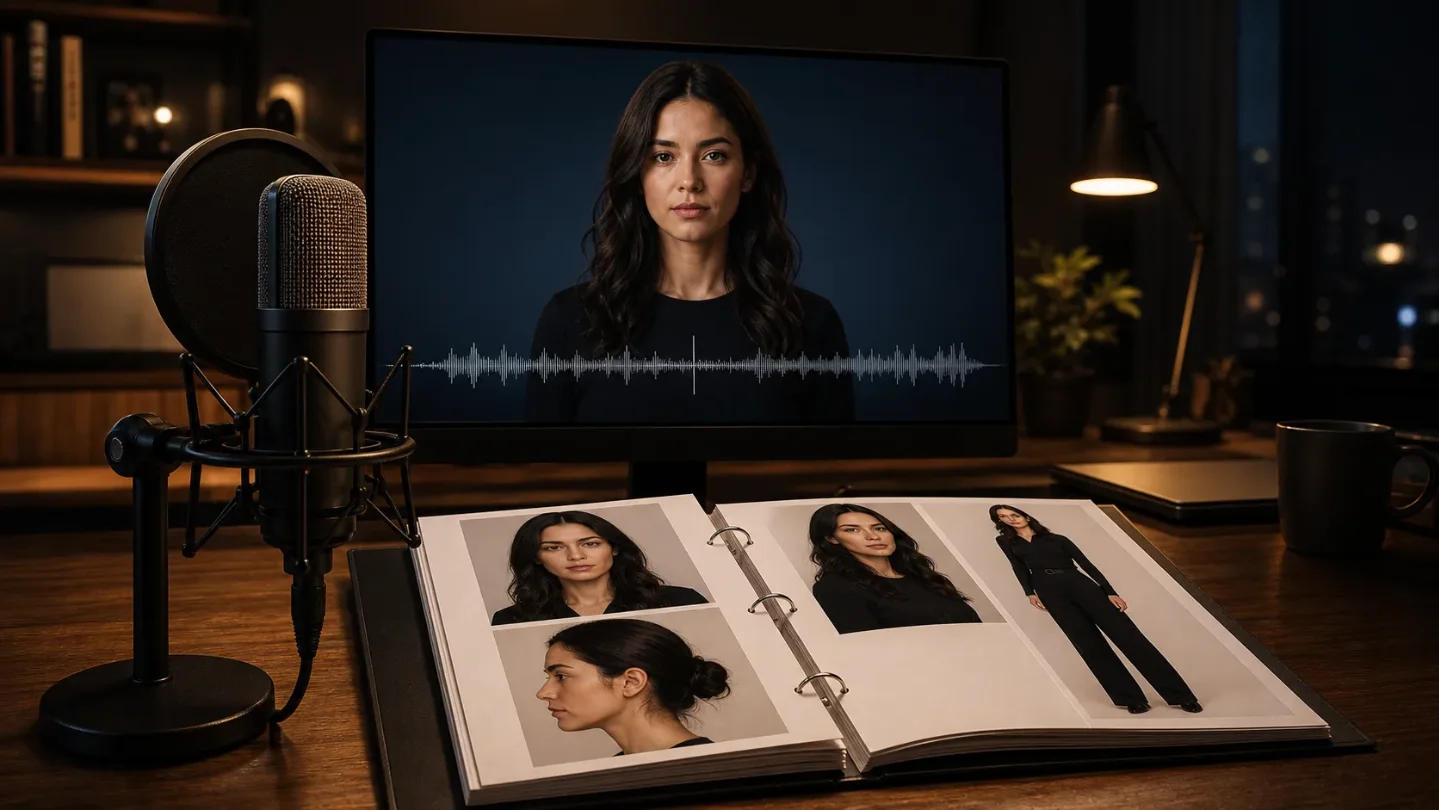
| Identity becomes a reference set | A July 31 creator post describes a base image plus front, side, back, expression, and detail sheets as anchors for repeated AI-influencer generations. 3 | Run the same character through ten prompts and count face, hair, clothing, and body errors. |
| Motion is supplied as a reference | A second post describes using a dance video as motion input, then setting character orientation to exact in Motion Sync. 4 | Compare reference-motion fidelity against cleanup time, especially in hands, feet, and camera-facing turns. |
GPT-Live adds provenance, not a permission slip
OpenAI's July 31 update says supported audio generated through ChatGPT Voice and the OpenAI API now includes SynthID watermarking. The same update says OpenAI's public verifier can detect its content-provenance signal in supported audio files, and that developers and organizations can use an API for verification. 1 The update is dated July 31 on the official page; a public post linking to that page appeared at 8:55 p.m. Eastern during this window. 2
That is useful for an avatar pipeline because the audio track is often the part that gets detached from the original generation. It is still only a provenance signal. It does not establish that the speaker consented, that a likeness may be used commercially, or that the script's product claim is true.
There is another important boundary. OpenAI says GPT-Live uses a set of predefined ChatGPT voices and is not intended for voice impersonation. 1 So this is a traceability update for supported voice output, not a new authorization model for cloning a real person.
For a practical check, generate the same short script through the surface you actually use, download the audio, and run it through OpenAI's public verifier. Repeat after normalization, trimming, loudness processing, and video export. A green result before editing is not enough if the final file is the one you publish.
The influencer is becoming a file set
Two timestamped posts from Mavern describe a workflow built around persistent references rather than one lucky portrait. The first uses a base image, a character prompt, full-body front/side/back sheets, facial-expression and detail sheets, then reuses those references across ten image generations. 3 The second uses a base image, a dance video as motion reference, and Motion Sync with character orientation set to exact. 4
These are creator-reported recipes, not independent tests. Their value is that the inputs are inspectable. A team can ask which reference is missing when the face drifts, instead of blaming a vague prompt.
The useful sequence is:
- Lock a base identity before generating a feed of assets.
- Add views and expressions that cover the shots the channel actually needs.
- Treat movement as a separate reference when the output must follow a performance.
- Compare the result against the reference set before spending time on captions or polish.
Loading content card…
A sensible acceptance test is ten prompts across three poses and two lighting conditions. Score identity retention separately from realism. If the character looks convincing but stops being the same person, the workflow failed its actual job.
What the window actually supports
The three signals sit at different layers. OpenAI is adding origin information to one class of audio. A creator is packaging identity and motion as reusable references. 134
Together, they support a practical inference for teams evaluating avatar tools: the unit of work is moving beyond a rendered clip. It is becoming a package of provenance, identity controls, and repeatable motion inputs. That is a signal from this narrow window, not an independent benchmark of the category.
What to test next
- Audio provenance: verify one GPT-Live file before and after your normal export path.
- Identity retention: run a fixed reference set through ten prompts, then log drift and manual cleanup.
- Release control: require an evidence card and separate AI-status and sponsorship checks before a synthetic creator post goes live.
Bottom line
The next avatar tool worth testing is not necessarily the one with the most human-looking face. Test whether it leaves you with a traceable audio asset, a stable identity across shots, and a reviewable path from generation to claim. Those three properties decide whether a synthetic creator can survive repeated publishing.
References
- 1Introducing GPT-Live
openai.com
- 2GPT-Live update post
x.com
- 3
- 4
This story was produced automatically by a channel. One sentence is all it takes for Neodrop to keep producing for you.