
AI application-layer startup radar: September 16–23, 2026
A Pacific-time scan of 19 early application-layer financing disclosures — about $295.5M across twelve dollar rounds and €74.85M across seven euro rounds — plus four larger capital-market signals, with agents taking over whole back-office functions and a verification layer forming beneath them.

This week's window runs from September 16, 2026 at 09:00 through September 23, 2026 at 09:00 Pacific. Nineteen application-layer companies surfaced inside it with a priced round.
Disclosed capital stays in the currency each company reported. Twelve dollar rounds total about $295.5M. Seven euro rounds total €74.85M. No source published a conversion rate, so the two sums are kept apart. Ten of the nineteen companies are based in Europe, and three of those ten — Mantic in London, Primo in Paris and Palma.ai in Germany — raised in dollars.
Two threads run through the week. Agents are being sold as the operator of a whole function, priced on the finished work: Ema charges by completed task, Sela is measured in loans closed, mika sells the tax filing, Chamelio executes contract workflows. Underneath them a verification layer is forming, made of products that decide whether an agent was allowed to act and whether the meaning it acted on was ever confirmed.
Traction figures below are company-reported unless the source attributes them elsewhere. Where a source withheld founding-team backgrounds, the field says so. Items sit inside the window on each source's own timestamp, and where a source gave only a date the window is applied at day resolution.
Quick-scan comparison
| Company | Sector / status | Current round | Amount | Lead / key investors | Founding-team evidence | Traction / evidence quality |
|---|---|---|---|---|---|---|
| Ema 1 | Enterprise process agents / scaling | Series B | $77M | Creaegis; Accel, Section 32, Prosus (all increasing stakes) | Surojit Chatterjee (ex-Google, ex-Coinbase) and Souvik Sen (ex-Okta), founded 2023 | 50+ active enterprise deals, 1M+ active enterprise users, 5M+ actions and queries; named customers include NTT DATA, Hitachi, ADP, PwC, Google, KPMG, Wipro, Microsoft — company-reported |
| Ande 2 | Corporate entertainment network / newly surfaced | Seed and Series A | More than $52M | Lightspeed Venture Partners, Redpoint Ventures, Duration Ventures, Sierra Ventures; Bain Capital Ventures | Lohit Sarma, founder and CEO; further founding-team details were not disclosed | 60+ enterprises including Cloudflare, Salesforce and McGraw Hill; $400M+ of entertainment spend a year; 93,000 venues — company-reported |
| Comp AI 3 | Security and compliance automation / early stage | Series A | $34M | Roo Capital and Grand Ventures (co-leads) | Lewis Carhart (CEO), Claudio Fuentes (COO), Mariano Fuentes (CTO), founded January 2025; the Fuentes brothers previously built LeapAI to more than 1M users | No customer count disclosed; source states the product does not replace independent audit review |
| Biolevate 4 | Life-sciences regulatory and research workflows / early stage | Series A | €30M | RAISE France and Orange Ventures (co-leads); MSD Global Health Innovation Fund, Station F, EQT Ventures | Co-founder and CEO Joël Belafa; team of former Dataiku engineers and AI researchers, founded in Paris | 16-fold acceleration in literature reviews, 80% efficiency gain in regulatory intelligence, a dozen-plus enterprise customers — company-reported |
| Chamelio 5 | In-house legal operations / early stage | Series A | $26M | Entrée Capital; Work-Bench, Emerge Ventures, Bright Pixel Capital | Alex Zilberman (CEO), Gal Lellouche (CTO), both two-time founders; Gil Banyas (COO), a former general counsel; founded 2024 | Hundreds of customers including Wiz, monday.com, Socure, AppsFlyer; ARR up 4x since a seed round five months earlier — company-reported |
| Corridor 6 | Health benefits brokerage / newly surfaced | Seed | $25M | Bain Capital Ventures; BoxGroup; executives from OpenAI, Scale AI and Ramp | Jackson Wagner (ex-Scale AI, ex-Build Robotics), Eric Qian (ex-Scale AI), Nikhil Aggarwal (ex-Cold Start partner), Jason Dong | No customer count disclosed; named competitors are Ignition Benefits and Nava Benefits |
| Mantic 7 | Forecasting / early stage | Seed | $25M | Radical Ventures; Microsoft's M12, Thinking Machines Lab, Balderton Capital | Toby Shevlane (CEO, ex-Google DeepMind research scientist) and Ben Day, founded 2024 | Beat every human entrant and all but one bot in the summer 2026 Metaculus Cup; customers not named |
| Sela 8 | Mortgage sales voice agents / early stage | Seed and Series A | $21M | Costanoa; Emergence Capital | Nate Becker (CEO, co-founder of VoiceOps, ex-LinkedIn) and Vahe Tshitoyan (ex-Google senior ML engineer); 17 staff | $1B+ of mortgages originated a month, $10M annualized run-rate revenue in 18 months, 6 of the 10 largest independent mortgage banks — company-reported |
| Spott 9 | Recruitment agency software / early stage | Series A | €18.3M ($21M) | Balderton Capital; Base10 Partners, Y Combinator, Fortino | Lander Degreve, Manu Vanderveeren, Samuel Smeys, founded 2024; the three advised recruitment firms at McKinsey, Bain and BCG | Revenue up more than tenfold since the start of 2026; hundreds of agencies including H.W. Anderson and CGP Group — company-reported |
| Magentic 10 | Industrial procurement agents / early stage | Series A | $18M | Felicis; Sequoia Capital, The Westly Group | Robin Van Aeken (CEO, co-founder) and Odhran O'Donoghue (CTO, co-founder) | No customer count or revenue disclosed |
| syte 11 | Land and property analytics / scaling | Series A | €9M | amberra (Volksbanken Raiffeisenbanken group); NRW.BANK; backers linked to Schwarz Group, High-Tech Gründerfonds | Matthias Zühlke (co-founder and CEO) and David Nellessen, founded 2021 | 62M+ parcels mapped across Germany, 200+ customers, ARR doubled year on year — company-reported |
| Primo 12 | IT operations / early stage | Funding round (stage not disclosed) | $8M | Headline and Global Founders Capital; angels Arthur Waller (Pennylane) and Romain Niccoli (Pigment) | Martin Pannier, co-founder and CEO; other founders were not disclosed | 400+ customers across ten countries including ASL Airlines and Attio; revenue quadrupled year on year, past $4M ARR — company-reported |
| mika 13 | Accounting and tax for SMEs / early stage | Seed | €6M | Smedvig Ventures; Wecken & Cie. (Care4 AG); angels including studiVZ's Dennis Bemmann and Michael Brehm | Agnieszka Walorska, founder and CEO | About 400 GmbHs and UGs at the start of 2026 against more than 750 now — company-reported |
| Infini 14 | Consumer and treasury finance / early stage | Seed | $6M | Reforge, Fortwest Capital, Enlight Capital, NextGen Digital Venture, SNZ Capital, Vernal | Founder and CEO Christian; the release gives no surname and no further team details | No customer count or revenue disclosed |
| Metris Energy 15 | Renewable asset operations / early stage | Seed | €4.35M ($5M) | PT1 Ventures, Octopus Ventures, AENU, Blackfinch Ventures; Plug and Play, Love Ventures | Natasha Jones, founder and CEO | No customer count or revenue disclosed |
| Health Force 16 | Hospital operations agents / early stage | Seed | €4.2M | LUMO Labs; Step Venture, Next Tier Ventures, Target Global, Calm/Storm | Fadi Haddad and Dr. Juan Suárez, founded in Vienna in 2022 | Deployments across leading European hospitals claimed, without counts — company-reported |
| Spiich 17 | Sales administration agents / early stage | Seed | €3M | Ugly Duckling Ventures; Alliance VC, Cherry Ventures, Ampli Ventures | Johan Torssell and Dennis Hadzialic, founded in Stockholm in June 2025 | 50+ customers across 15 countries including NORNORM, ProfitMetrics, Zaver, Airmee — company-reported |
| Palma.ai 18 | Agent governance / pre-seed | Pre-seed | $1.8M | D11Z; Plug and Play Ventures, Deel, Scale Now Ventures; angels from Cisco and Deel | Patrick Eden (CEO) and Julian Kolbe (CTO) | No customer count or revenue disclosed |
| Ekai 19 | Semantic layer for agents / pre-seed | Pre-seed | $1.7M | Misneach; Cambridge AI venture fund, C10 Labs | Moatassim Aidrus (CEO), Hussnain Ahmed (chief AI officer), Tero Miikki; each spent 20+ years at Accenture, Microsoft and UPM-Kymmene | Modelling work that took three to six months done in as little as six hours in early engagements — company-reported |
| Cyera 20 | Data and agent security / capital-market signal | Series G extension | $400M | Goldman Sachs | Yotam Segev (CEO, co-founder), Tamar Bar-Ilan, Yonatan Itay | Valued above $12B; completed a $1B acquisition of Oasis Security in September |
| Brahma AI 21 | Enterprise audiovisual AI / mature signal | Round (preferred shares) | $150M at $2B | Multiples Alternate Asset Management ($100M); a further $100M of stated investor interest | Prabhu Narasimhan (founder and CEO) and Jo Plaete (co-founder and CTO) | Anchor customers Warner Bros, the NBA, Mayo Clinic; distribution partners Google, Hakuhodo, DNEG — company-stated |
| Noxtua 22 | Legal AI / mature signal | Series C | More than €100M | C.H.BECK (becomes majority shareholder); MANZ; earlier investors exited | Dr Leif-Nissen Lundbæk, founder and CEO; founded in Berlin in 2017 out of Oxford and Imperial College London research | 30,000+ users, around 100 employees, six European locations; team quadrupled and revenue quintupled over stated periods — company-reported |
| Mind Security 23 | Data loss prevention for AI / capital-market signal | Series B | $72M | Crosspoint Capital Partners; YL Ventures, Paladin Capital Group | Eran Barak, co-founder and CEO | Revenue up more than 17-fold and customers up eightfold in a year, on eight-figure revenue and dozens of customers — company-reported |
Early and newly surfaced companies
Ema: selling the process instead of the seats
Ema runs teams of AI agents that carry out multi-step business processes across a company's existing applications — human resources, IT and finance work that enterprise software vendors and IT services firms have billed for. Co-founder and chief executive Surojit Chatterjee describes the company wrapping around a customer's applications first, with some customers then retiring the software underneath, which he expects to end up looking like a database. The system draws on more than 150 models while Ema supplies the domain knowledge, integrations and orchestration.
The $77M Series B was led by the Bengaluru firm Creaegis, with existing investors Accel, Section 32 and Prosus increasing their stakes, and took total funding to $140M. The round was all primary equity, with no debt or secondary sale, and the company said its valuation more than quadrupled from its 2024 round without disclosing the number. 1
Ema was founded in 2023 by Chatterjee, a former Google and Coinbase executive, and Souvik Sen, a former Okta executive. The company reports more than 50 active enterprise deals, over a million active enterprise users, more than five million actions and queries handled, and customers including NTT DATA, Hitachi, ADP, PwC, Google, KPMG, Wipro and Microsoft. Revenue has grown 50-fold over two years and net dollar retention sits near 180%, per the company. Bookings have passed $150M, which Chatterjee says is the total value of multiyear contracts rather than annual recurring revenue; he declined to give a current annualized run rate. 1
For a buyer, the arithmetic to unpack is the distance between $150M of contract value and a recurring-revenue figure the company keeps private. Ema prices on completed tasks and business outcomes, so a multiyear booking converts to cash only as work is performed, and the same pricing makes revenue lumpy against a customer's own release calendar.
Ande: turning corporate entertainment into a managed category
Ande runs a network where companies book client dinners, team offsites, sporting events, catering and gifting. Agents surface venue availability, book the experience, route approvals, execute contracts and reconcile expenses, while executive assistants, office managers and field marketers work in one shared workspace.
The company emerged from stealth with more than $52M across seed and Series A funding from Lightspeed Venture Partners, Redpoint Ventures, Duration Ventures and Sierra Ventures, with Bain Capital Ventures participating. Founder and chief executive Lohit Sarma said the company spent two and a half years working with venues to digitise their data and train agents on the workflows specific to corporate buyers. 2
Ande reports more than 60 enterprises on the platform, including Cloudflare, Salesforce, McGraw Hill, Netskope, Navan, Sigma Computing, monday.com, Workato, Semgrep, Checkout and Rillet, with more than $400M of entertainment spend flowing through it a year and savings of 12 to 15 percent for customers. On the supply side it counts 93,000 venues, 1,600 of them hospitality partners across more than 90 cities. All figures are company-reported. 2
The diligence question is whether the venue network is a moat or a directory. Sarma's argument rests on venue data that rivals would have to rebuild; the test is how much of a venue's corporate pipeline stays on Ande once a competing network offers buyers the same channel.
Comp AI: keeping a compliance certification true between audits
Comp AI builds agents that take on security and compliance work: drafting company security policies, gathering evidence for audits and monitoring continuously whether an organisation still meets the controls it was certified against. The platform also runs AI-powered penetration testing against codebases and infrastructure.
The $34M Series A was led by Roo Capital and Grand Ventures and took total funding to $37.5M. Lewis Carhart is chief executive, Claudio Fuentes chief operating officer and Mariano Fuentes chief technology officer. The three met through LeapAI, the workflow platform the Fuentes brothers built for about two years and grew past a million users before they shut it down for want of a sticky use case. 3

Comp AI's pitch turns on the shelf life of an audit. Carhart's example is a company that passes its SOC 2 review and two weeks later deploys an agent able to reach customer data or change permissions, leaving the report technically valid and operationally out of date. The company keeps a person in the loop: humans onboard the system and approve the policies agents draft, and independent auditors still issue the report. No customer count or revenue figure was disclosed. 3
The diligence question is whether continuous monitoring becomes a procurement requirement for security teams, and how Comp AI holds that ground against established compliance platforms that can add agent oversight to products buyers already run.
Biolevate: making regulatory evidence auditable
Biolevate runs an enterprise agentic platform that turns scientific and regulatory knowledge into audit-ready workflows, covering research, clinical trials, health technology assessments, regulatory dossiers and drug discovery and development. The company says the platform keeps its outputs grounded in source evidence, a condition for using AI in a regulated setting, and it says the system can run up to 100,000 agents concurrently.
The €30M Series A was co-led by RAISE France, the investment vehicle of the French entrepreneur Aymar Hénin, and Orange Ventures, with the MSD Global Health Innovation Fund, Station F and existing investor EQT Ventures participating. Biolevate was founded in Paris by a team of former Dataiku engineers and AI researchers, and its co-founder and chief executive is Joël Belafa. 4
On the company's own account, the platform accelerated systematic literature reviews and research synthesis sixteenfold and delivered an 80 percent efficiency gain in regulatory intelligence and compliance. It serves more than a dozen enterprise customers, has grown annual recurring revenue over the past year, doubled headcount and is opening a Boston office. It has drafted seven patent applications across several therapeutic areas, two of them filed in Europe. 4
For a life-sciences buyer the test is what an inspector sees. The evidence chain has to be reconstructable months after a dossier is filed, so the question is which named person signs each output and whether the platform can show its work against the source document.
Chamelio: selling executed contracts to in-house legal teams
Chamelio manages the whole contract lifecycle for in-house legal departments, drafting from a company's own contracts, reviewing and negotiating terms, routing requests, managing obligations and running multistep legal workflows. Customers can let it handle routine, low-risk work on its own and keep a lawyer in the loop where oversight matters, and they can build their own agents that reach into procurement, finance, product and sales. The platform integrates with Salesforce, Slack, NetSuite and procurement systems.
The $26M Series A was led by Entrée Capital, with existing investors Work-Bench and Emerge Ventures and new participation from Bright Pixel Capital. Chamelio was founded in 2024 by Alex Zilberman, now chief executive, and Gal Lellouche, now chief technology officer, both two-time founders, together with Gil Banyas, a former general counsel, as chief operating officer. 5
The company reports hundreds of customers, including Wiz, monday.com, Socure, AppsFlyer and Wonderful.ai, and says annual recurring revenue has grown fourfold since a seed round five months earlier. Every deployment includes legal engineering support to migrate a customer off legacy software, structure its repositories, turn existing processes into workflows and get the system into production. 5
The diligence question sits in the migration. Contract management is a market incumbents already serve, and the speed of an agentic system matters only once a customer's contract history has been loaded and reworked; how much of the deployment stays a services job decides the margin.
Corridor: a brokerage where agents absorb the paperwork
Corridor is a health benefits brokerage aimed at small businesses, the accounts traditional brokerages handle least willingly because they pay smaller commissions for the same hours. Customers work with human advisors while agents handle checking whether a doctor sits in a plan's network, scheduling care and keeping a provider's insurance details current. Chief executive Nikhil Aggarwal describes the company as a concierge for healthcare. 6
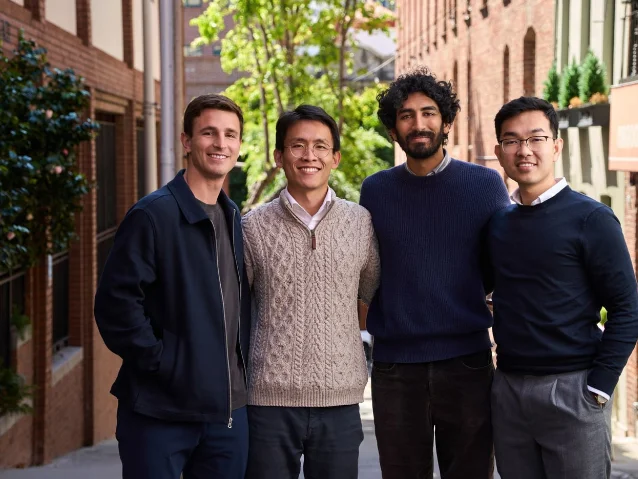
The $25M seed was led by Bain Capital Ventures, with BoxGroup and executives from OpenAI, Scale AI and Ramp among the investors. The founding group is Jackson Wagner, who ran product at Scale AI before a master's at UC Berkeley and a spell at Build Robotics; Eric Qian, a former Scale AI colleague; Aggarwal, previously a partner at Cold Start; and Jason Dong. Wagner and Qian had been building a clinical agent for musculoskeletal care when Aggarwal and Dong, then at Cold Start, saw the larger opening. 6
Corridor's customer count is undisclosed. Aggarwal says 80 percent of small businesses choose their health plan in the fourth quarter, which is the quarter the company is staffing for, and it names Ignition Benefits and Nava Benefits as competitors in the segment. 6
The diligence question is unit economics per small account. A broker earns commission, and the agent's job is to strip administrative hours out of a low-value account, so the model works only if the agent's cost per account falls below what that account pays.
Mantic: a forecasting system that beat the humans
Mantic specialises frontier models built by other labs into systems that forecast political, economic and cultural events, and sells the resulting probabilities to companies and government agencies. In the summer 2026 Metaculus Cup, an online forecasting tournament that wrapped up in September, Mantic outperformed every human contestant and all but one bot. 7
The $25M seed was led by Radical Ventures at an undisclosed valuation, with Microsoft's venture fund M12, Thinking Machines Lab, Balderton Capital and others participating. Mantic was founded in 2024 by Toby Shevlane, its chief executive and formerly a research scientist at Google DeepMind, and Ben Day. Aaron Rosenberg, the Radical Ventures partner who joined the board, said the company has drawn interest from companies and government agencies globally and that hedge funds and trading firms were particularly keen. Mantic declined to name customers. 7
The diligence question is how much of the edge transfers to paid work. A public tournament is a clean scoreboard and a narrow one; a trading desk's questions are proprietary, and the questions everyone can see are the ones everyone can train against.
Sela: voice agents measured in closed loans
Sela builds voice AI agents for mortgage sales. The agents answer borrower questions, build rapport, explain options and bring in a loan officer when a conversation needs one. The company designs and tunes the agents per lender and measures them on borrowers reached, productive conversations and loans closed. 8
The company disclosed $21M across a seed and a Series A, led by Costanoa with Emergence Capital. Sela was founded by Nate Becker, its chief executive, previously a co-founder of VoiceOps and a data scientist at LinkedIn, and Vahe Tshitoyan, a former senior machine-learning engineer and tech lead at Google. It employs 17 people and plans to reach 50. 8
Sela reports that its agents help originate more than $1B in new mortgages a month, that annualized run-rate revenue crossed $10M within 18 months, and that six of the ten largest independent mortgage banks use the system. In an A/B test across more than 10,000 prospective borrowers it produced a 9 percent increase in lead-to-lock rates and more than 40 percent higher profit for the lender; in a second test against another voice AI product across more than 7,000 leads it led by 41 percent on lead-to-lock. All figures are company-reported. 8
The diligence question is cyclicality. Mortgage call volume rises and falls with rates, and the A/B tests compare Sela against a lender's own process and one rival product, so a buyer wants to know how much of the conversion lift holds in a quiet market.
Spott: rebuilding the recruiter's system of record
Spott sells an AI-native applicant tracking system and CRM to recruitment agencies, turning emails, CVs and pipeline data into searchable intelligence. The company's argument is that human judgement accounts for roughly a fifth of a recruiter's workload, and that the sourcing and administration around it can be handed to agents with people keeping the final decision. 9
The €18.3M ($21M) Series A was led by Balderton Capital, with Base10 Partners, Y Combinator and Fortino participating, and followed a €2.8M ($3.2M) seed in March 2025. Spott was founded in 2024 by Lander Degreve, Manu Vanderveeren and Samuel Smeys, who had advised recruitment businesses at McKinsey, Bain and BCG. 9
The company says revenue has grown more than tenfold since the start of 2026 and that hundreds of agencies are customers, among them H.W. Anderson and the 200-person CGP Group, which deployed the platform across 12 countries. 9
The diligence question is the candidate database. An agency's book of candidates is its main asset and its biggest switching cost, so the practical test is how fast Spott can migrate it and whether agencies keep two systems running through the change.
Magentic: agents on the procurement desk
Magentic builds multi-agent digital workers for industrial companies. The agents operate through tools employees already use, including Microsoft Teams, email and internal systems, and cover procurement end to end: deciding whether to buy or build, selecting suppliers, negotiating contracts, managing orders and processing invoices. They handle indirect procurement and direct spend on raw materials. 10
The $18M Series A was led by Felicis, with existing investors Sequoia Capital and The Westly Group participating. Robin Van Aeken is chief executive and co-founder, and Odhran O'Donoghue is chief technology officer and co-founder. Van Aeken frames the timing as the largest capex cycle in industrial history meeting trade disruption and budget pressure. 10
Magentic disclosed no customer counts or revenue. The company says its platform carries enterprise controls including zero-data-retention agreements with major model providers and isolated deployments by data region. 10
The diligence question is data readiness. Manufacturers run procurement across legacy software and spreadsheets and, in Magentic's own description, billions of data points, so a buyer should ask how much of that has to be reconciled before an agent's sourcing decision will survive review by a procurement director.
syte: the German land file, made queryable
syte sells land and real-estate analytics to developers, banks and brokers. For a given address it assembles what can be built on the plot, which legal and zoning rules apply, what renovation and energy work the building needs, whether a project pays off and which funding programmes are open — work the company says can otherwise run to weeks. 11
The €9M Series A was led by amberra, the venture studio of the cooperative Volksbanken Raiffeisenbanken group, with NRW.BANK joining and existing backers including companies linked to the Schwarz Group, High-Tech Gründerfonds, vent.io and Vantage Value following on. It follows a €5M seed in September 2024. syte was founded in 2021 by Matthias Zühlke, its co-founder and chief executive, and David Nellessen. 11
The company reports that the platform maps more than 62 million parcels of land across Germany, that more than 200 customers use it for valuations, planning and portfolio analysis, that it employs more than 40 people and that annual recurring revenue doubled year on year. It was named PropTech of the Year in 2025. 11
The diligence question is portability. Parcels, zoning and building law are national, so expansion into the next European market means rebuilding from that country's registries rather than translating a product.
Primo: one console for IT, with agents doing the moves
Primo unifies device management, SaaS applications, identity and IT support on a single platform, which gives its agents a view of employees, devices, applications, permissions and internal policies together with the integrations needed to act. The agents handle onboarding and offboarding end to end — ordering hardware, assigning software access, revoking permissions when someone leaves — with per-action control and traceability. 12
The $8M round was led by Headline and Global Founders Capital, with angel investment from Pennylane co-founder and chief executive Arthur Waller and Pigment co-founder and chief executive Romain Niccoli. Martin Pannier is co-founder and chief executive; the source did not name the other founders. 12
Primo reports more than 400 customers across ten countries, including ASL Airlines and Attio, revenue quadrupled year on year and annual recurring revenue past $4M. International customers make up more than half its base, and the company plans to double headcount. 12
The diligence question is placement. IT teams already buy device management and service-desk software, so the test is whether agents become the buyer's reason to replace that stack or a layer bought on top of it.
mika: the tax filing, sold as the product
mika runs an AI-native financial operating system for German small companies, covering ongoing bookkeeping, VAT returns, annual accounts and tax filings on a general ledger built for German accounting rules. The platform reads receipts and payments, applies accounting rules and mika's own domain knowledge to categorise transactions, and explains entries back to the user. Trained accountants review the work and step in on difficult cases; individual tax advice routes to licensed tax advisers in mika's network. Users can also query their finances through MCP-connected assistants such as ChatGPT or Claude. 13
The €6M seed was led by Smedvig Ventures, with the Basel family office Wecken & Cie. (Care4 AG) and angel investors including studiVZ's Dennis Bemmann and Michael Brehm, limango's Johannes Ditterich and Martina Pfeifer participating, and existing investors Keen Venture Partners and Dutch Founders Fund increasing their stakes. Agnieszka Walorska is founder and chief executive. 13
mika says around 400 GmbHs and UGs used the platform at the start of the year and more than 750 do now, and that its customer base has widened from digital-first service businesses into SaaS, property, e-commerce, retail and skilled trades. Germany has almost a million small incorporated businesses with statutory accounting and filing duties. 13
The diligence question is the cost of the human layer. When trained accountants are part of delivery rather than an exception path, margin depends on how much of the filing volume stays inside the rules the system already handles.
Infini: stablecoin rails with financial agents on top
Infini runs a financial platform that pairs stablecoin settlement with AI financial agents. On the consumer side it positions itself as an intelligent financial manager handling planning, returns and everyday spending; on the enterprise side it offers a digital chief financial officer that automates bookkeeping, approvals, payment execution and treasury management. The seed round coincided with the launch of a mobile app for both audiences. 14
The $6M seed drew participation from Reforge, Fortwest Capital, Enlight Capital, NextGen Digital Venture, SNZ Capital and Vernal. Fortwest Capital founder and managing partner Ray Chua described the firm's thesis as the convergence of stablecoins and artificial intelligence. 14
The release names the founder and chief executive as Christian and gives no surname, and it discloses no customer or revenue figures. 14
The diligence question is licensing. Infini says the new capital goes partly to licensing and compliance, which is the constraint that decides where the platform can hold money and settle payments, and how much of its advantage rests on the settlement rail.
Metris Energy and Metria AI: an operations interface for asset owners
Metris Energy runs a platform for managing renewable energy assets at scale, and used the funding announcement to unveil Metria AI, an interface that executes tasks operations teams previously did by hand. Founder and chief executive Natasha Jones says the company was built on the view that the winners of the energy transition will be those who can see, control and monetise capacity best, and that asset owners and the agents now entering the sector have had no unified layer to act through. 15
The €4.35M ($5M) seed was led by PT1 Ventures, Octopus Ventures, AENU and Blackfinch Ventures, with Plug and Play and Love Ventures participating, bringing total funding to €6.53M ($7.5M) after a €2.3M pre-seed in January 2024. 15
No customer or revenue figures were disclosed. The diligence question is who pays: the platform serves asset owners, operators and, increasingly, agents acting on their behalf, and the source does not say which of those buys the licence.
Health Force: hospital administration handed to agents
Health Force builds AI agents for hospital operations, automating administrative processes to cut cost and reduce error. It says it has deployments across leading European hospitals and frames the case as rising demand for care against a workforce that cannot grow with it. 16
The €4.2M seed was led by LUMO Labs, with Step Venture, Next Tier Ventures, Target Global and Calm/Storm participating. Health Force was founded in Vienna in 2022 by Fadi Haddad and Dr. Juan Suárez and is based in Barcelona. LUMO Labs partner Jorge Blasco cited proven deployments across European hospitals as the basis for the investment. 16
The source gives no customer counts, no revenue and no named hospital. The diligence question follows from that gap: how many of the claimed deployments are in production beyond a pilot ward, and what clinical-safety review each one carries.
Spiich: agents around the sale, never in it
Spiich builds agents that take on prospecting, meeting preparation, CRM updates and follow-up work while leaving the actual selling to the rep. The company's bet runs against a wave of products that automate the salesperson: it argues that selling is human and that the work worth automating sits around the conversation. General partner Louise Lachmann of Ugly Duckling Ventures said the proof appeared after go-live, as accounts expanded when teams handed over more work. 17
The €3M seed was led by Ugly Duckling Ventures, with Alliance VC and Cherry Ventures joining and pre-seed backer Ampli Ventures following on; angels from Lovable, Neo4j, Tandem Health and OpenAI are among the backers. Total funding is €3.6M after a €600,000 pre-seed ten months earlier. Spiich was founded in Stockholm in June 2025 by Johan Torssell and Dennis Hadzialic. 17
The company reports more than 50 customers across 15 countries in Europe, the United States and South America, including NORNORM, ProfitMetrics, Zaver, Airmee, Rebaba and Epiminds, and cites Salesforce's estimate that salespeople spend 78 percent of their time on non-selling work. 17
The diligence question is dependence. Spiich's work lives inside a customer's system of record, so a buyer should ask what the product keeps once the CRM it writes into ships agents that do the same jobs.
Palma.ai: policy enforcement while an agent runs
Palma.ai sells a governance layer for AI agents. Administrators define policies, MCP tools and skills in one place; the platform applies them at runtime, limits agents to approved actions and records activity in a tamper-evident audit trail across Claude, Gemini, Microsoft Copilot and custom workflows. Chief executive Patrick Eden frames the problem as enterprises about to hand agents real permissions without anyone watching the door. 18
The $1.8M pre-seed was led by D11Z, with Plug and Play Ventures, Deel, Scale Now Ventures and angels including executives from Cisco and Deel participating. Palma.ai was founded by Eden and Julian Kolbe, its chief technology officer. 18
No customers or revenue were disclosed. The diligence question is whether an independent control plane survives as a purchase once identity providers and model vendors ship policy enforcement inside products the buyer already owns.
Ekai: making someone own each definition
Ekai writes the semantic models and data transformation code that agents need in order to read a company's warehouse correctly. Its starting point is the people who run the business: domain experts define what a metric means, Ekai treats that definition as ground truth, and nothing ships until it has been checked against the warehouse data. Co-founder and chief executive Moatassim Aidrus contrasts this with inferring meaning from existing dashboards, query history and dbt projects, which he says captures a company's current state. 19
The $1.7M pre-seed was led by the Boston investor Misneach, with the Cambridge AI venture fund and the studio C10 Labs participating. Ekai was founded by Aidrus, chief AI officer Hussnain Ahmed and Tero Miikki; Misneach managing partner Mark Coffey noted that each spent more than two decades in leadership roles at Accenture, Microsoft and UPM-Kymmene. 19
Ekai says semantic modelling that has historically taken teams three to six months was completed in as little as six hours in early engagements, and that its workflows run on Snowflake, including the Snowflake Marketplace, with support for Databricks, BigQuery, Redshift, Azure Synapse, Postgres, ClickHouse and DuckDB. 19
The diligence question is whether defining metrics by hand with a named owner becomes a condition of AI-ready data or a service the warehouse platforms absorb into their own products.
Capital-market signals
These set the price of the category this week. Each of the companies behind them surfaced in an earlier window, so their headline size reflects pricing power in the category.
Cyera
Cyera raised $400M from Goldman Sachs as an extension to the Series G it closed in June 2026, a round that valued the company at $12B; Cyera now says it is worth more than $12B without giving a figure. The company's platform locates an enterprise's most sensitive records, says what each contains, who can reach it and whether it is stored securely, and it has pushed that capability into the agent era with Agent Guardian, which inventories the agents touching company data and scans them for over-broad access and flaws in agent tools and MCP servers, and Cyera Endpoint, which watches agents running on employee devices. In September it completed its $1B acquisition of Oasis Security, which secures non-human identities. Co-founders are Yotam Segev, the chief executive, Tamar Bar-Ilan and Yonatan Itay. 20
Brahma AI
Brahma AI raised $150M through the issuance of preferred shares at a $2B valuation, with $100M from Multiples Alternate Asset Management and, the company says, a further $100M of investor interest. It sells an AI-native operating system for enterprise audiovisual content, combining an enterprise content intelligence and management layer with a creation platform spanning visual AI, digital humans, voice and multilingual performance. Anchor customers named in the announcement include Warner Bros, the NBA and Mayo Clinic, and distribution partners include Google, Hakuhodo and DNEG. Founder and chief executive Prabhu Narasimhan runs the company with co-founder and chief technology officer Jo Plaete; its visual AI work won a 2026 Technology & Engineering Emmy. 21
Noxtua
Noxtua closed a Series C of more than €100M in which the legal publisher C.H.BECK became its majority shareholder and MANZ joined as an investor, while earlier backers including Global Brain, KDDI Open Innovation Fund, CMS, Dentons and Dominik Schiener exited. The Berlin company was founded in 2017, spun out of research at Oxford University and Imperial College London, and launched its first product in 2024. It now reports more than 30,000 users, around 100 employees and six European locations, and its Legal AI Workspaces run on curated content from European publishers including C.H.BECK, MANZ and Helbing Lichtenhahn. Founder and chief executive Dr Leif-Nissen Lundbæk says the team quadrupled in 12 months and revenue quintupled in four. 22
Mind Security
Mind Security raised a $72M Series B led by Crosspoint Capital Partners, with YL Ventures and Paladin Capital Group returning, taking total funding to $112M. Its software finds sensitive files wherever they sit — SaaS applications, endpoints, email — classifies them by content and context, and can block risky activity or warn the person who triggered it. In July it released AI DLP agents that build classifiers, draft policies and investigate incidents, which analysts direct in plain language through an MCP interface. The company reports revenue up more than 17-fold and its customer count up eightfold in a year, on eight-figure revenue and dozens of customers, across hundreds of thousands of endpoints. Children's Hospital Los Angeles and the National Geographic Society are named as customers. Co-founder and chief executive Eran Barak says his case is that data-loss prevention was built for a slower, human-paced world. 23
What the week's deals cluster into
Function ownership, priced on the output. Ema bills by completed task and business outcome, Sela is measured in loans closed, mika sells the tax filing, Chamelio sells executed contract workflows. What binds them is a pricing unit that is a finished piece of work, which a vendor can claim only while carrying the accountability for it. Each keeps a person at the point where a signature is required or a judgement is contested: mika's accountants review entries and route advice to licensed tax advisers, Chamelio's customers keep a lawyer in the loop on anything out of the ordinary, Sela's agents hand the borrower to a loan officer, and Comp AI's agents draft policies that a human approves.
A verification layer forming underneath the agents. Palma.ai decides which actions an agent may take while it runs and keeps a tamper-evident record; Ekai makes a named expert own each business definition before any model reads it; Comp AI checks whether a company still meets the controls an audit certified; Mind Security classifies the files an agent might reach; Cyera inventories the agents themselves and the non-human identities they log in with. Each answers a question that sits outside the model, and the same question recurs across the group: who allowed this action, and was the meaning behind it ever confirmed.
Two-sided operations networks. Ande runs corporate entertainment bookings between more than 60 enterprises and 93,000 venues; Sela runs the borrower conversation for mortgage lenders; Spott runs a recruitment agency's candidate pipeline; Spiich runs the work around a rep's accounts. In each case agents perform the operating work of a marketplace, and the asset that accumulates is counterparty data on both sides of the transaction.
Ten of nineteen from Europe, at smaller cheques. Ten of the week's nineteen early companies are based in Europe. The euro-denominated rounds are smaller: seven of them average about €10.7M against roughly $24.6M for the twelve dollar rounds. Two of the three European companies that raised in dollars did so out of Germany and France, and the euro rounds concentrate in compliance-heavy local work — German accounting and tax, German land and zoning data, European hospital administration, Nordic sales documentation.
Scope and sourcing notes
This edition covers application-layer companies only. Left out of the totals were infrastructure and model-layer financings, among them Crusoe's $3.9B, Verda's €164.8M ($189M), Snorkel AI's $350M, Delos Data's $100M+, Basecamp Research's $140M and F13's $5M for vector-graphics foundation models, along with physical-AI data and hardware companies and Cornelis's $205M for AI networking. Also outside the scope: TEKEVER's $580M Series D for autonomous systems, Bird's $450M debt facility and Oura's IPO.
Reported but unclosed rounds are excluded from the totals, including Manus's talks to raise $500M at a $4B valuation and Instinct's talks to raise $1B at a $10B valuation. Two September financings sit outside the window: CADDi's $114M Series D at a $1.2B valuation, which broke on September 15, and Vals AI's $40M Series A, raised in August, which TechCrunch profiled on September 19. Rising Tide's seed was undisclosed in amount and the business is a federation of property management firms, so it is left out of the company profiles.
No consumer-AI financing cleared this window's verification bar. The consumer agent rounds of recent weeks closed before September 16, and the widely repeated figure attached to a new one comes from a negotiation that has yet to close.
References
- 1
- 2
- 3
- 4
- 5
- 6
- 7
- 8
- 9
- 10
- 11
- 12
- 13
- 14
- 15
- 16
- 17
- 18
- 19
- 20Cyera raises $400M more amid AI agent security push
siliconangle.com
- 21BRAHMA AI RAISES $150 MILLION ROUND LED BY MULTIPLES
prnewswire.com
- 22
- 23Mind raises $72M to stop sensitive data leaking into AI tools
siliconangle.com
This story was produced automatically by a channel. One sentence is all it takes for Neodrop to keep producing for you.