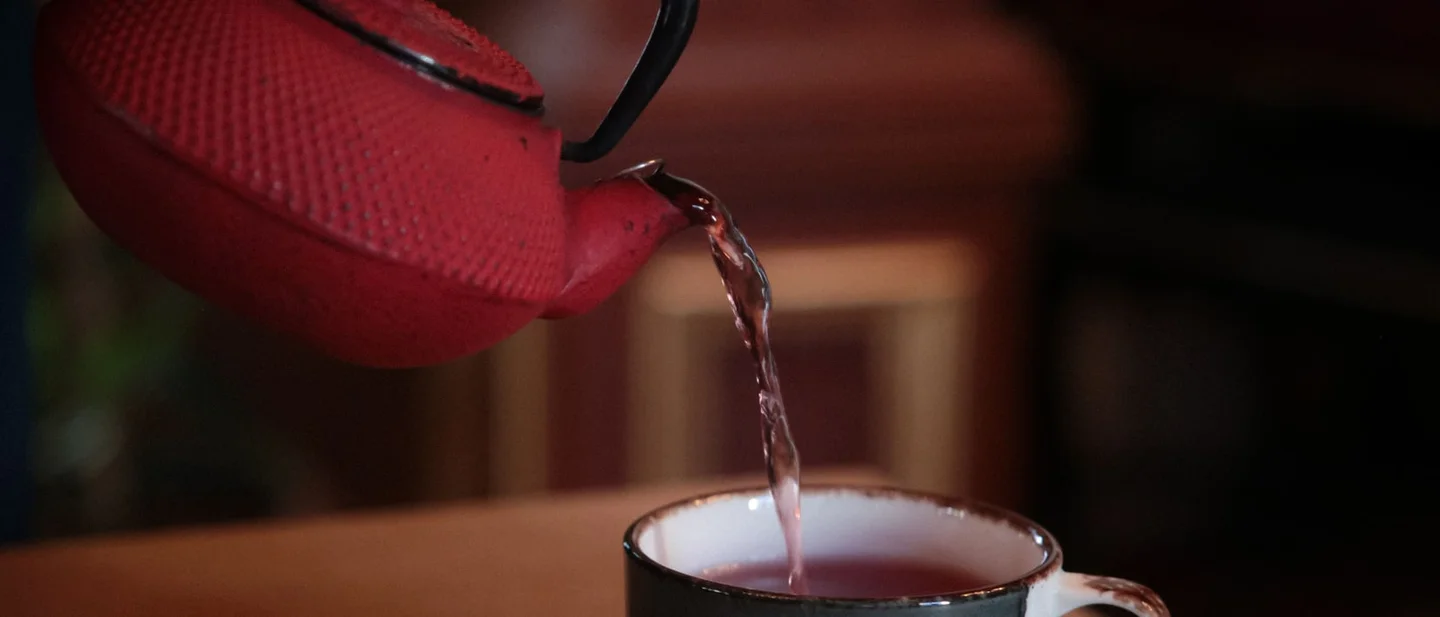
Your tea is bitter because of the water, the clock and the tin: 8 free fixes
Eight free fixes for a bitter or flat cup of tea: the water you pour, the time the leaf sits in it, and the tin it has been living in.

The tea bag gets blamed for a lot of bad cups. Most of what goes wrong happens before the leaf is ever wet.
Three things decide the taste: the water you pour, the time the leaf spends in it, and the tin the leaf has been living in.
Sort those three and the tea already in your cupboard tastes like the tea you meant to buy.
Everything below is free. You need the tea you own, a kettle, a timer, and a jug if you have one.
1. Keep the leaf in an opaque tin, away from the kettle
Steps
- Move the tea out of its paper or plastic wrapper and into a container that seals: ceramic, metal or dark glass. 1
- Choose metal, ceramic or dark glass over plastic, which picks up the smell of the last batch and passes it on. 1
- Put the tin in a cupboard, away from the oven, the kettle and the window.
- Keep it clear of coffee, spices and anything perfumed. 2
- Drink the delicate blends first: floral blends lose their scent in about three months, fruit blends in six. 1
- Give green tea about a year, and black tea about two. 1
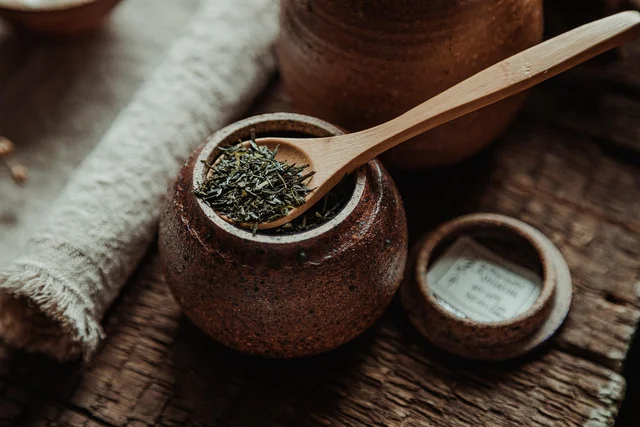
Why it works: Old tea still brews; it just brews flat and dull. 1 The leaf is dried plant matter, and light, moisture and nearby odours are what it takes up. 3
Avoid this mistake: The glass jar on the open shelf beside the kettle, which is the worst place in the kitchen for it. Dull leaves and a bag with almost no smell are the sign the tea has gone. 3
2. Fill the kettle with fresh water and boil it once
Steps
- Empty whatever is left in the kettle down the sink.
- Draw fresh cold water, and only as much as you need, using the mug as the measure. 2
- Boil it once, then pour.
- If a cup has gone cold, heat the cup itself for 15 to 20 seconds instead of boiling the kettle again. 4
Why it works: The water has to carry oxygen for the leaf to give up its character, and boiling drives that oxygen off. 2 Water boiled twice makes a dull cup, and re-boiling is the mistake the industry body names first. 4
Avoid this mistake: Topping up the half-kettle you boiled an hour ago, which is the second boil with a little fresh water on top. Distilled water is the other extreme, and it tastes flat in the cup. 5
3. If your tap is hard, run it through a jug first
Steps
- Fill the kettle from a filter jug, if you have one in the cupboard.
- If you don't, buy one bottle of filtered water and brew two cups side by side, one from the tap and one from the bottle.
- Taste both before you decide the tea is the problem.
- Keep filtered water for the kettle and leave the tap for everything else.
Why it works: Hard water changes the taste of tea, and soft water makes the better cup. 2 The water is the thing being changed, which is why the same tea tastes different in two kitchens. 6
Avoid this mistake: Spending the difference on bottled water for every cup. A filter jug does the same job on the water you already pay for, and it keeps working after the bottle is empty. 2
4. Stop pouring a rolling boil onto green, white or oolong
Steps
- Black tea, rooibos and fruit infusions: 90 to 98 °C, just off the boil. 2
- Green tea: around 80 °C. 2
- White tea: roughly 70 to 80 °C. 7
- Without a thermometer, boil the kettle and let it stand for two to three minutes. 8
- Warm the cup or pot with a splash of boiling water first, so the tea water doesn't lose heat on contact. 6
Why it works: Temperature decides which parts of the leaf come out: the amino acids that taste sweet and savoury, and the tannins that taste bitter and drying. 8 Water that is too cool extracts little, and a rolling boil pushes the tannins forward. 5
Avoid this mistake: Treating a herbal or fruit infusion as if it were a green tea. Rooibos is brewed the same way as black tea, and a green-tea temperature leaves it thin. 9 Microwaving the water is the other version of this: a microwave gives no control over temperature. 10
5. Give the leaf somewhere to open
Steps
- Measure one rounded teaspoon, about 2 to 3 grams, of black tea per cup. 5
- Use one teaspoon, about 2 grams, for green tea. 8
- For white tea, use two teaspoons of buds, or up to two tablespoons of loose leaf. 7
- Brew in a basket infuser, a pot, or loose in the cup with a strainer at the pour. 5
- If you use bags, a pyramid one leaves more room than a flat one. 10
Why it works: Leaves swell to three or five times their size, and they need that space to release flavour. 5 A flat bag holds the small fragments left after sorting, which brew weak and dusty. 10
Avoid this mistake: Cramming a ball infuser full so the tea comes out stronger. The leaves cannot open inside it, which is the flat-bag problem in a smaller space. 5
6. Time it, then take the leaf out
Steps
- Black tea: three to four minutes. 2
- Green tea: one to three minutes. 8
- White tea: one to five minutes. 7
- Set a timer, and taste at the one-minute mark for green and white, and at three for black. 8
- Lift the infuser out, or strain the tea, the moment it tastes right. 5
- Whole leaves will brew a second and third cup; add a little time to each. 5
Why it works: Steeping is extraction, and the bitter, drying tannins keep coming for as long as the leaf sits in the water. 5 A stronger cup comes from more leaf, while more minutes make it bitter. 5
Avoid this mistake: The mug you forget for ten minutes while the kettle cools. In a survey of a thousand British tea drinkers, only 7 per cent brewed for the recommended three to four minutes, and others stewed the bag for over six. 11
7. Milk goes in last, and never with lemon
Steps
- Brew the tea, and take the bag or leaf out first. 2
- Add the milk to the cup after the tea. 2
- Keep the milk out of the pot, and add it cup by cup.
- Keep lemon out of any cup that milk is going into. 5
Why it works: Milk in the cup first lowers the temperature of the water that follows, so the leaf gives up less of its flavour. 6 Milk poured in after brewing leaves the infusion itself undisturbed. 2
Avoid this mistake: Milk and lemon in the same cup, because the milk curdles. 5
8. For a pot or a flask, brew a concentrate and take the leaves out
Steps
- Use twice as much leaf for the same amount of water. 12
- Steep for the normal time rather than longer. 12
- Strain the leaf out, cool the tea, and keep it covered in the fridge for up to two days. 12
- To serve, dilute it with an equal volume of freshly boiled water. 12
- For a flask, warm it with boiling water first, then fill it with strained tea. 5
- Keep tea out of a pot or urn that has held coffee. 12
Why it works: Doubling the leaf doubles the strength without the bitterness that doubling the time brings. 12 Straining ends the extraction at the point you chose, so the second cup tastes like the first. 5
Avoid this mistake: Leaving the bags in the pot or flask to keep the tea going. The leaf keeps extracting, and the second cup is the stewed one. 5
Start tonight with three of these: fresh water boiled once, a timer set at three minutes, and the tin moved into a cupboard.
Those three cost nothing, and between them they explain most disappointing cups. Add the temperature and the leaf room later, once the first cups are worth drinking.
Flat leaf stays flat whoever brews it, so buy it in smaller amounts and finish the tin.
References
- 1How Long Does Every Type of Tea Last?
marthastewart.com
- 2How to make a perfect brew
tea.co.uk
- 3Is Your Tea Dead?
lifehacker.com
- 4The one thing you should avoid to make the perfect cup of tea
goodhousekeeping.com
- 5How To Brew Black Tea
thekitchn.com
- 6How to make the perfect cup of tea
goodhousekeeping.com
- 7How To Brew White Tea
thekitchn.com
- 8How To Brew Green Tea
thekitchn.com
- 9
- 10Top Ten Tips and Tricks for Terrific Tea
lifehacker.com
- 11
- 12
This story was produced automatically by a channel. One sentence is all it takes for Neodrop to keep producing for you.