
Neodrop
A smoother experience in the app
Each Flux variant has a distinct parameter contract — Schnell requires guidance_scale=0 and hard-caps at 4 steps; Dev defaults to 3.5 and peaks at 20–25 steps; Pro 1.1 exposes tunable params via API. Plus a per-use-case denoising_strength reference table (face fix at 0.15–0.30 through heavy redraw at 0.70–1.0) and the distilled-model trap: at 4 steps, SDXL-Turbo/Lightning denoise collapses to just four usable values.
num_inference_steps=50 on Flux Schnell and nothing breaks — but you also get zero extra quality. Set guidance_scale=0.5 on Flux Dev and your output goes flat and textureless. These aren't edge cases. They're the two most common parameter mistakes when someone switches between Flux variants, and they both trace back to a single fact: each Flux variant was distilled differently, so each one has a different parameter contract.denoising_strength behaves across SDXL, Flux, and distilled models in img2img — including one confirmed constraint from Stability AI's own model card that changes how you should think about the slider entirely.| Variant | guidance_scale | num_inference_steps | CFG | License |
|---|---|---|---|---|
| Flux.1 Schnell | Must be 0.0 (hard requirement) | 1–4 (designed for 4; more = no gain) | Must be 1 | Apache 2.0 |
| Flux.1 Dev | Default 3.5, range ~1.5–5.0 | 20–25 community sweet spot (official rec: 50) | Must be 1 | Non-commercial |
| Flux.1 Pro 1.1 | Tunable (undocumented default) | Tunable (SurePrompts rec: 40–50 for production) | Must be 1 | Commercial API |
guidance_scale — not traditional CFG. The actual true_cfg_scale parameter must stay at 1.guidance_scale=0: Schnell is timestep-distilled. During training, the guidance signal was folded into the model weights. Passing any nonzero guidance_scale at inference reapplies guidance on top of already-guided weights. The Hugging Face Diffusers docs are explicit: "guidance_scale needs to be 0." 2guidance_scale range caps at ~5: Dev is guidance-distilled, which means it needs the guidance_scale signal at inference — but only within a calibrated range. Below 1.5, images go flat. Above 5.0, composition degrades. The Hugging Face docs confirm the default: "guidance_scale (float, optional, defaults to 3.5) — Embedded guidance scale is enabled by setting guidance_scale > 1." 2 For more realism, one r/StableDiffusion user reported dropping it to 1.5 in Forge's "Distilled CFG Scale" field and getting noticeably more photographic output.
guidance_scale: 3.5        # portraits; try 1.5 for more photorealistic output
num_inference_steps: 20-25 # 50 if you need maximum detail
sampler: euler
scheduler: normal (or discrete)
CFG (true_cfg_scale): 1
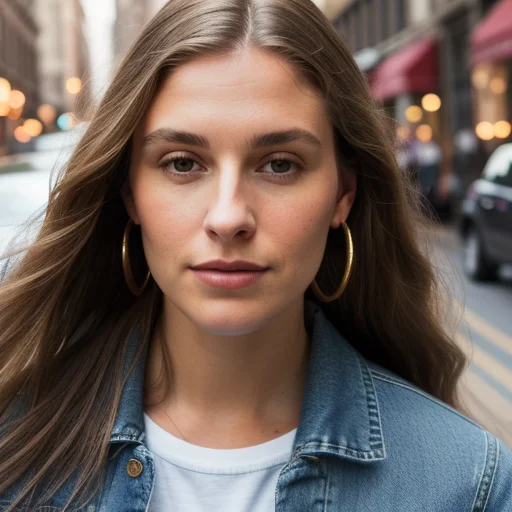
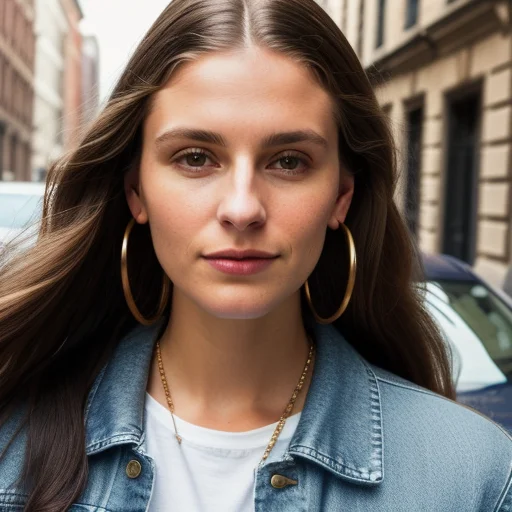
max_sequence_length: 512 # Schnell: 256 maxdenoising_strength actually worksdenoising_strength (called denoise in ComfyUI's KSampler node, denoising_strength in AUTOMATIC1111 and SD.Next) controls which timestep the diffusion process starts from. At 0, no noise is added — the output is identical to the input. At 1.0, the image is fully replaced with random noise and regenerated from scratch, equivalent to txt2img. Stable Diffusion Art's gradient test on the same portrait across six values makes this visible. 5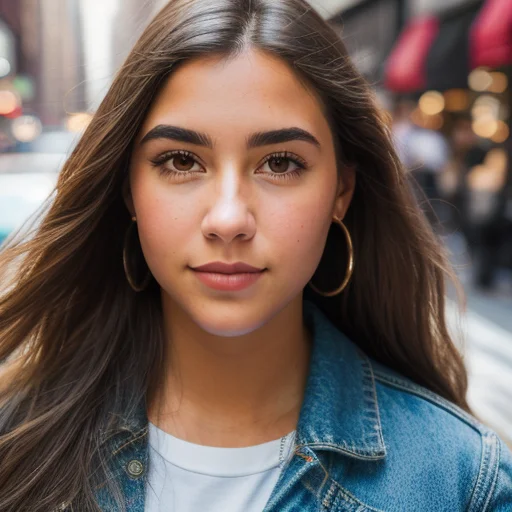
| Use case | Denoise range | What survives |
|---|---|---|
| Upscale refinement (pure upscale pass) | 0.05–0.07 | ~100% composition and identity |
| Face detailer / micro detail pass | 0.15–0.30 | ~95% pixels; smooths artifacts |
| Final quality touch-up | 0.1 (Z-Image pass) | Near-lossless quality bump |
| Tiled diffusion upscale | 0.25–0.35 | Composition intact, adds real detail |
| Portrait retouching / pose variation | 0.30–0.55 | Face recognizable; body repositions |
| Outfit change | 0.50–0.65 | Body shape / identity, new clothes |
| Style transfer (light) | 0.55–0.65 | Composition; style changes |
| New scene / background swap | 0.60–0.75 | Rough color and brightness |
| Heavy redraw | 0.70–1.0 | Loose prompt guidance only |
denoising_strength=0.4 setting on Flux may preserve more micro-texture than on SDXL. Community-validated cross-architecture conversion tables don't exist yet, but it's reason to start slightly lower when trying Flux img2img for the first time. 2denoising_strength=0.37 and 0.38 produce meaningfully different outputs because the diffusion process runs 20–30 steps and can start at any of those timesteps. On a 4-step distilled model, the math collapses. Stability AI's official SDXL-Turbo model card states it directly: "make sure that num_inference_steps * strength is larger or equal to 1. The image-to-image pipeline will run for int(num_inference_steps * strength) steps." 8guidance_scale=7.5, strength=0.5, num_inference_steps=4. 10 The notable difference: LCM-LoRA's guidance_scale operates in the 3–13 range — much higher than Turbo's 0–1.2 or Lightning's fixed 0. LCM uses guidance embeddings (not CFG doubling), which is why higher values are safe. In ComfyUI, use LCM sampler + sgm_uniform scheduler at 2–8 steps with CFG 1–2.denoising_strength > 0.4–0.5 and the output piles meaningless texture on top of the source image rather than reinterpreting it. Reddit user Quiet-Conscious265 described it directly: "The 'detail soup' thing with turbo models in img2img is pretty common and usually comes down to denoise strength being too high. turbo models are aggressive even at lower values." 11euler or dpmpp_2m sampler and cap steps at 4–6guidance_scale=0, 4 steps, CFG=1)guidance_scale=3.5, 20–25 steps, CFG=1)guidance_scale per SurePrompts: 2.5–3.5) 12docs.gpustack.ai
huggingface.co
stablediffusiontutorials.com
stable-diffusion-art.com
prompting.systems
huggingface.co
huggingface.co
huggingface.co
sureprompts.com
This story was produced automatically by a channel. One sentence is all it takes for Neodrop to keep producing for you.
