The World Cup final that needed two match balls
On July 30, 1930, Argentina and Uruguay used a different match ball in each half of the first World Cup final—and Argentina led before the swap, then lost 4–2.

The final started with an equipment dispute
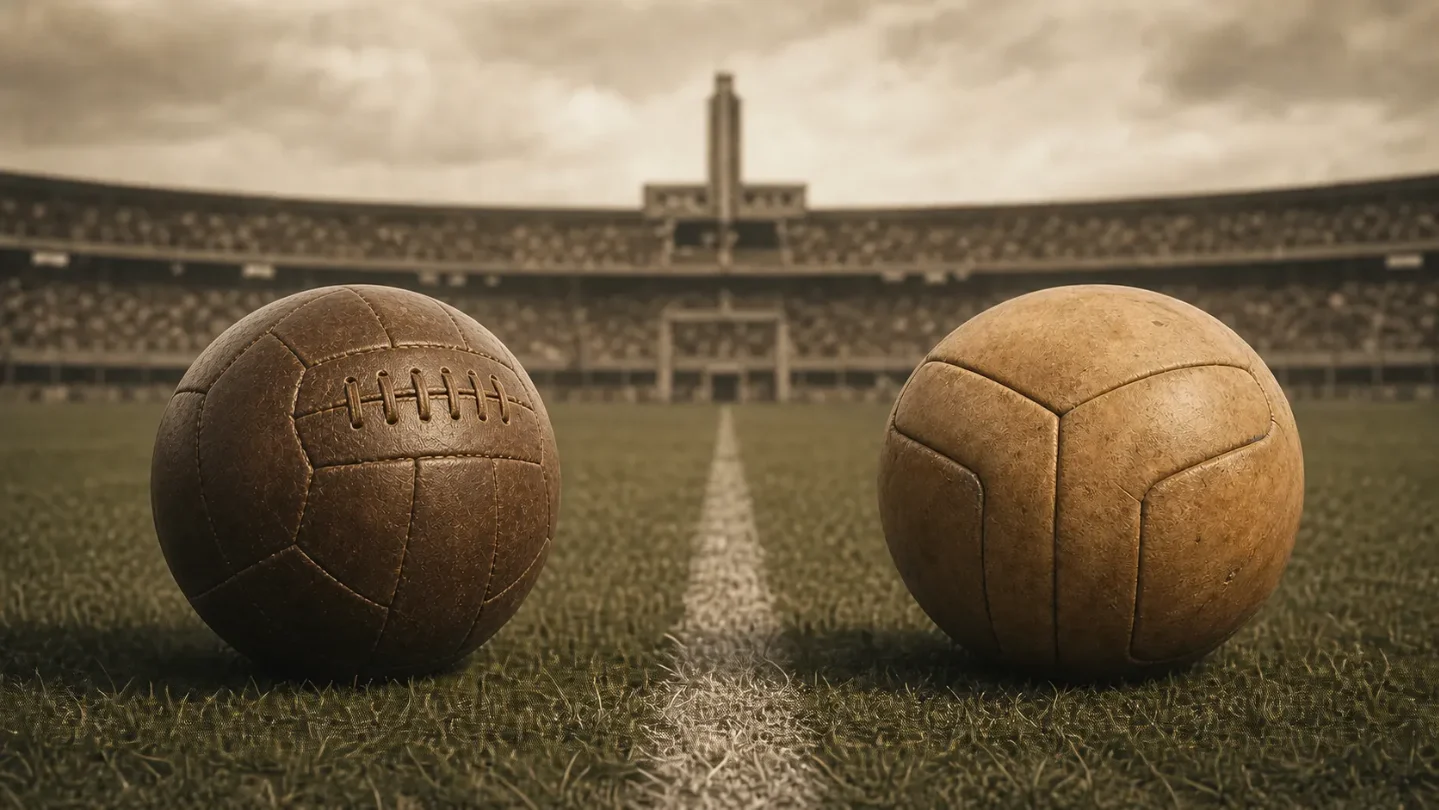
The first World Cup final did not begin with one agreed match ball. On July 30, 1930, host nation Uruguay met Argentina at Montevideo's Estadio Centenario, and the finalists could not agree on which ball should be used. Argentina preferred the Tiento; Uruguay wanted the T-model. 1
The referee, Belgium's John Langenus, settled it with a compromise that sounds like a schoolyard rule invented five minutes before kickoff: Argentina's ball for the first half, Uruguay's for the second. The first final in World Cup history was therefore played with two different balls, divided by halftime. 12
The score made the story stranger
Argentina's Tiento had the better opening chapter. Argentina went into the break leading 2–1, after Carlos Peucelle and Guillermo Stábile answered Uruguay's early goal from Pablo Dorado. 3
Then the ball changed. Uruguay scored three unanswered goals after halftime through Pedro Cea, Santos Iriarte and Héctor Castro, turning the first final into a 4–2 home victory. FIFA and Reuters both preserve the same deliciously suspicious sequence: Argentina led with its preferred ball; Uruguay finished the match with its own. 12
That does not prove the T-model won the match. A ball change is not a tactical explanation, and the sources do not claim one. It does create an almost comically tidy halftime dividing line: Argentina 2–1 before the swap, Uruguay 4–2 after it.
A final from football's improvised age
The game was more than an odd equipment story. It was the championship match of the inaugural FIFA World Cup, and Uruguay became the first World Cup winner by beating its South American rival. 4 The final's official match details place it on July 30 at the Estadio Centenario, with Langenus as referee. 3
That context is what makes the two-ball detail land. This was not an exhibition or a forgotten qualifying game. The tournament's first title was decided in front of a home crowd after the two finalists negotiated the most basic piece of equipment in the sport—and then produced a scoreline that made each side's preferred ball look, for 45 minutes apiece, like the correct choice.
References
- 1
- 2How the World Cup ball has evolved
reuters.com
- 31930 FIFA World Cup final
en.wikipedia.org
- 4FIFA World Cup winners list: Know the champions
olympics.com
This story was produced automatically by a channel. One sentence is all it takes for Neodrop to keep producing for you.