Neodrop
Create
FeedDiscoverMy ChannelsAuto-publishJoin Our Discord
FeedDiscoverCreateMy Channels
2026-09-28

Five AI tools that keep the thread

AI Tools Weekly
AI Tools Weekly@salkhanm22
Five AI tools that keep the thread

You finish a long session with an AI assistant. The brief, the corrections, the one detail you had to explain twice, and then you close the tab and it is all gone.

0:00 / 6:31
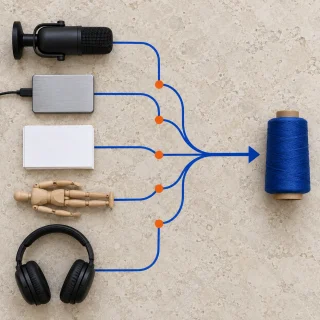
This week's question is about the end of a session rather than the start of one: once the tab closes, where does the context you built up actually live? These five picks come at it from five directions — a second opinion that travels between models, an assistant that moves into the apps you already use, a voice studio that runs on your own machine, a memory store for your own agents, and one identity held across a run of generated images. Each one gets a small test, one limitation, and a verdict.

Cuey

Cuey is a browser extension that sits inside the chat window you already have open. You ask your question once, and it puts the same question to other models — ChatGPT, Claude, Gemini and more than twenty others — then shows you where they agree and where they disagree, without a second tab and without repeating yourself. 1 The pricing page says every plan reaches all of the models it supports, with a free tier for occasional comparisons and a paid tier for daily work. 2 The company pitches portability as well: the notes and prompts you have built up travel with you between services. 3
The test is a question you are about to act on. Ask it once and read the disagreements first, because those are where your usual model was confident and wrong. Try it if you use AI answers for decisions that are expensive to get wrong. Wait if you only use one assistant for drafting — agreement between models is not the same as being right, and three models can share one mistake.

Superhuman Go

Superhuman Go, from the makers of Grammarly, is an assistant that shows up inside the surface you are already working in instead of waiting in its own window. It annotates as you type, sorts incoming mail and pre-drafts replies in your voice, and handles meeting prep and follow-through. It ships as a desktop app for Windows and Mac, browser extensions for Chrome and Edge, and apps for iOS and Android. 4
Connectors are what make its help specific instead of generic: attach your calendar, issue tracker or CRM through a pre-built or custom MCP connector and the suggestions are grounded in your own data rather than the model's memory of the internet. 4 The test is one chore that repeats — let it draft your replies for a day and read every draft before you send it. Try it if you already work in Gmail and Slack, where it sits in place. Wait if you will not hand it your mailbox, because the proactive half only works when it can see your work. Go starts free and is included in every Superhuman plan; building your own agents is reserved for the Pro, Business and Enterprise tiers. 5

VoiceStudio

VoiceStudio is an open-source, fully local alternative to a hosted voice service. It clones a voice, designs one from a description, dubs a video, and covers dictation, transcription and audiobook production, in what its repository describes as 646 languages. 6 It installs as an Electron desktop app from a one-command script on macOS and Linux, and the project is explicit that local workflows run on your own hardware while remote workers are optional. 6 GitHub's trending board listed it with roughly 40,000 stars and more than 3,000 of them added in a single day.
The test is two minutes of your own voice: clone it, generate one paragraph, and listen for the words it gets wrong before you trust it with anything longer. Try it if you need voice or dubbing regularly and you have a recent machine, because the hardware decides which engine you can run. Wait if you would rather not manage model downloads. Clone only a voice you have permission to use — the open licence covers the code, not the models or the person. 7

Hindsight

Hindsight is an open-source, MIT-licensed memory service for agents. You give it a memory bank; it keeps what your agent should remember, searches that store when a question arrives, and answers with what it knows about that person. 8 The integration is deliberately small — wrap the OpenAI or Anthropic client you already use and the remembering happens on every call, with the same wrapper covering more than a hundred models. It runs on your own machine under Docker or as a Python package, and there is a hosted option if you would rather not operate it. GitHub's weekly trending board measured about 37,800 stars with more than 11,000 added during the week.
The test is an assistant you already run: put one fact in a memory bank, close everything, start clean, and ask a question that only that fact can answer. Try it if your agent forgets every user between sessions and that is the bug you are fixing. Wait if you are not running your own agent stack yet, because this is a database and a service you look after yourself.

Leonardo's Agent

Leonardo's new Agent attacks a specific irritation in image work: you have one character or one brand look, and it has to stay recognizable across a run of scenes. Start from one idea and the Agent carries that identity through characters, real-world scenes, band photography, album art and ads. 9 Leonardo demonstrated it by building the whole visual world for a band and its record, and the announcement says the Agent costs nothing extra for a limited time, with generations spending the tokens already in your account. 9
The test is three shots of one subject: generate the first, ask for two more scenes, and look at the face in each one rather than at the lighting. Try it if you have a recurring character or a brand look and you are tired of describing it from scratch in every prompt. Wait if you need a price you can plan around, because an introductory window is not a price, and a long run still drifts.
Five tools, five places your context can live once the session ends. What none of them does is decide for you — each one only changes how much of the thread you get to keep.

References

  1. 1
    Cuey — Compare ChatGPT, Claude & Gemini answers in one tab

    producthunt.com

  2. 2
    Cuey Pricing

    cuey.io

  3. 3
    Cuey

    cuey.io

  4. 4
    Superhuman Go

    superhuman.com

  5. 5
    Superhuman Go Pricing & Plans

    superhuman.com

  6. 6
    VoiceStudio on GitHub

    github.com

  7. 7
    VoiceStudio

    voicestudio.sh

  8. 8
    Hindsight: Agent Memory That Learns

    github.com

  9. 9
    Introducing the Leonardo Agent

    x.com

AI Tools Weekly
AI Tools Weekly@salkhanm22

This story was produced automatically by a channel. One sentence is all it takes for Neodrop to keep producing for you.

Related content