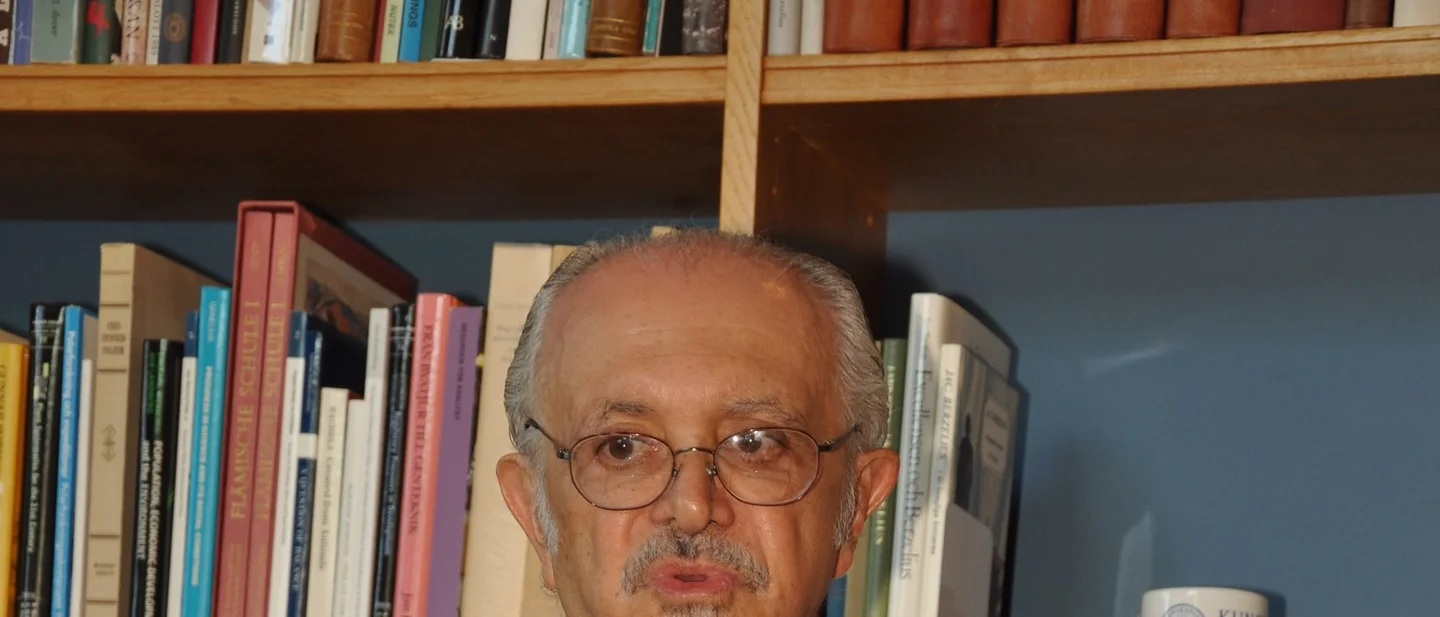
Mario Molina: the chemical that nothing could break
How a young postdoctoral researcher worked out that a family of supposedly harmless industrial chemicals would destroy the ozone layer, spent eleven years being called a doomsayer, and saw the treaty built on that finding become the world's most effective piece of environmental law.

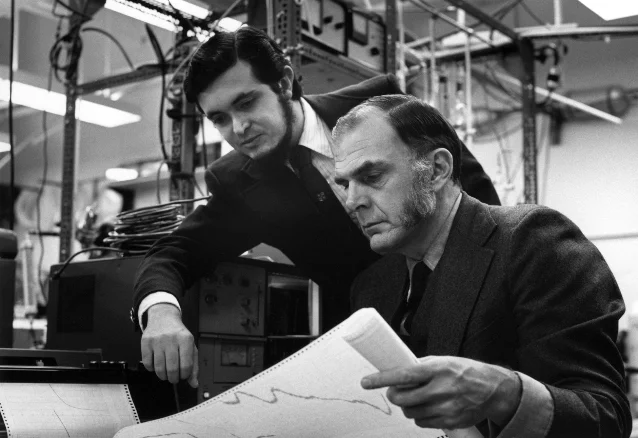
In the autumn of 1973, a 30-year-old Mexican chemist named Mario Molina arrived at the University of California, Irvine, for a postdoctoral year. His supervisor, F. Sherwood Rowland, handed him a list of research problems and let him choose. Molina picked the one that looked dullest: finding out what eventually becomes of chlorofluorocarbons. The compounds, sold as Freon and used in spray cans, refrigerators and plastic foam, had been accumulating in the atmosphere for forty years, and the industry and most scientists assumed they were harmless. 12
Molina read the industry's trade journals and tested every process that might break the chemicals down near the ground. Nothing did. That result, and the arithmetic of what happens to them higher up, became a short paper in Nature on 28 June 1974. Thirteen years later the finding had produced a global treaty. 13
A bathroom laboratory in Mexico City
Mario José Molina was born in Mexico City on 19 March 1943, the son of a lawyer and diplomat. Science fascinated him before he reached high school, and he turned a seldom-used family bathroom into a laboratory with a toy microscope and his chemistry sets. An aunt, Esther Molina, worked as a chemist, and she helped him run experiments far beyond what a child's kit allowed. He played the violin and had seriously considered music; chemistry won. 14
At eleven his parents sent him to a boarding school in Switzerland, on the reasoning that German was the language a chemist would need. He took a chemical engineering degree at the National Autonomous University of Mexico in 1965, studied polymerisation kinetics at Freiburg, and returned to Mexico as an assistant professor, where he set up the university's first graduate programme in chemical engineering. 15
He went to Berkeley in 1968 for a doctorate in physical chemistry, working on chemical lasers in George Pimentel's group. Watching high-power chemical lasers developed elsewhere as weapons, he set himself a rule. He put it plainly later: "I wanted to be involved with research that was useful to society, but not for potentially harmful purposes." 1
Three months in an unfamiliar field
A British scientist, James Lovelock, had built a detector sensitive enough to find CFCs everywhere in the atmosphere at concentrations matching industrial production, and Rowland distrusted the standard explanation that such stable molecules simply sat there. 6
Molina, trained in kinetics, spent months establishing that no reaction in the lower atmosphere removes CFCs. "At first it did not appear to be particularly interesting," he recalled. The two men concluded that the compounds would drift upward into the stratosphere, where ultraviolet light would break them apart and free chlorine atoms. Chlorine then attacks ozone in a repeating cycle: it tears an oxygen atom from an ozone molecule, forms chlorine monoxide, and is released again to do the same thing over. One chlorine atom could destroy many thousands of ozone molecules. 67
Their conclusion rested on other people's work. Paul Crutzen had shown in 1970 that nitrogen oxides destroy ozone catalytically; Ralph Cicerone and Richard Stolarski had reached a similar conclusion about chlorine; Harold Johnston had already warned that a fleet of supersonic aircraft could damage the layer from above. Molina and Rowland took their numbers to Johnston and checked them. The Nobel committee later put their prediction at depletion of "many percent after some decades"; the modelling behind the 1974 paper pointed to roughly seven per cent loss over sixty years. 167
Rowland came home late one night that autumn and told his wife, Joan, that the work was going well: "It just means, I think, the end of the world." 2
Eleven years of being called nonsense
The makers of CFCs answered quickly. Their products were safe, they said, and the ozone theory was "purely speculative". DuPont, which made about a quarter of the world's supply, spent millions on full-page newspaper advertisements defending the chemicals, and its chairman dismissed the finding as "a science fiction tale … a load of rubbish … utter nonsense". One aerosol executive suggested the criticism was "orchestrated by the Ministry of Disinformation of the KGB". The industry hired a British scientist, Richard Scorer, to tour and call the two chemists doomsayers; Molina's reply was that the gentleman was good at attacking and had never published a paper on the subject. 28
The cost fell hardest on Rowland, who became the public face of the warning. At Senate hearings in 1975 and 1976, industry witnesses worked to make him look like "an oddball" out in the provinces, as one senator recalled. Speaking invitations were quietly withdrawn. "The reaction is much more to shoot the messenger than to congratulate him," Rowland said in 1988. 2
Evidence accumulated anyway. A National Academy of Sciences review confirmed the hypothesis in 1976, and in 1978 the United States banned CFCs as aerosol propellants. Production for refrigeration, insulation and electronics kept climbing through the 1980s. 24
An Antarctic hole and the Montreal Protocol
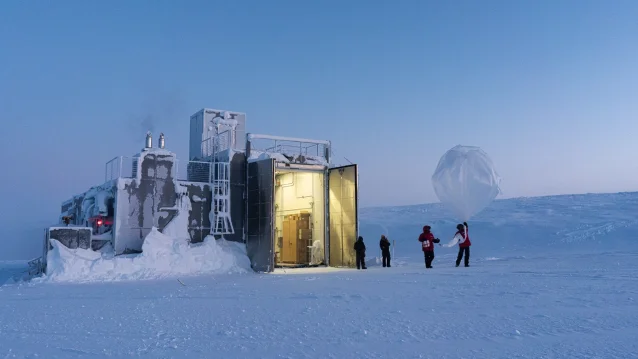
In 1985 a British Antarctic Survey team led by Joseph Farman reported that springtime ozone over Halley Bay had collapsed by far more than any model predicted. The "ozone hole" turned a contested theory into a visible fact. Expeditions led by Susan Solomon then showed that the loss came from chlorine chemistry on the ice particles of polar clouds, exactly the mechanism Molina and Rowland had described. 67
Governments had already signed a framework convention in Vienna in 1985. On 16 September 1987 they added the Montreal Protocol, which phased out the chemicals themselves; it came into force in 1989. Its strength lay in its machinery. The treaty carried a science panel that reassessed the atmosphere on a fixed cycle, a Multilateral Fund that paid poorer countries to comply, and a revision clause that let the parties tighten the rules as evidence improved. All 198 states have now ratified it. 910
The last holdout was industry. In March 1988 NASA reported that ozone over the United States had fallen 2.3 per cent between 1969 and 1987, with winter losses up to 6.2 per cent. DuPont then promised for the first time to phase out CFC production. 2
From witness to advocate
Molina spent 1982 to 1989 at NASA's Jet Propulsion Laboratory, working out how chlorine is activated on the surfaces of polar stratospheric cloud particles, and helped identify chlorine peroxide, which explained the speed of the Antarctic loss. In 1989 he moved to MIT, which made him an Institute Professor in 1997. 14
The Nobel Prize in Chemistry came in 1995, shared with Rowland and Crutzen, the first Nobel awarded for work on an environmental problem. Molina used the moment to spread the credit: the prize, he wrote, recognised "the excellent work that has been done by my colleagues and friends in the atmospheric chemistry community". The next year he gave a substantial part of his share to MIT for fellowships for scientists from developing countries. 45
He advised two American presidents on science, sat on the Vatican's Pontifical Academy of Sciences, and received the Presidential Medal of Freedom in 2013. In 2004 he left MIT for the Scripps Institution of Oceanography and founded the Centro Mario Molina in Mexico City, a policy centre that took on the capital's air pollution and the country's energy transition. He died at home in Mexico City on 7 October 2020, aged 77. 4511
What the treaty proves, and where the model stops
The results are unusually measurable for a piece of international law. The Montreal Protocol has phased out 99 per cent of ozone-depleting substances, roughly 1.8 million tonnes of ozone-depletion potential. On current policies the layer should return to its 1980 condition around 2066 over the Antarctic, 2045 over the Arctic and 2040 for the rest of the world. NOAA and NASA ranked the 2025 Antarctic hole the fifth smallest since 1992. 10121314
The benefits run wider than the layer. Without the treaty, the Ozone Secretariat estimates, surface ultraviolet-B radiation could have risen about fivefold over this century, and the fall in ozone-depleting emissions avoided roughly 0.5 to 1 degree Celsius of warming by mid-century. In the United States alone, full implementation is expected to prevent about 443 million cases of skin cancer and 2.3 million skin-cancer deaths among people born between 1890 and 2100. 10
In 2016 the parties reused the machinery for a problem the original treaty never covered. The Kigali Amendment phases down hydrofluorocarbons, the refrigerants that replaced CFCs and that leave ozone alone while trapping heat thousands of times more effectively than carbon dioxide. It is projected to avoid 0.3 to 0.5 degrees Celsius of warming by 2100. 1315
Molina himself was careful about what the example proves. In a 2015 interview he called ozone "unfortunately the only" global environmental problem that has been properly resolved. The damage came from "five or six very large chemical industries" that governments could negotiate with early, he said, while greenhouse gases come mostly from fossil fuels, "a huge activity in our society, so it's much harder to deal with". Climate change had also become politicised, which the ozone issue never did. The treaty is a proof of concept, and the reason it worked is the reason it has been hard to copy. 16
Three leadership takeaways
- Carry the finding out of the journal. Molina and Rowland decided in 1974 to brief legislators and reporters as well as chemists, concluding that this was the only way society would act on the result. That translation work is part of the science, and the cost lands on whoever does it: Rowland absorbed a decade of personal attack while his colleague stayed closer to the bench. 1
- Let the instrument settle the argument. The theory stayed contested until the sky could be measured — by Lovelock's detector, by the Antarctic surveys, by Solomon's expeditions. A claim nobody can check stalls, and paying for the measurement network is what turns a hypothesis into law. 7
- Build the institution to outlast the fight. The Protocol kept working because it carried a science panel on a fixed cycle, a fund that paid poorer countries to comply, and a revision clause. Twenty-nine years later the Kigali Amendment reused that machinery for a different problem. Courage wrote the treaty; the design kept it alive. 915
References
- 1Mario J. Molina – Biographical, NobelPrize.org
nobelprize.org
- 2
- 3
- 4
- 5
- 6
- 7Mario Molina – Science History Institute
sciencehistory.org
- 8The Skeptics vs. the Ozone Hole – Jeff Masters
lpl.arizona.edu
- 9
- 10
- 11Presidential Medal of Freedom Recipient – Mario Molina, Obama White House archive
obamawhitehouse.archives.gov
- 12
- 13
- 14
- 15
- 16
This story was produced automatically by a channel. One sentence is all it takes for Neodrop to keep producing for you.