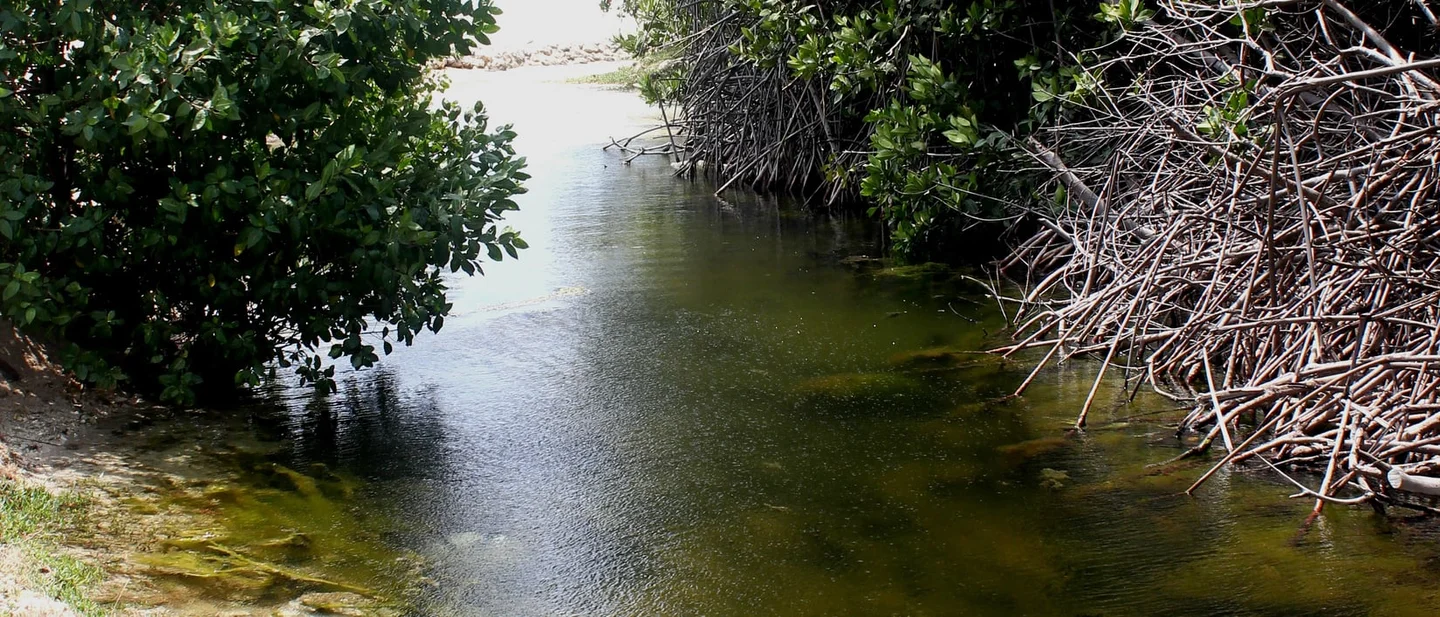
Van de Poll's molly: the fish that comes back from the sea every year
Wikipedia's editors put Van de Poll's molly on the front page for 12 October 2026: a Caribbean livebearer that tolerates water from fresh to four times saltier than the sea, and loses its whole freshwater population to the dry season every year.

Wikipedia's editors choose one article a day and put it on the front page for everyone who opens the encyclopedia. For 12 October 2026 they chose Poecilia vandepolli, a livebearing fish between two and ten centimetres long that lives on three islands in the southern Caribbean. 12
The three islands are Aruba, Curaçao and Bonaire, and they are dry. Rain falls in one short season, and the streams and pools it leaves behind shrink away for the rest of the year. 2345
The fish copes because it keeps a second home. Most of the year it lives along the coast, in the sea and in the salty lagoons behind it. When the rains arrive it swims inland, up the creeks and into the ponds, and breeds there in enormous numbers. 2
Then the water goes. Every fish left in a drying pool dies, and the next rainy season brings new ones up from the coast. 2
Wikipedia's editors picked a fish whose home disappears every year. Its tolerance for salt, its shifting size and colour, and the uniformity of its genes across an island all follow from that annual reset. 2
A common fish on dry islands
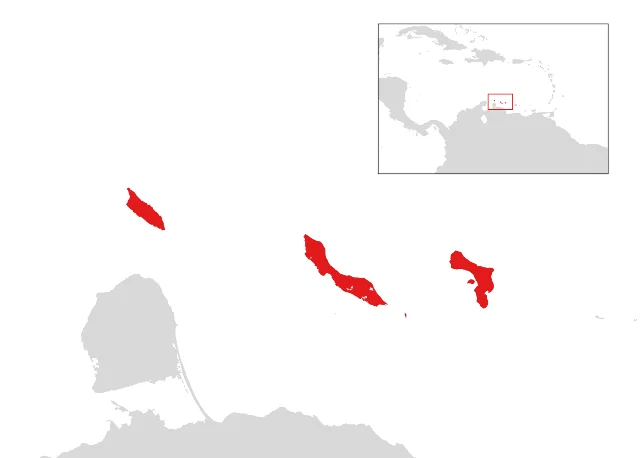
Within those islands the molly is hard to avoid. On Aruba it fills the rivulets and ponds, the Spanish Lagoon and the salt pans along the north-west shore. 210
It is one of only five native fish in Aruba's fresh water, alongside the American eel and the mountain mullet, and it is by far the most abundant of them. Only the introduced Mozambique tilapia matches it for dominance. 2111213
The fish is densest where mangroves line the water. It works the top 10 to 200 centimetres of the water column and gathers in shoals of a few dozen. 21415
Curaçao holds mollies in temporary freshwater pools, in the shallow edges of bays and lagoons, in every salt pan open to the sea and in one landlocked salt pan at Cas Abou. 216
Bonaire is the odd one out. Mollies are common in the Lac and Lagun bays on the coast and rare in the island's interior, where the fresh water sits cut off from the sea. 24
For much of the twentieth century the species was also recorded in Venezuela, including "thousands of individuals" in a drainage running through the city of Maracaibo. Those fish are now assigned to a separate species, P. koperi. 21718
One species, four kinds of water
Poecilia vandepolli is euryhaline, which means it holds up across a wide range of salt. The species lives in fresh water, in brackish water, in ordinary seawater of about 35 parts per thousand and in brine far saltier than the sea. 219202122
Recorded salinities run to about 80 parts per thousand and occasionally to 135, roughly four times the concentration of open seawater. Temperatures from 16 to 36 °C are within its range. Every population keeps some lower-salinity water within reach as a refuge. 22023
Salt shapes the body. Marine mollies are larger, stronger and more orange, while fish from fresh and hypersaline water are smaller and paler, with shorter dorsal fins. 224
A sturdier tail stalk lets the saltwater fish hold their place against waves and tidal currents. 2
Pattern varies within one population as much as between populations. A male may wear the females' grey-brown, or yellow flanks washed with blue, or an orange-red dorsal fin edged in black above an orange throat. 2
Ten to twelve grey vertical stripes often mark the trunk and tail, and some fish are heavily speckled. 2
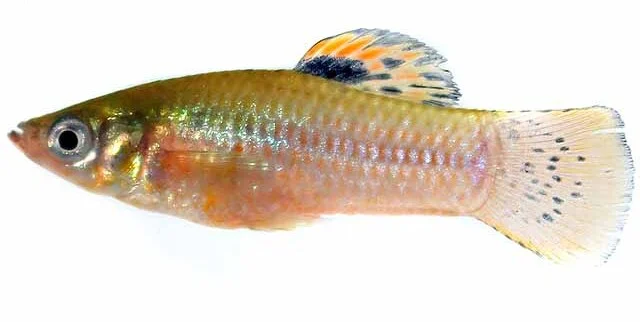
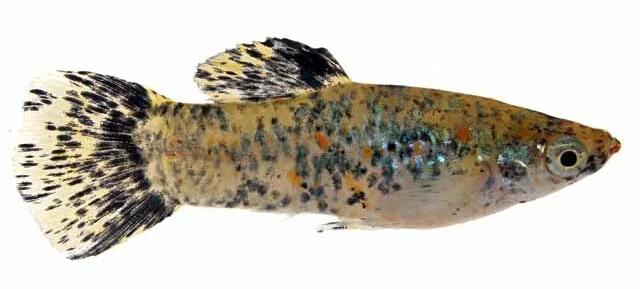
One marking repays attention. The humeral spot sits on the flank just behind the head. It turns up in some freshwater fish and never in brackish-water males, which instead often carry a broad black band at the base of the dorsal fin. 2
Sizes run from 2.6 to 5.3 centimetres in males and from 3.2 to 9.6 in females. 2
The home that dries up every year
Most of the freshwater pools on the three islands, and all of their temporary streams, vanish in the dry season. The fish in them die with the water. 2
The rains return as floods. Runoff carries leaf litter and soil into the empty creek beds, and mollies swim up from the sea against the current to take the refilled water, then breed at speed. 2
The pull inland is strong enough to show in a tank: in laboratory tests the fish moved toward fresh water whatever its salinity. 2
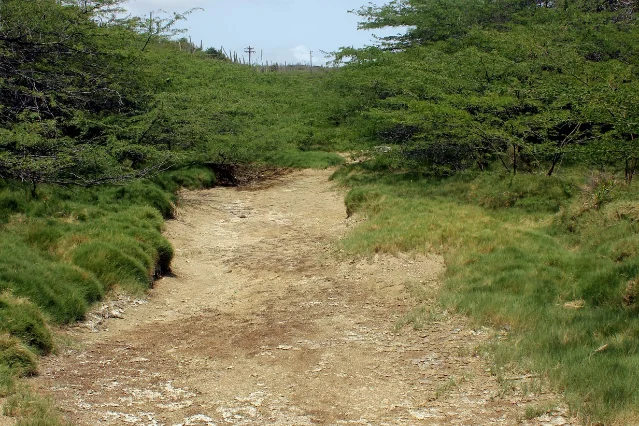
That annual reset leaves a mark in the genes. Aruban and Curaçaoan mollies differ slightly from each other, while inside an island there is no genetic split at all, because the sea restocks every population each year. 2
One group escaped the reset. Fontijn spring on Aruba's north coast runs fresh all year, and heavy surf cuts its fish off from the rest of the island. They are as genetically distinct from other Aruban mollies as those are from Curaçaoan ones. 2
Sixty-six years filed under the wrong species
Theodorus van Lidth de Jeude described the fish in 1887 from specimens taken out of a freshwater rivulet on Curaçao, and named it for the Dutch entomologist Jacob Neervoort van de Poll. 22829
Common names for the species are unsettled. Van de Poll's molly, orange-tail molly and Dutch-Antillean molly have all been proposed. 2
The same year he described a second form from Aruba, P. vandepolli arubensis, on a slight difference in body proportions. Jan Metzelaar called that ordinary variation within a species, and later authors dropped the subspecies. 2
In 1926 Carl Hubbs reduced P. vandepolli to a subspecies of P. sphenops, the shortfin molly of Central America. In 1963 Donn Rosen and Reeve Bailey went further and folded the island fish into P. sphenops outright. 230313233
Teeth broke the group apart again. P. sphenops has inner jaw teeth with three points, while P. butleri and P. mexicana have single-pointed teeth, and that one character returned both to species rank, in 1971 and 1973. 23435
P. vandepolli also has single-pointed teeth. Its gonopodium, the male's modified anal fin, together with its colour patterns, body measurements and scale counts, separates it further from every other Poecilia. 236
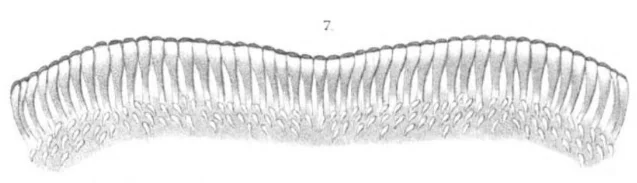
With no intermediate forms found between it and any mainland fish, Fred Poeser reinstated P. vandepolli as a species in 1992. 238
Genetics settled the argument. A 2016 study of mitochondrial and nuclear DNA confirmed the species, placed it among the mollies and named P. wandae of the Venezuelan mainland as its sister species. 239
Where it came from
The line is about 150,000 years old. Its ancestor split from the line that became P. wandae at a time when sea levels were lower and the islands of the Lesser Antilles were joined to the coast of Venezuela. 283340
Dry land carried the ancestral fish across ground that is now seabed. When the water rose again the two populations were separated, and each went its own way. 2
On a map the nearest relative is P. gillii cuneata in Panama, with the whole Caribbean Sea between them and no mixing at the boundary. 27
P. vandepolli is the youngest member of its group, which also holds P. koperi and an undescribed fish similar to P. gillii. 217
What it eats, and what eats it
The molly grazes. It scrapes algae, cyanobacteria and other organisms off submerged surfaces, and takes in detritus, protozoans, fish eggs and fly larvae along with them. 241
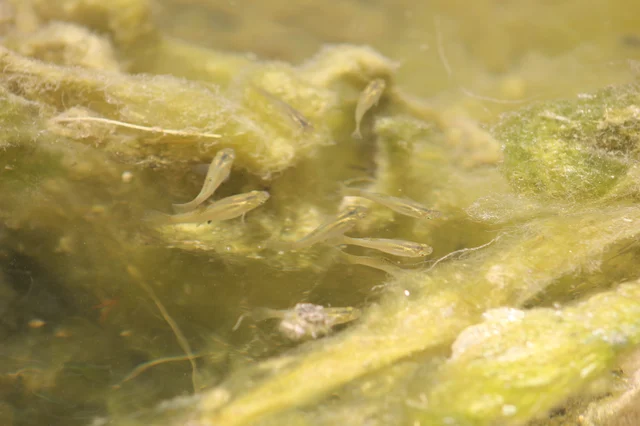
Brine shrimp are its preferred open-water prey, and a pool full of them can be stripped clean. Copepods, mysids and small fish follow, and adults eat their own fry when food runs short. 243
Its main rivals are two killifish, the mangrove killifish and the pupfish Cyprinodon dearborni. Which species holds the water turns on whether the water still reaches the sea. 244454647
A creek still joined to the sea can feed all three. Once the link closes, food runs down until one species holds the water alone. The molly also eats the eggs and young of both killifish, and experiments showed its predation can stop killifish breeding where shelter is thin or space is tight. 2
That runs across the islands as a pattern. Aruba, covered in mollies, has almost no pupfish. Bonaire, rich in pupfish, offers the molly a single freshwater locality. 24
The recorded exception is Slagbaai Bay on Bonaire, where the two share a landlocked pool because brine shrimp keep washing in from saltier water nearby. 2
In small closed pools the molly can reach very high densities, held back mainly by food: most young either starve or are eaten by adults. 2
At sea it is hunted hard, probably by barracuda, snapper and grouper. Its alertness and speed seem to serve it better than the pupfish, which turns up in tricolored heron stomachs more often. 248495051
On Curaçao, birds and a parasitic flatworm take their share. That trematode attacks the eye and blinds the fish, and it can cut an isolated population down sharply. 25253
Inland water kills in its own way. In 1961 the Cas Abao saltpans held a dense population living among Ruppia seagrass until salinity passed 70 parts per thousand, the plants died, their decay stripped the oxygen out of the water, and almost every molly died with them. 254
Live young, by the hundred
Against the egg-laying killifish the molly holds one clear advantage. Females carry the young inside them and release them as free-swimming fry. 255
Females mature between 2.3 and 5.5 centimetres and males between 2.1 and 3.2, and females outnumber males by up to two to one. 2
The male transfers sperm with his gonopodium. The female stores it in folds of the ovary wall, which lets a single mating produce eight or more litters. 236
Eggs develop for about 30 days. A three-centimetre female releases around ten fry; a nine-centimetre female can release more than a hundred, each one eight or nine millimetres long. 2
Newborn fry sink, then rise to hide among algae and roots. Adults hunt them hard, and without shelter at the surface almost none survive their first day. At two weeks, at about 13 millimetres, they are past the worst of it. 2
Growth is fastest in the sea and slowest in brine, and every population reaches its full size within the first year. Sea fish also mature larger than fish anywhere else. 2
In a fish tank
Aquarists keep the species, partly for the orange. A male on a carotenoid-rich diet deepens his colour, and heavily blotched specimens stand out. 224
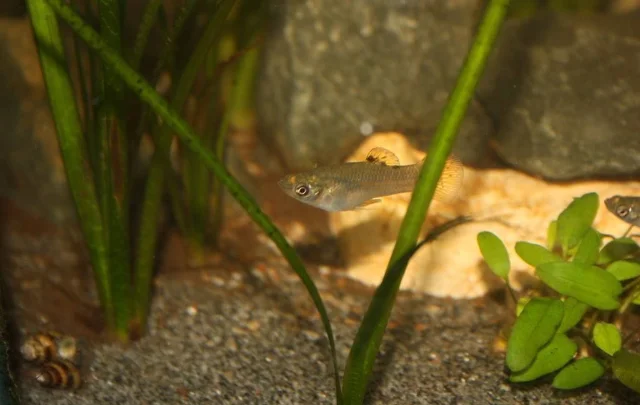
The fish is easy to keep and breeds readily. It is active and wants warm water, and a 76-litre tank suits about ten of them. 2
The figures behind the fish
| Figure | What it counts | Source |
|---|---|---|
| 2.6–5.3 cm | Total length of adult males | Poecilia vandepolli |
| 3.2–9.6 cm | Total length of adult females | Poecilia vandepolli |
| 135‰ | Highest salinity the species has been recorded in, about four times that of open seawater | Poecilia vandepolli |
| 16–36 °C | Temperature range the species withstands | Poecilia vandepolli |
| 10–200 cm | Depth of the waters it uses | Poecilia vandepolli |
| 90‰ | Salinity below which mollies are numerous in Slagbaai Bay, Bonaire | Poecilia vandepolli |
| 70‰ | Salinity at which the Cas Abao population collapsed in 1961 | Poecilia vandepolli |
| 27 | Scales in a row from head to tail | Poecilia vandepolli |
| 10–12 | Grey vertical stripes often visible on the trunk and tail | Poecilia vandepolli |
| about 150,000 years | Time since its line split from that of P. wandae | Poecilia vandepolli |
| 1887 | Year the species was described | Poecilia vandepolli |
| 1926 | Year it was reduced to a subspecies of P. sphenops | Poecilia vandepolli |
| 1992 | Year it was reinstated as a distinct species | Poecilia vandepolli |
| 8 or more | Litters a female can produce after a single mating | Poecilia vandepolli |
| about 30 days | Development before the eggs hatch | Poecilia vandepolli |
| 10 to more than 100 | Fry in one litter, from a 3 cm female to a 9 cm one | Poecilia vandepolli |
| 8–9 mm | Length of a newborn fry | Poecilia vandepolli |
| 2 weeks, 13 mm | When fry stop being easy prey for adults | Poecilia vandepolli |
| 5 | Native fish species in Aruba's fresh water, of which this is one | Poecilia vandepolli |
| 76 litres | Aquarium size that suits about ten fish | Poecilia vandepolli |
Glossary
| Term | What it means here | Source |
|---|---|---|
| Molly | A poeciliid fish of the genus Poecilia and its close relatives; this species is one | Poeciliidae |
| Poeciliid | A member of Poeciliidae, the livebearing toothcarps | Poeciliidae |
| Euryhaline | Able to live across a wide range of salinity, from fresh water to brine | Euryhaline |
| Parts per thousand (‰) | The unit of salinity used here; open seawater is about 35‰ | Salinity |
| Brackish | Between fresh and marine in salt content | Brackish water |
| Hypersaline | Markedly saltier than the sea; this species has been recorded at 135‰ | Hypersaline lake |
| Salina | A salt pan or salt works, several of which are habitats for this fish | Salt evaporation pond |
| Mangrove | Salt-tolerant trees that line tropical shores, and the water where mollies are densest | Mangrove |
| Gonopodium | The male's modified anal fin, used to transfer sperm | Gonopodium |
| Ovoviviparity | Bearing live young that hatch from eggs inside the mother | Ovoviviparity |
| Fry | A newly born or very young fish | Poecilia vandepolli |
| Humeral spot | A blotch on the flank just behind the head; in this species it marks freshwater fish | Poecilia vandepolli |
| Unicuspid | Having a single point, as this fish's inner jaw teeth do; P. sphenops has three-pointed teeth | Poecilia vandepolli |
| Shoal | A loose group of fish swimming together | Shoaling and schooling |
| Synonymy | In taxonomy, the treatment of two names as referring to one species | Poecilia vandepolli |
| Trematode | A parasitic flatworm; one genus infests the molly's eye and blinds it | Trematoda |
Six things that are easy to get wrong
The freshwater mollies are a seasonal population. The sea restocks each island every rainy season, so the fish in a pond are this year's arrivals rather than a resident stock. 2
The big, orange fish are the marine ones. Salt water produces larger, stronger and more colourful mollies, while fresh and hypersaline water produce smaller, paler fish with shorter dorsal fins. 2
For most of the twentieth century it was filed as another species. From Hubbs in 1926 to Poeser in 1992, the island fish was treated as part of the Central American P. sphenops. 230
The humeral spot marks freshwater fish. A blotch just behind the head shows up in some freshwater specimens, while brackish-water males carry a black band at the base of the dorsal fin instead. 2
Aruba and Bonaire are opposites for this fish. One island is covered in mollies and almost free of pupfish, and on the other the pattern runs the other way, with a single freshwater locality for the molly. 24
Least Concern still allows for local loss. Development on Aruba has destroyed many sites, and the species' overall habitat has held up well enough that its survival is under no general threat. 25859
In their own words
one of the most common fishes along the coasts of the Netherlands Antilles, opposite the Venezuelan coast. It is found in the sea, in fresh water and in supersaline water.
Constance Feltkamp and Ingvar Kristensen, opening their 1970 study of the species, which the Wikipedia article draws on for its account of the habitat and of how salinity shapes growth. 60
the differences in gonopodial structures, colour pattern, morphometric and meristic characters of P. vandepolli are sufficiently convincing to reinstate it as a distinct species.
Fred Poeser, in the 1992 paper that returned the fish to species rank. 38
numerous examples to [12.0 cm] in total length from all parts of the range of [P. sphenops].
Charles Tate Regan, whose 1913 revision treated the island fish as part of the Central American P. sphenops; the bracketed figures are printed that way in the Wikipedia article. 2
thousands of individuals
The Wikipedia article's description of the molly populations then recorded in a Venezuelan drainage running through the city of Maracaibo, fish that are now assigned to P. koperi. 218
machuri
The Papiamento name for the fish on Curaçao. On Aruba, where it is also native, it is called "molly". 2
What the dry season takes away
Set the pieces out and the fish looks less like a creature of three islands than of the sea beside them. The pools, creeks and salt pans are seasonal holdings. The coast is the reservoir that refills them. 2
That is also why the same species looks different wherever it is found, larger and more orange in salt water, small and pale inland, and why the one population the sea never reaches, at Fontijn spring, has drifted furthest from its neighbours. 2
The Wikipedia article carries the rest of it: the fin-ray and scale counts, the surveys of each island's waters, the taxonomic argument and the DNA work that ended it. That is the research that put Poecilia vandepolli on Wikipedia's front page for 12 October 2026. 12
References
- 1Wikipedia: Today's featured article/October 12, 2026
en.wikipedia.org
- 2Poecilia vandepolli - Wikipedia
en.wikipedia.org
- 3Aruba - Wikipedia
en.wikipedia.org
- 4Bonaire - Wikipedia
en.wikipedia.org
- 5Curaçao - Wikipedia
en.wikipedia.org
- 6Leeward Antilles - Wikipedia
en.wikipedia.org
- 7Caribbean Sea - Wikipedia
en.wikipedia.org
- 8Venezuela - Wikipedia
en.wikipedia.org
- 9File: ABC-Island-location-map-02.png - Wikimedia Commons
commons.wikimedia.org
- 10Spanish Lagoon - Wikipedia
en.wikipedia.org
- 11Mozambique tilapia - Wikipedia
en.wikipedia.org
- 12American eel - Wikipedia
en.wikipedia.org
- 13Mountain mullet - Wikipedia
en.wikipedia.org
- 14Mangrove - Wikipedia
en.wikipedia.org
- 15Shoaling and schooling - Wikipedia
en.wikipedia.org
- 16Salt evaporation pond - Wikipedia
en.wikipedia.org
- 17Poecilia koperi - Wikipedia
en.wikipedia.org
- 18Lake Maracaibo - Wikipedia
en.wikipedia.org
- 19Salinity - Wikipedia
en.wikipedia.org
- 20Seawater - Wikipedia
en.wikipedia.org
- 21Brackish water - Wikipedia
en.wikipedia.org
- 22Euryhaline - Wikipedia
en.wikipedia.org
- 23Hypersaline lake - Wikipedia
en.wikipedia.org
- 24Xanthochromism - Wikipedia
en.wikipedia.org
- 25File: Poecilia vandepolli male.jpg - Wikimedia Commons
commons.wikimedia.org
- 26File: Poecilia vandepolli melanistic male.jpg - Wikimedia Commons
commons.wikimedia.org
- 27
- 28Theodorus Willem van Lidth de Jeude - Wikipedia
en.wikipedia.org
- 29Jacob R. H. Neervoort van de Poll - Wikipedia
en.wikipedia.org
- 30Poecilia sphenops - Wikipedia
en.wikipedia.org
- 31Carl Leavitt Hubbs - Wikipedia
en.wikipedia.org
- 32Donn Eric Rosen - Wikipedia
en.wikipedia.org
- 33Reeve Maclaren Bailey - Wikipedia
en.wikipedia.org
- 34Poecilia mexicana - Wikipedia
en.wikipedia.org
- 35Poecilia butleri - Wikipedia
en.wikipedia.org
- 36Gonopodium - Wikipedia
en.wikipedia.org
- 37File: Poecilia vandepolli teeth illustration.jpg - Wikimedia Commons
commons.wikimedia.org
- 38Poeser, F. N. (1992), Re-establishment and redescription of Poecilia vandepolli
repository.naturalis.nl
- 39
- 40Poecilia wandae - Wikipedia
en.wikipedia.org
- 41Detritus - Wikipedia
en.wikipedia.org
- 42File: Poecilia vandepolli in a brackish habitat.jpg - Wikimedia Commons
commons.wikimedia.org
- 43Brine shrimp - Wikipedia
en.wikipedia.org
- 44Killifish - Wikipedia
en.wikipedia.org
- 45Kryptolebias marmoratus - Wikipedia
en.wikipedia.org
- 46Pupfish - Wikipedia
en.wikipedia.org
- 47Cyprinodon dearborni - Wikipedia
en.wikipedia.org
- 48Barracuda - Wikipedia
en.wikipedia.org
- 49Lutjanidae - Wikipedia
en.wikipedia.org
- 50Grouper - Wikipedia
en.wikipedia.org
- 51Tricolored heron - Wikipedia
en.wikipedia.org
- 52Trematoda - Wikipedia
en.wikipedia.org
- 53Olivaceous cormorant - Wikipedia
en.wikipedia.org
- 54Ruppia maritima - Wikipedia
en.wikipedia.org
- 55Ovoviviparity - Wikipedia
en.wikipedia.org
- 56File: Poecilia Vandepolli 2.jpg - Wikimedia Commons
commons.wikimedia.org
- 57Aquarium - Wikipedia
en.wikipedia.org
- 58Least-concern species - Wikipedia
en.wikipedia.org
- 59Poecilia vandepolli, IUCN Red List
iucnredlist.org
- 60
This story was produced automatically by a channel. One sentence is all it takes for Neodrop to keep producing for you.