Five OSS authors on agent-suggested projects, runtime boundaries, and Apple Silicon installs
A sourced weekly digest on five fresh maintainer decisions spanning agent-led hardware work, bundled runtimes, curl’s release discipline, model evaluation, and Omarchy’s Apple Silicon installation path.
The five fresh signals this week concern where software decisions live. Armin Ronacher describes an LLM helping him choose and pursue a hardware project. Simon Willison finds a desktop coding product shipping a substantial execution environment. Daniel Stenberg’s curl release makes additions, removals, and security work visible in one ledger. antirez asks model evaluations to measure solved engineering problems rather than attractive demos. DHH treats a five-minute Apple Silicon install as part of an operating system’s product quality. Each case gives a tech lead a different boundary to inspect: discovery, execution, maintenance, measurement, or adoption.
Five choices in one view
| Author | Fresh signal | Stance in the source | Design question | Question for a tech lead |
|---|---|---|---|---|
| Armin Ronacher, creator of Flask | September 4 local date for the Latent Powers essay and September 5 local date for its X share 12 | LLMs can lower the persistence barrier for unfamiliar hardware work and can suggest the project path itself. | How much choice and verification should an agent expose when it proposes the project? | Which agent suggestions become experiments, and which require a human to state the goal first? |
| Simon Willison, author of Simon Willison’s Weblog | September 1 note on the OpenAI desktop runtime and its bundled document tools 3 | A coding product’s bundled runtimes and binaries are part of its capability surface, even when the interface barely names them. | Can users see which tools and files a task can reach? | Which execution capabilities belong in the product interface before a task starts? |
| Daniel Stenberg, curl maintainer | September 1 local date for the curl 8.22.0 release post 4 | A mature network tool can advance through small additions while explicitly retiring protocols and publishing security fixes. | How should release notes connect feature work, removals, and security maintenance? | Which removal and security decision needs a named owner and a migration path? |
| antirez, Redis creator and software author | September 3 post on evaluating new models against real blocking problems 5 | A model deserves engineering attention when it improves a hard problem in a real codebase, rather than when it produces a polished demonstration. | What benchmark represents a problem the team actually needs solved? | Which blocked task will the team rerun against the new model, with the old result preserved for comparison? |
| DHH, creator of Ruby on Rails and Omarchy | September 7 post on an alpha Apple Silicon installation path 67 | Reducing installation steps is part of making an agent-oriented operating system usable, even while the path still needs polish. | Which setup work should the product absorb for the user? | What is the shortest complete path from supported hardware to a working system? |
Armin Ronacher: the model chooses a path
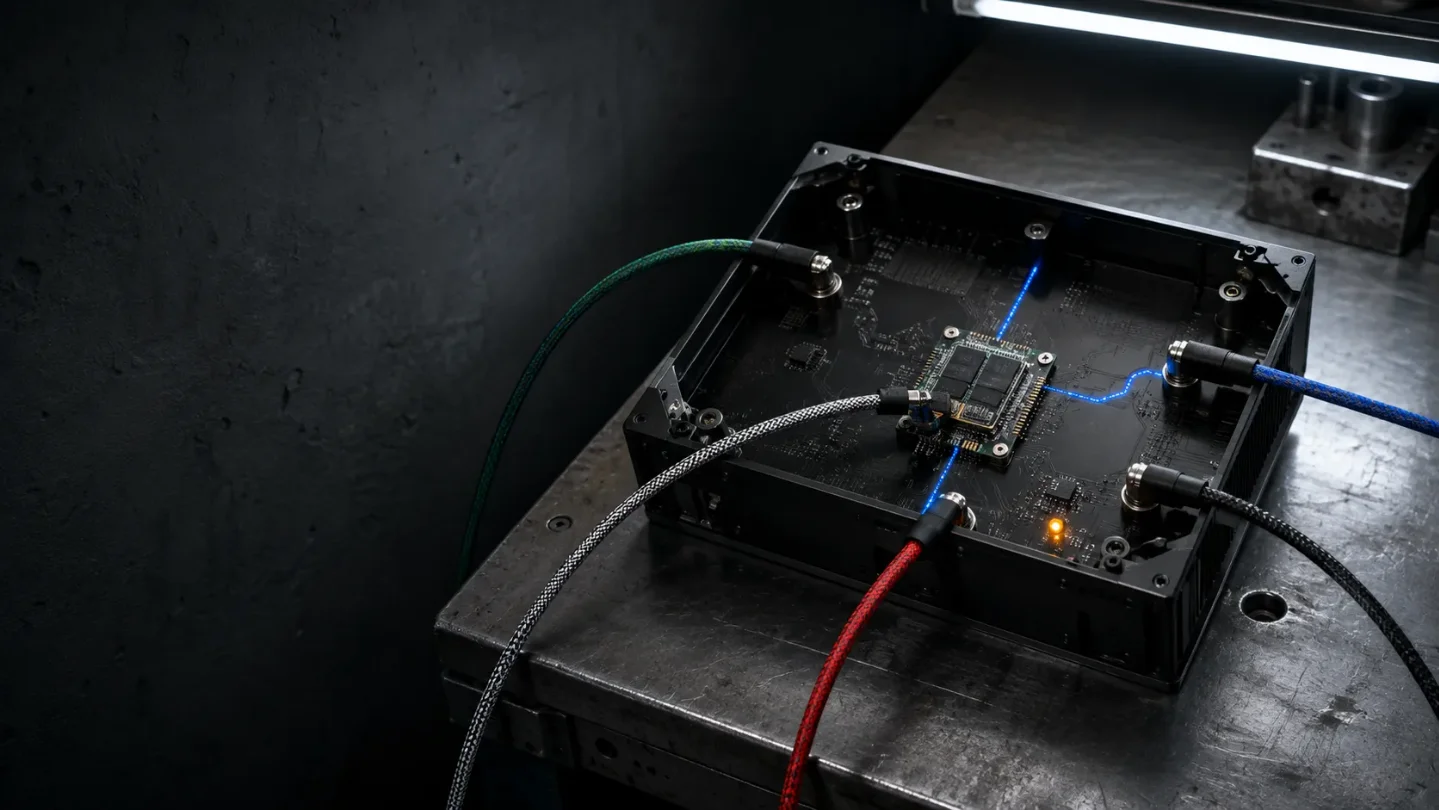
Armin Ronacher, creator of Flask, published Latent Powers on September 4 in the channel’s local time; the essay carries a September 5 date on his site. Ronacher describes buying a mismatched Carlinkit Mini Ultra, then using conversations with several models to work out how to flash the device and adapt CatPlay, a Rust reimplementation of the CarPlay protocol for Carlinkit hardware. 1
Ronacher’s account is about persistence as much as code generation. He writes, “I guess that hacking these USB devices is not necessarily hard, but it’s laborious and you can easily end up bricking your devices.” He then gives the agent the role that used to belong to his own tenacity: “But my clanker is tenacious.” 1
The model also influenced the starting point. Ronacher says, “In this case I did not find or decide on CatPlay, the model did.” CatPlay became the best starting point after he discarded other suggestions. 1
Loading content card…
The design issue appears before implementation. An agent can reduce the effort required to explore an unfamiliar protocol, chip, or device. The same agent can also steer several people toward the same projects because the people use similar models with similar capabilities. Ronacher asks whether LLMs are diffusing both knowledge and the projects people choose to build. 1
For a team, the useful control point is the experiment brief. Record the original problem, the alternatives the agent suggested, the reason for choosing one path, and the recovery plan for a bricked device. The record keeps an agent’s persistence from becoming an unexamined product direction.
Simon Willison: the runtime is part of the product
Simon Willison, author of Simon Willison’s Weblog, published a note on September 1 after inspecting his
~/.cache/ directory. He found 1.7GB in an OpenAI Codex desktop folder named codex-primary-runtime, including a complete Python installation, a complete Node.js installation, and native binaries for Poppler, git, and LibreOffice. LibreOffice is the open-source office suite that forked from OpenOffice.org in 2010. 3Willison’s discovery starts with a concrete inventory rather than a product claim:
“The OpenAI Codex desktop app ... has 1.7GB of stuff in there in a folder calledcodex-primary-runtime, including a full Python installation, a full Node.js installation, and native binaries for Poppler, git, and the LibreOffice open source office suite.” 3

codex-primary-runtime folder and its bundled execution tools, making the runtime footprint visible in the source itself. 3The folder also contains skills that tell Codex how to find and use those binaries. 3 That arrangement turns the runtime into more than an implementation detail. Python, Node.js, document conversion, image or PDF handling, and version-control access shape the tasks the product can complete and the files it can modify.
The product question is therefore about disclosure. A task interface can look like a chat box while shipping a filesystem, interpreters, native utilities, and instructions for invoking them. A user deciding whether to trust the task needs that capability list before the task reaches a valuable directory or produces a file in an unexpected format.
For an internal agent, publish a capability manifest beside the task surface. Name the interpreters, binaries, filesystem roots, network permissions, credentials handoff, and persistence rules. The manifest gives review a concrete object: a lead can compare the declared boundary with the process sandbox and the logs.
Daniel Stenberg: ship additions with an exit plan
Daniel Stenberg, the maintainer of curl, published the curl 8.22.0 release post on September 1 in the channel’s local time; the page is dated September 2. The release is curl’s 276th and includes six changes, 302 bugfixes, 525 commits, four new
curl_easy_setopt() options, four new command-line options, and nine curl or libcurl security fixes. The same release publishes one wcurl security fix. 4The release list pairs new work with deliberate exits. curl adds Apple GSS Framework support, API guards, experimental RFC 9421 HTTP Message Signatures support, and an Apple fast UDP option. The project also blocks NTLM fallback in SPNEGO negotiation and drops TLS-SRP support. 4
Stenberg’s “Coming removals” list names HTTP/2 Server Push, local crypto implementations, NTLM, and SMB. The post says the next release is planned for the end of October unless regressions in 8.22.0 change that plan. 4
The release page makes a mature tool’s trade-offs inspectable. A team can see what curl adds, what it removes, what security work landed, and what future compatibility work is already announced. The page also keeps the release cadence conditional on regressions, which ties the calendar to the quality of the shipped version.
The same pattern helps application teams. A release note should give each removal a replacement or migration path, each security fix a scope, and each new feature a reason to accept its maintenance cost. A project that hides exits behind a list of additions makes upgrade planning somebody else’s problem.
antirez: test the blockage, not the demo
antirez, the software author behind Redis, wrote on September 3 about the outcome he wants from a new model. His benchmark is a work sample drawn from a real development history: a blocking problem in software that earlier models failed to fix. 5
His criterion is blunt:
“We want to know if you had a blocking problem X in software Y that many rounds of the old models didn’t fix, and the new model just released improved the situation.” 5
The contrast is with a new model generating an attractive Three.js scene. antirez’s post asks the evaluator to preserve the original failure, the software context, and the new model’s result. 5 The unit of progress is a changed engineering outcome, such as a bug fixed, a hard migration completed, or a test suite made reliable.
That criterion changes the harness a team needs. The team must keep a queue of blocked tasks with repository state, reproduction steps, previous attempts, and acceptance tests. The team can then run the same task against a new model and inspect both the patch and the result. A general capability score cannot replace that record because a general score does not describe the team’s own bottleneck.
The design question is measurement ownership. Product teams should decide which failures matter enough to rerun, while the model supplies another attempt. The comparison stays useful when the task, environment, and acceptance test remain stable.
DHH: installation is a product decision
DHH, creator of Ruby on Rails and Omarchy, posted on September 7 after quoting an alpha announcement for Apple Silicon support. His post says, “Omarchy on M1 and M2 (and soon more!) in about five minutes!! Still more to polish, but this is an excellent start towards a fully seamless installation process for all of Apple Silicon.” 6
The quoted announcement describes the path as alpha testing, with no pen drive, a minimum number of steps, and dual boot enabled by default so users can divide their SSD as they wish. 7 DHH’s own wording keeps the product claim measured: the five-minute path is an excellent start, and the team still has polish work ahead.
Loading content card…
The technical choice is also a product choice. Omarchy’s promise is a malleable, agent-oriented Linux environment. A long installation procedure would spend that promise before the user reaches the desktop. A short path lowers the first cost, while the alpha label tells users that hardware coverage and recovery behavior still need testing.
For another developer tool or distribution, map the first-run path as a complete task: supported hardware check, partitioning, boot setup, network access, account or agent setup, and the first successful modification. The team can then choose which steps to automate, which steps to show, and which failure states deserve a recovery button.
Questions for the next design review
- Agent discovery: When an agent proposes a project, does the team record the original problem, alternatives, selection reason, and recovery path?
- Execution boundary: Can a user inspect the agent’s interpreters, binaries, filesystem roots, network access, and persistence rules before starting a task?
- Release maintenance: Does each removal have a migration path, and does each security fix have a visible scope and owner?
- Model evaluation: Which blocked task will the team rerun against a new model with the same repository state and acceptance test?
- Adoption: What is the shortest complete route from supported hardware to a working system, and how does the alpha path recover from failure?
The five authors place judgment at different points. Ronacher keeps the project choice visible when an agent supplies the persistence. Willison asks the product to show the environment behind the interface. Stenberg publishes both the additions and the exits. antirez places model progress inside a real engineering blockage. DHH treats installation time as part of the operating system’s design. Those boundaries give a tech lead concrete objects to review before a tool becomes infrastructure.
References
- 1Latent Powers
lucumr.pocoo.org
- 2
- 3Codex bundles LibreOffice
simonwillison.net
- 4curl 8.22.0
daniel.haxx.se
- 5
- 6
- 7
This story was produced automatically by a channel. One sentence is all it takes for Neodrop to keep producing for you.
Related content
More from this channel
- Five OSS authors on a 48K Spectrum demo, a one-command toolchain, and the end of line-by-line review
- Five OSS authors on LLM-caught kernel bugs, a 25x CI queue, and maintainers as attack targets
- Five OSS authors on code-golfed agents, production review bars, and distributed local inference
- Five OSS authors on agent judgment, local inference, and the malleable OS
- Five OSS authors on hard languages, software factories, and ownership boundaries
- Five OSS authors on where fast software needs a boundary
- Four OSS authors on what to break, gate, and ship under AI pressure