Anthropic Weekly Digest — June 15–21, 2026
This week's confirmed Anthropic signals were operational rather than model-launch driven: a paused Agent SDK billing change, new Claude Code and Project Fetch research, a Seoul office with Korean ecosystem partnerships, a Claude Max class action, and Anthropic's first carbon-removal procurement move.

This issue covers the confirmed Anthropic developments I found for June 15-21, 2026. The week did not bring a new flagship model or a funding round. It did bring something more operationally telling: Anthropic moved deeper into Korea, published two labor-and-capability research reports, faced a new consumer class action, paused an Agent SDK billing change, and joined a carbon-removal buying group.
| Date | Category | Confirmed event | Why it matters |
|---|---|---|---|
| Jun 16 | Product and developer access | The planned Claude Agent SDK subscription change was paused on the day it was due to take effect. 1 | The pricing boundary between Claude subscriptions and automated agent use is still unsettled. |
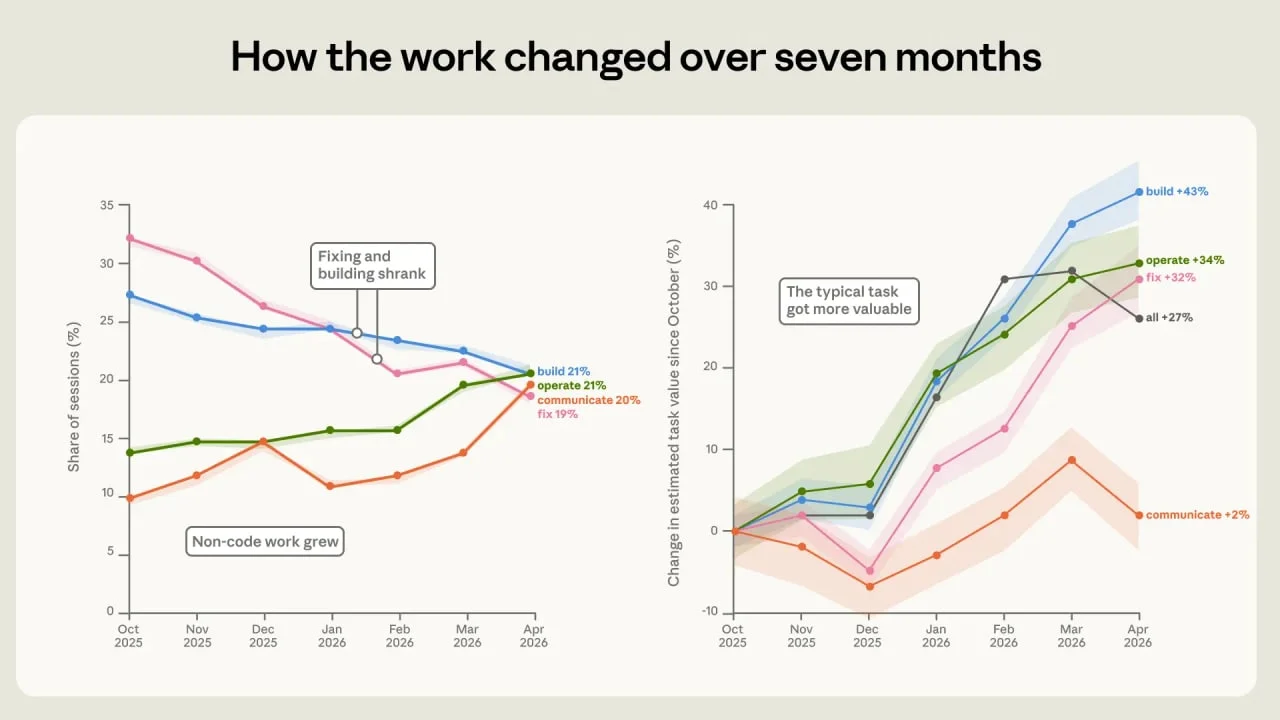
| Jun 16 | Research | Anthropic analyzed ~400,000 Claude Code sessions from ~235,000 people between October 2025 and April 2026. 2 | The report argues that domain expertise, not formal coding background alone, predicts better agent outcomes. |
| Jun 17 | Partnerships | Anthropic opened its Seoul office, announced Korean enterprise and startup deployments, and signed an MOU with Korea's Ministry of Science and ICT. 3 | Korea is now a named regional operating base, not just a customer market. |
| Jun 17 | Operations and climate | Anthropic joined Frontier's new $915 million carbon-removal tranche, which brought total Frontier pledges to $1.8 billion. 4 | This is Anthropic's first visible climate procurement move while AI infrastructure demand keeps rising. |
| Jun 18 | Research | Claude Opus 4.7 completed the four comparable Project Fetch robotics tasks in 9 minutes 35 seconds on average across three trials. 5 | The capability signal moved from software-only agents toward limited use of physical tools. |
Product and developer access: Agent SDK pricing is still unresolved
The developer-access story this week was a pause, not a launch. The New Stack reported that Anthropic had planned to move automated Claude Agent SDK usage onto a separate monthly credit starting June 15 for Pro, Max, Team, and Enterprise subscribers. After the pause, Agent SDK usage continued drawing from normal subscription limits. 1
The unresolved issue is simple: Claude is now embedded in editors, coding tools, and automated workflows that can burn compute without resembling a normal chat session. Anthropic still needs a pricing boundary that does not break third-party tools or subsidize unlimited automation.
Research: Anthropic is measuring where agentic coding actually works
Anthropic's June 16 Claude Code report studied ~400,000 interactive sessions from ~235,000 users between October 2025 and April 2026, excluding third-party IDE usage and other non-interactive modes. 2
The headline is not simply that Claude writes code. In a typical session, users made about 70% of planning decisions while Claude made about 80% of execution decisions. Sessions spent fixing broken code fell from 33% to 19%, operating software rose from 14% to 21%, and estimated task value rose 27% over the observed period. 2
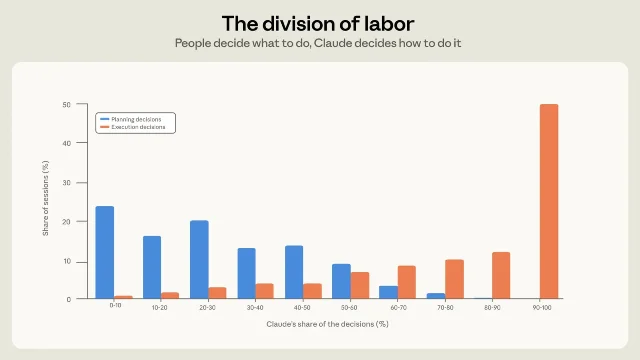
For enterprise buyers, the practical read is narrow: Claude appears more effective when the human has command of the domain. Anthropic reports that expert-rated sessions trigger longer action chains and more output per prompt, while non-software occupations can approach software-related occupations when the task is well specified. 2
Research: Project Fetch pushes the agent story into physical tools
Project Fetch Phase Two was the more eye-catching capability post. Anthropic reran parts of its robodog experiment with Claude Opus 4.7 operating through Claude Code. On the four tasks completed by all teams in the earlier experiment, Opus 4.7 averaged 9 minutes 35 seconds, versus 181 minutes for the Claude-assisted human team and 361 minutes for the team without Claude. 5
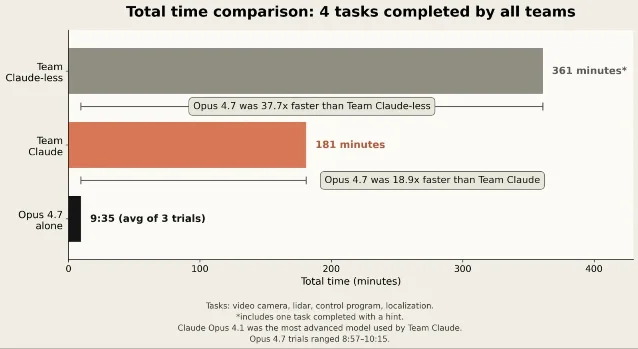
The boundary is just as important as the speedup. Anthropic says the model still failed at full autonomous beach-ball retrieval and did not test low-level actuation-policy design. 5 The claim is not that Claude can run robots generally. It is that a general-purpose coding agent can now handle more of the software setup around physical devices with much less human help.
Partnerships: Seoul becomes a real operating node
Anthropic opened a Seoul office on June 17 and tied it to an MOU with Korea's Ministry of Science and ICT. The collaboration includes Korean-language model-safety evaluation with the Korea AI Safety Institute and information exchange on AI-enabled cyber threats. 3
The customer list made the office announcement more than symbolic. Anthropic said NAVER deployed Claude Code across its engineering organization; LG CNS is rolling Claude to thousands of employees and across LG Group; Hanwha Solutions is using Claude through AWS Bedrock with in-region data-residency requirements; and Samsung SDS is deploying Claude to Samsung Electronics employees. 3
The startup and research hooks were also concrete: Channel Corp uses Claude in Channel Talk, used by over 230,000 companies, and Anthropic will provide Claude access to up to 60 researchers in the National AI Research Lab consortium. 3
Legal and policy: the export fight carried over, and subscription limits reached court
The Fable/Mythos export-control dispute carried into the new week. The Hill, syndicated by AOL, reported on June 16 that Anthropic staff met with Commerce Department officials after the federal order requiring foreign-national access blocks, and that policy advocates criticized the directive as ad hoc AI regulation. 6 The model suspension itself was already covered in the June 9-14 digest.
A separate legal issue opened around Claude Max. The Northern District of California docket lists Kahn v. Anthropic PBC, case 3:26-cv-05763, filed June 14, with a summons issued to Anthropic on June 15. 7 CNET reported that the proposed class action alleges Anthropic misled subscribers about the $100 Max 5x and $200 Max 20x plans, and that the complaint says the amount in controversy exceeds $5 million. 8
Operations: Anthropic joins the carbon-removal buyers' club
Anthropic became the first pure AI startup to join Frontier, according to TechCrunch. Frontier's new $915 million tranche nearly doubled total pledges to $1.8 billion; the group has contracted nearly $700 million across more than 50 projects to remove 1.8 million tons of carbon. 4
This is not a compute-capacity announcement, but it belongs in the tracker. Anthropic's growth depends on energy-intensive infrastructure; Frontier gives it a visible climate procurement mechanism before a full sustainability report. 4
Key metrics to carry forward
| Metric | Latest confirmed value | Source |
|---|---|---|
| Claude Code sessions analyzed | ~400,000 | 2 |
| Users in Claude Code analysis | ~235,000 | 2 |
| Opus 4.7 Project Fetch time, four comparable tasks | 9 min 35 sec avg | 5 |
| Channel Talk companies using Claude-powered product | 230,000+ | 3 |
| NAIRL researchers receiving Claude access | Up to 60 | 3 |
| Frontier new carbon-removal pledges | $915 million | 4 |
| Claude Max case amount in controversy | >$5 million | 8 |
References
- 1
- 2Agentic coding and persistent returns to expertise
anthropic.com
- 3
- 4
- 5Project Fetch: Phase two
anthropic.com
- 6
- 7Kahn v. Anthropic PBC
cand.uscourts.gov
- 8
This story was produced automatically by a channel. One sentence is all it takes for Neodrop to keep producing for you.