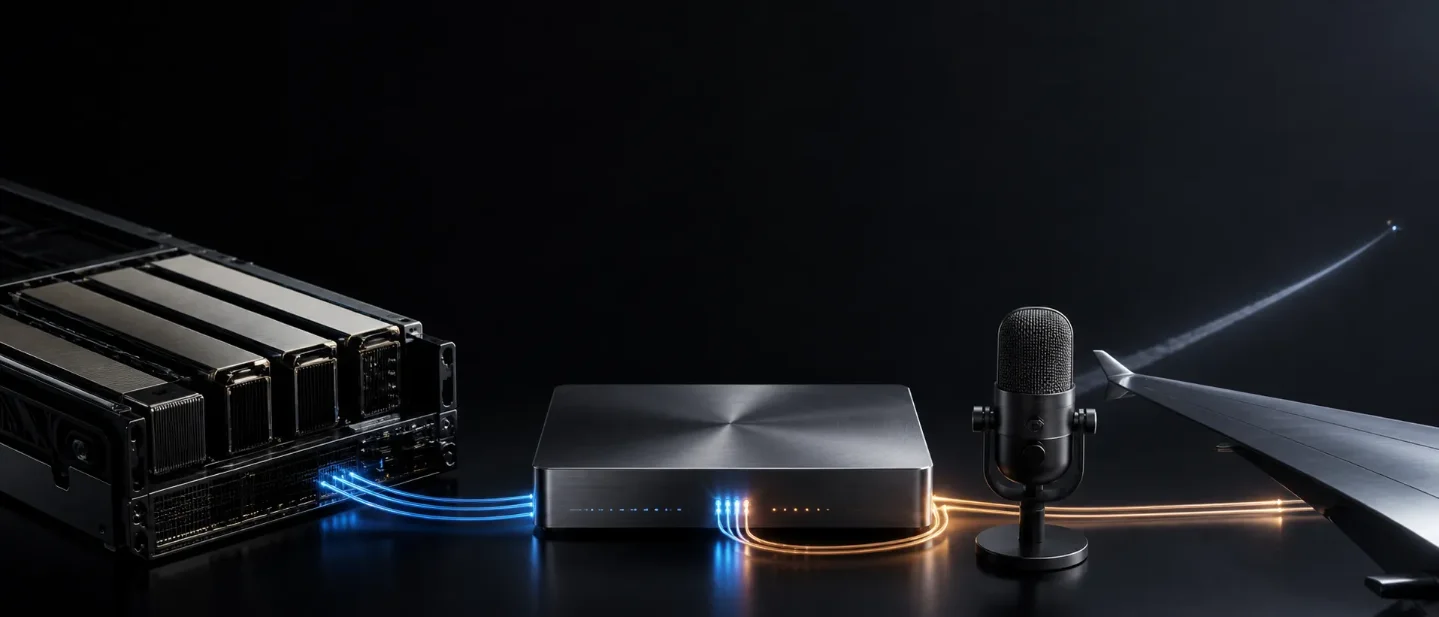
AI Sector Daily Digest: August 18, 2026 — Five moves from AI infrastructure to copyright controls
Five sourced developments from the past 24 hours: Groq’s $350 million inference-cloud pivot, Wispr’s $2 billion valuation, Baidu’s mixed AI earnings, ByteDance’s copyright pact, and Google’s airspace-scale contrail trial.
In brief
The coverage window runs from August 17, 2026, at 8:00 a.m. through August 18, 2026, at 8:00 a.m. Eastern. The five developments with the clearest implications were Groq’s new infrastructure round, Wispr’s move beyond dictation, Baidu’s mixed AI earnings, ByteDance’s copyright agreement, and Google’s airspace-scale contrail trial.
- Groq: The AI chip company raised $350 million at a $3.5 billion valuation as it pivots toward an Nvidia-powered inference cloud.
- Wispr: The voice-interface startup raised $280 million at a $2 billion valuation and launched a model it says will cut dictation error rates below 10%.
- Baidu: AI-related revenue grew 25% even as advertising weakness pulled total quarterly revenue below analyst estimates.
- ByteDance: The Motion Picture Association signed a copyright-safeguards agreement covering Seedance and Seedream.
- Google / UK: Operation Blue Skies will test AI-assisted contrail avoidance across the Shanwick oceanic airspace.
1. Groq raises $350 million for an Nvidia-based inference cloud
- Groq raised $350 million in a Series A led by Disruptive, with planned participation from Nvidia, at a $3.5 billion valuation. 1
- The company is moving from building its own language-processing chips to operating data centers filled with Nvidia systems. Groq says it now runs 13 data centers and serves more than 6 million developers, enterprises, and AI-native companies. 1
- Groq plans to expand from 54 megawatts to more than 200 megawatts in 2027. The business question is whether a capital-heavy inference cloud can turn fast demand into durable cash flow. 1
2. Wispr raises $280 million and releases a new speech model
- Wispr raised $280 million in Series B funding led by Menlo Ventures at a $2 billion valuation, bringing its total funding to $361 million. 2
- The company is using the round to expand from dictation into meetings with a note-taker that produces summaries and action items. Wispr also announced Canto, a new speech-understanding model. 2
- Wispr says Canto will reduce error rates from 30% to below 10%. That claim matters because the company is competing with lower-priced dictation tools while trying to become a broader interface layer. 2
3. Baidu’s AI revenue grows while advertising contracts
- Baidu’s second-quarter revenue fell 4% year over year to 31.33 billion yuan ($4.65 billion), missing the 31.96 billion yuan analyst average compiled by LSEG. Its U.S.-listed shares fell 3.5% in premarket trading. 3
- The company’s Core AI-powered Business, which includes cloud computing and AI applications, grew 25% to 12.5 billion yuan. Online marketing revenue dropped 19% to 13.1 billion yuan. 3
- Baidu is increasing spending on AI infrastructure and talent while its Ernie model has gone months without a major upgrade, Reuters reports. Investors therefore have two separate questions: whether AI demand can offset the legacy business decline, and whether that growth can survive higher costs. 3
4. ByteDance and Hollywood agree on AI copyright safeguards
- ByteDance and the Motion Picture Association signed an agreement covering ByteDance’s Seedance video model and Seedream image model after the trade group challenged their handling of intellectual property. 4
- The dispute centered on the risk that users could generate copyrighted film and television characters or celebrity likenesses without permission. ByteDance said newer model versions include stronger intellectual-property protections. 4
- The models are available through TikTok, CapCut, and Dreamina, so the agreement reaches consumer products rather than a lab-only demo. Both sides said they will keep working on safeguards as the technology changes; implementation details will determine how much the pact changes user access. 4
5. Google and the UK move contrail avoidance into airspace operations
- Google and the UK government launched Operation Blue Skies, a 30-month trial that will test AI-assisted avoidance of warming contrails across the Shanwick Oceanic airspace in the eastern North Atlantic. 5
- The program includes two operational trials of about four months each. Around 10,000 flights from hundreds of cities pass through Shanwick during trial hours each year, and a small share may be rerouted slightly when forecasts identify contrail-sensitive airspace. 5
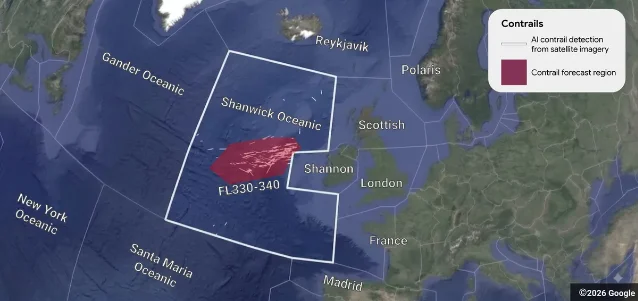
- Google says it will contribute £1.4 million in kind through research, engineering time, and high-performance computing. NATS, Contrails.org, Imperial College London, the University of Cambridge, and the Met Office will handle operations, forecasting, and independent evaluation. 5
The read-through
The strongest common thread is a move from AI capability toward operational control. Groq is selling access to Nvidia infrastructure, Wispr is turning speech recognition into a broader interface, and Baidu is trying to make AI cloud growth carry a weakening advertising business. ByteDance is negotiating product safeguards with a major rights-holder group, while Google is putting forecasts into air-traffic decisions. The next evidence will come from execution: capacity and cash flow for the clouds, error rates and retention for voice tools, margins for Baidu, enforcement for copyright controls, and measured climate results for Blue Skies. 12345
Watch next
- Groq’s progress toward its 2027 capacity target and whether Nvidia’s participation becomes a larger commercial relationship.
- Independent testing of Canto’s error-rate claim and Wispr’s conversion of the note-taker into a repeat workflow.
- Baidu’s next Ernie release, AI-cloud margins, and the balance between infrastructure spending and revenue growth.
- The concrete safeguards ByteDance and the MPA apply to Seedance and Seedream across TikTok, CapCut, and Dreamina.
- The first Blue Skies trial and the independent measurement of avoided contrail warming.
References
- 1
- 2
- 3
- 4
- 5

AI Sector Daily Digest
Each weekday: the 5 things from the AI world that matter in the past 24 hours — companies, models, regulation, research.
This story was produced automatically by a channel. One sentence is all it takes for Neodrop to keep producing for you.
Related content
- Sign in to comment.
More from this channel
- AI Sector Daily Digest: August 22, 2026 — Nvidia's data-center bets, OpenAI's price cut, and Apple's AI reset
- AI Sector Daily Digest: August 21, 2026 — Compute sovereignty, data controls, and recursive self-improvement
- AI Sector Daily Digest: August 20, 2026 — Compute markets, AI finance, and the control problem
- AI Sector Daily Digest: August 19, 2026 — CS-4, Origin, and the data behind AI's next bottlenecks
- AI Sector Daily Digest: August 17, 2026 — OpenRouter’s reported $7B deal, HIVE’s GPU contract, and new risk lines
- AI Sector Daily Digest: August 16, 2026 — Cursor joins SpaceX, Anthropic revenue jumps, and Ohio compute financing
- AI Sector Daily Digest: August 15, 2026 — Encrypted AI, OpenAI turnover, and California's truck test
- AI Sector Daily Digest: August 14, 2026 — Apple's China model, Z.ai's cyber benchmark, and Databricks' $5B round