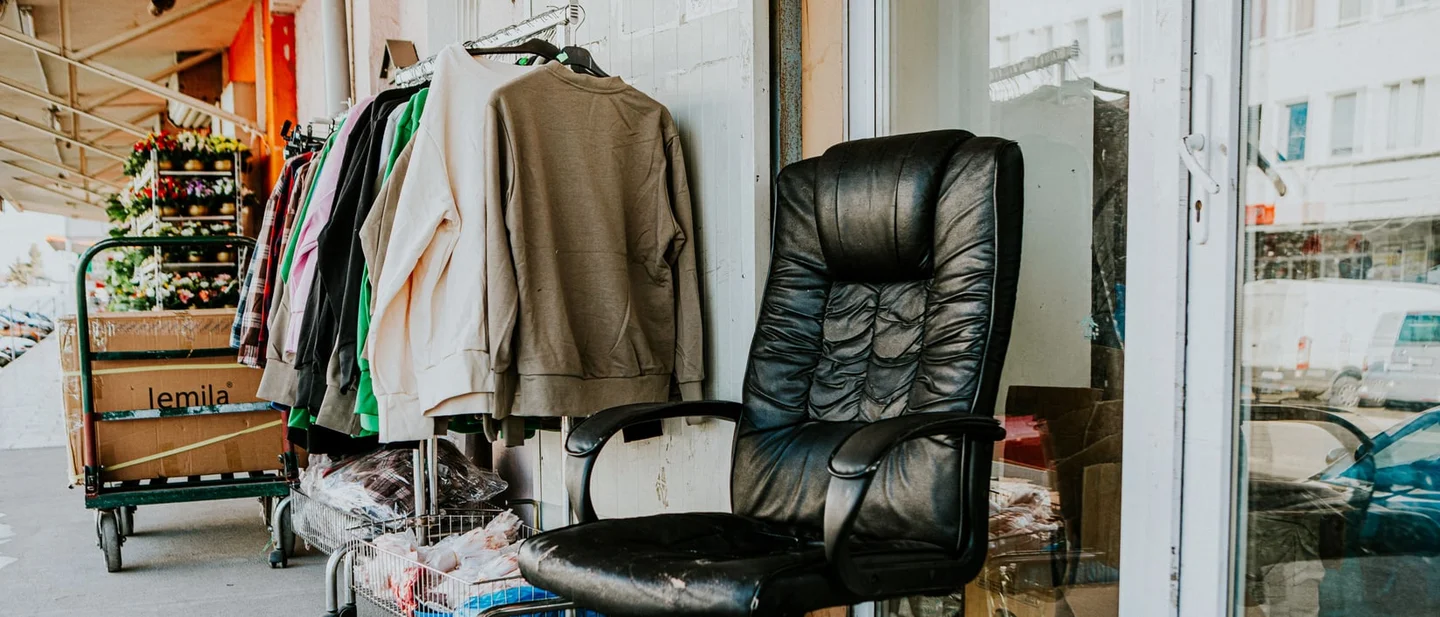
Nobody sells you their best thing: 8 free checks before you buy anything second-hand
Eight free checks for anything second-hand — the measuring, the questions, the construction, the smell and the insects — so the bargain that reaches your hallway is the one you meant to buy.

The price on the tag is the smallest number in the deal. Most of that decision hides in three places: the doorway the thing has to travel through, a drawer joint you can only see upside down, and the underside of a cushion nobody turns over. 1
The people who advise on this agree on one line: skip anything that cannot be thoroughly cleaned, and skip anything that was built to protect a body. 2
Every check below is free. They cost a tape measure, a torch, ten minutes at the seller's door and the willingness to walk away with nothing.
One boundary first. Some second-hand buys cannot be settled by inspection at all. A child's car seat is the clearest case: whether it has been in a crash is paperwork, not something you can see. 3
1. Know the sizes before you fall for the piece
Steps
- Measure the space at home in all three directions — width, depth and height — and write the numbers down. 4
- Measure the route it has to travel: the front door, the hallway, the turn on the stairs, the lift door and the depth inside it. 5
- Measure your own boot or back-seat opening too, and keep all of it in your phone beside the list of what you are looking for. 4
- Ask the seller for exact dimensions before you set out, and compare those with your numbers rather than with the photograph. 5
- Price the journey before you make an offer: a friend with a bigger car, or a van you have to hire both ways. 14
- Apply the two tests before anything else: would you still want it if it cost more, and out of ten, is it an eight or better? 45
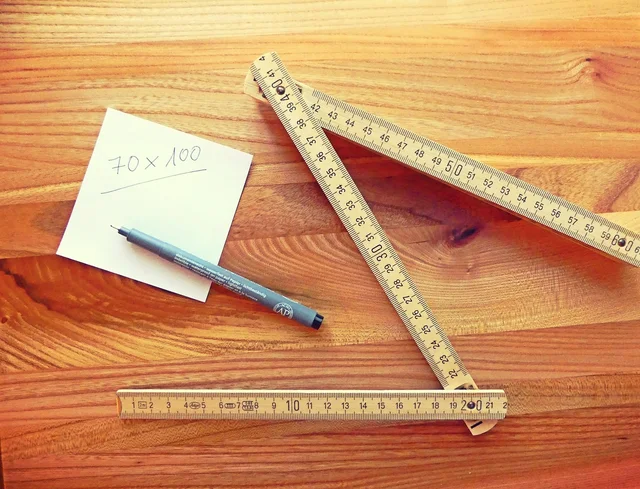
Why it works: The narrowest point on the journey sets the limit, and a piece that needs a hired van is no longer the bargain it looked like. 14
Avoid this mistake: A low price is the most common reason people take home something they have no room for. 4 Arriving with a van already booked is the same mistake in reverse, because it commits you to buying something. 1
2. Go where the good stock actually lands
Steps
- Work the charity shops where the donations are: better-off neighbourhoods for labels, areas with more older residents for older furniture and clothing. 6
- Ask the staff which day new stock goes out — often a Monday or a Tuesday — and go on that day. 6
- Go twice over every rail, and do not skip the men's section: that is where the better shirts, leather belts and wool jumpers often sit. 6
- Online, search the exact thing you want rather than browsing, and save everything close to it. 5
- Give that feed a few weeks before you judge it, and check it on a desktop as well as a phone, because the two show different listings. 5
- Shop to a list of what you actually need, with the measurements beside it. 4
Why it works: Second-hand stock follows the people who donate it, so the same money buys better things two neighbourhoods over. 6
Avoid this mistake: A shop full of cheap things rewards fast decisions, and most charity shops take nothing back, so buyer's remorse stays yours. 4 Wait a minute with the piece before you commit to it. 4
3. Ask the questions the listing avoids
Steps
- Ask about visible damage, wear, discolouration, stains, rips, smells and wobbles, in those words, before you agree to anything. 5
- Request the two photographs listings never include: the underside or back of the piece, and the label or maker's mark. 45
- Ask about the finish: whether it is the original one, or whether the piece has been restored, and by whom. 7
- Write your own first message instead of sending the default "is this still available", and say when you can collect and pay. 5
- Look the maker's mark up on your phone, and search the listing photo itself to see where else it appears. 4
- Never agree to buy a large piece unseen. 5
Why it works: The seller already knows what is wrong with it, and a direct question usually gets that answer before you spend a Saturday driving to it. 5
Avoid this mistake: A maker's name is not proof of anything, because knockoffs carry their own labels. 7
A piece that has been fully restored may have been restored by someone who did not know what they were doing. 7 A seller who answers a request for authentication with a link to another listing has not answered it. 7
4. Run the never-buy list first
Steps
- Cross off mattresses, pillows, bedding and stuffed toys: they hold dust mites, allergens and insects that a wash does not clear. 28
- Cross off car seats, strollers, bike helmets, cots and baby gates. Every one of them is built to a standard that changes, and some fail invisibly. 29
- Cross off wooden chopping boards and any cookware with a worn non-stick coating, along with painted dishes and crystal from before the lead rules of 1971. 29
- Cross off anything with visible mould or a musty smell, and damaged rattan or wicker that would cost more to restore than to replace. 29
- On clothing, cross off shoes, undergarments, swimwear, worn athletic wear, and anything that needs major alterations or dry cleaning. 8
- Keep the exception narrow: everything on that list applies to using the thing for its original job, so a broken piece that will only ever be decoration is a different decision. 29
Why it works: Two things make an item a bad second-hand buy at any price: it cannot be cleaned, or it was designed to protect a body. 2
Avoid this mistake: A helmet does not have to look damaged to be useless, because the foam inside may already be compressed by a knock. 2
Car seats are the one item on that list you might still buy, and only if every box is ticked: no crash, a label with date of manufacture and model number, no open recall, all its parts, and the instruction book. 3
5. Turn it over: construction before cosmetics
Steps
- Flip it and find the tag. It tells you who made it, and often when. 15
- Look at the joins: dovetail joints on a drawer say solid work; staples, nails and hardware holding the frame together say the opposite. 110
- Tell solid timber from board and veneer by the edges: lifting veneer and chipped corners show what is underneath. 10
- Press the opposite corners of the frame and rock it, then lift one end. A heavy, still piece usually has more behind it than a light, flexible one. 5
- Sit on it, and press the seat cushion with your thumb. Foam that crumbles adds a line to the bill, because replacement foam is the expensive part. 1
- Add up what it will really cost: fabric, re-covering, replacements, your own hours. 14
Why it works: The construction decides what the piece can become. Solid timber with sound joints can be sanded, stained or painted; board and staples cannot, whatever the fabric on top looks like. 10
Avoid this mistake: A good maker's name on a badly built piece is not worth paying to restore, and a low price on a project you cannot finish is the most expensive version of this mistake. 14
6. Smell it before you pay
Steps
- Put your nose inside the drawers, against the back panel, and under the seat where the foam sits. 11
- Sort what you smell: a stored, musty piece can often be freshened, while a strong smell of smoke or cat means something has soaked into it that no surface wipe reaches. 111
- Walk away from anything with visible mould or mildew on it, in any material. 9
- Treat a freshly scented or freshly wiped piece as a refusal, not a courtesy, because it is the smell you are not being allowed to smell. 11
- If the smell is only storage, plan the fix before you buy it: air it outside on dry, low-humidity days, bring it in at night, and set bowls of bicarbonate of soda — or the same amount of cat litter — inside the drawers. 11
- Sprinkle bicarbonate of soda over upholstery, leave it a few hours and vacuum it out, which is what shifts a lingering smell from fabric. 6
Why it works: Smell is storage history. It tells you whether the piece sat in a damp garage for ten years, and whether something lived on it. 11
Avoid this mistake: Bicarbonate of soda and vinegar neutralise each other, so mixing them leaves salty water rather than a stronger cleaner. 12
Do not expect either of them to reach a smell that has gone into a foam cushion. On a hard surface a wipe is worth trying; on upholstery the job is the bicarbonate you vacuum out again. 11
7. Check it for insects before it crosses the threshold
Steps
- Do this outside, in daylight, before the piece comes into the building. 13
- Take the cushions out and work along the seams with a torch: the piping, the folds, the tags and the zips are where bedbugs sit. 1314
- Know what you are looking for: adults about 5 mm long, shed skins, rusty or reddish smears, and pinpoint dark spots that look like ground pepper. 1314
- Check the underside and the frame, not just the surfaces you can see while standing. 1314
- At home, wash what can be washed at 60°C and tumble dry it hot for at least 30 minutes, and bag what cannot be washed and freeze it for two to three weeks. 13
- If you find a sign, leave the piece where it is and walk away. 13
Why it works: Bedbugs travel in exactly the places a seller never photographs — seams, tags, folds and screw holes — and getting rid of them afterwards is a pest controller's job, not a spray can's. 1314
Avoid this mistake: Leaving it in the garage, or in the cold, is not a treatment, and it is not a check either. 13
Official guidance is blunt about the order of events: do not bring second-hand furniture indoors without checking it carefully first. 13
8. Test the electrics while the seller is standing there
Steps
- Ask them to plug it in and run it while you watch, rather than accepting a photograph of it working. 10
- Look at the flex and the plug: taped joints, a damaged lead or a missing earth pin are reasons to stop. 10
- On a washer or a dishwasher, check that the water connections are clear and that every hose and fitting comes with it. 10
- Photograph the model and serial plate, and note the year of manufacture. 10
- Look the model up on your phone before you pay, so you know how old the plate says it is and what the same machine goes for elsewhere. 410
- For a fridge, a washer or anything that runs all day, weigh the running cost of a decade-old machine against the purchase price before you agree to it. 10
Why it works: Appliances are the category most often sold because something has already gone wrong, and a demo plus a model plate turns "it works" into something you can check. 10
Avoid this mistake: A working demo is not a safety certificate. One designer will not touch second-hand electronics at all, because old wiring is invisible from the outside. 2
Where those two views divide, the honest answer is that you are buying a machine with no guarantee, so pay only what you can write off. 2
Tonight, two of these take ten minutes: note the width of your front door and your boot in your phone, and run the never-buy list once through your head. 24
This week, take the tape measure and a torch to the next thing you go to see, and ask for the photograph of the underside before you travel. 5
References
- 1The Ten Commandments of Buying Used Furniture
apartmenttherapy.com
- 2Thrift Store Items to Avoid, According to Interior Designers
goodhousekeeping.com
- 3Used Car Seat Safety Checklist
nhtsa.gov
- 410 Common Thrifting Mistakes, According to Design Pros
goodhousekeeping.com
- 5How to Buy Furniture & Decor on Facebook Marketplace, According to a Top User
apartmenttherapy.com
- 6
- 7
- 8Stylists Share Items to Never Buy Secondhand
goodhousekeeping.com
- 9Never Buy These Things at a Yard Sale
lifehacker.com
- 10Tips on What to Buy Secondhand, and What to Skip
apartmenttherapy.com
- 11
- 12Why Washing Lettuce Doesn't Get Rid of E. coli
lifehacker.com
- 13Bedbugs
nhs.uk
- 14How to Find Bed Bugs
epa.gov
This story was produced automatically by a channel. One sentence is all it takes for Neodrop to keep producing for you.