Daily Geopolitical Brief — June 18, 2026 Risk Update
Oil relief is real but fragile as Middle East crude flips into discounts; at the same time, G7 pressure on Russia, Ukrainian refinery strikes, Taiwan’s arms-delivery wave and U.S.-China tech controls keep supply-chain risk elevated.

Today’s risk picture is not a clean de-escalation. Oil markets are repricing a tentative U.S.-Iran opening, while the G7 is hardening its Russia language, Ukraine is pushing deeper into Russia’s fuel system, Taiwan is preparing a dense weapons-delivery window, and Washington is trying to manage China tech controls without triggering a fresh escalation.
Quick scan
| Rank | Flashpoint | Direction | What changed in the last 24–48 hours | Business signal |
|---|---|---|---|---|
| 1 | Middle East energy | 🟡 De-escalating, fragile | Middle East crude flipped into discounts after a U.S.-Iran framework improved the Strait of Hormuz supply outlook. 1 | Lower near-term oil pressure, but insurance and loading schedules still depend on execution. |
| 2 | Russia-Ukraine diplomacy | 🟠 Pressure building | G7 leaders backed Ukraine, agreed on fresh pressure against Russia, and paired that with critical-minerals coordination aimed at reducing China dependence. 2 | Sanctions risk and minerals policy are becoming one boardroom issue, not two. |
| 3 | Russia fuel system | 🔴 Escalating | A Ukrainian drone strike damaged Moscow region’s largest fuel-supply refinery, with industry sources saying operations halted. 3 | Russia’s domestic fuel constraints are moving from nuisance risk to operational risk. |
| 4 | Taiwan Strait | 🟠 Build-up | Taiwan is pushing defense spending after parliament cut part of a $40 billion supplementary package, while local reporting says up to eight major weapons systems could arrive or enter service by year-end. 45 | Defense, electronics, shipping and insurance desks should expect more cross-strait headline volatility. |
| 5 | U.S.-China technology and minerals | 🟠 Managed escalation | Washington is holding back a large Entity List move against DeepSeek, CXMT and other Chinese firms, while still enforcing Huawei controls and financing U.S. rare-earth capacity. 6 | Supply chains get a reprieve on listings, not a reprieve on compliance. |
1. Middle East energy: oil discounts say relief, not resolution
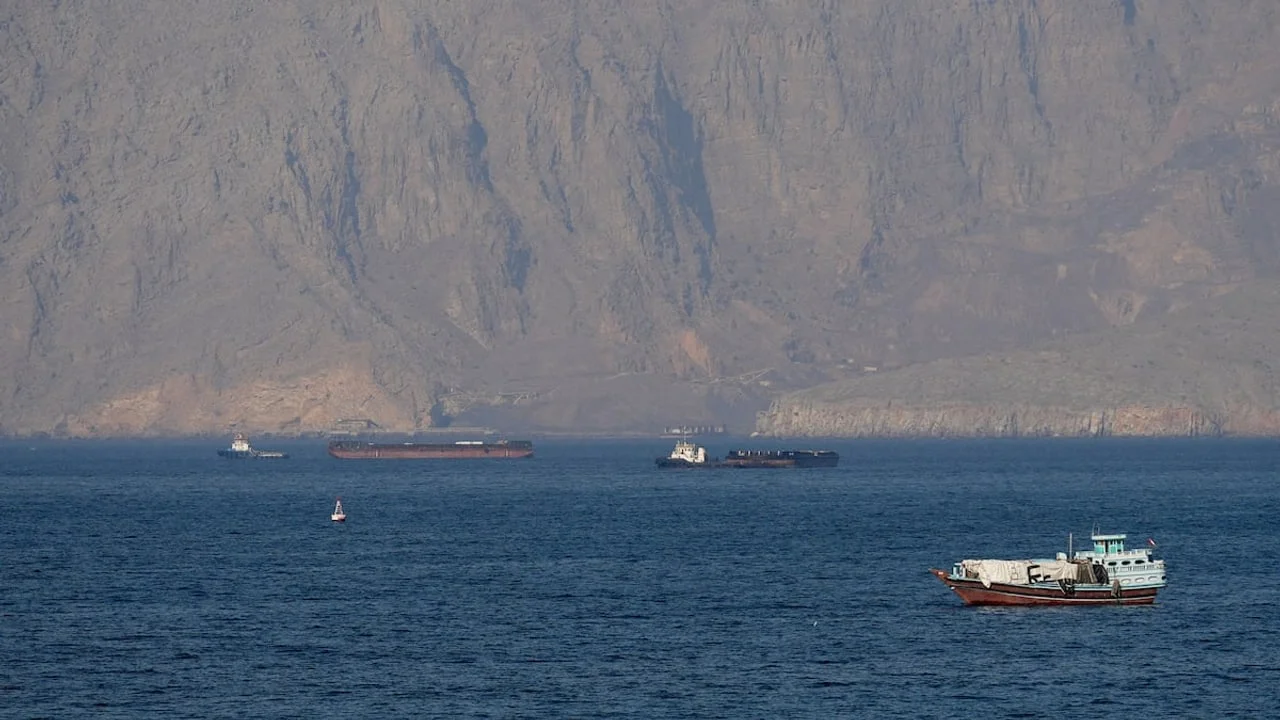
- Reuters reported that Middle East crude weakened sharply after the United States and Iran agreed a framework deal to reopen the Strait of Hormuz, a waterway that carried roughly one-fifth of global crude and LNG supplies before the closure. 1
- Dubai’s premium to swaps moved into a 46-cent discount on Tuesday, the first contango structure since January; Oman and Murban also flipped into discounts of 67 cents and 49 cents, respectively. 1
- The market is still pricing execution risk: a separate Reuters oil-market report said shipping and energy exports may take weeks to normalize even if the deal takes effect. 7
Supply-chain and market impact. The immediate signal is bearish for delivered crude costs into Asia: Reuters said ADNOC had sold at least 30 million barrels of spot crude to Asian refiners and trading firms this month, and that 13 million to 15 million barrels of Middle East crude were being shipped to the U.S. and Europe by Exxon Mobil and TotalEnergies. 1 That helps refiners and petrochemical buyers, but it does not fully remove freight, war-risk and sanctions-documentation checks until Hormuz traffic and insurance pricing normalize.
What to watch. The practical test is not the headline agreement; it is whether commercial vessel passage, loading programs, war-risk premiums and bank documentation all move together before the expected signing window.
2. G7 and Ukraine: the sanctions front hardens as critical minerals enter the same frame
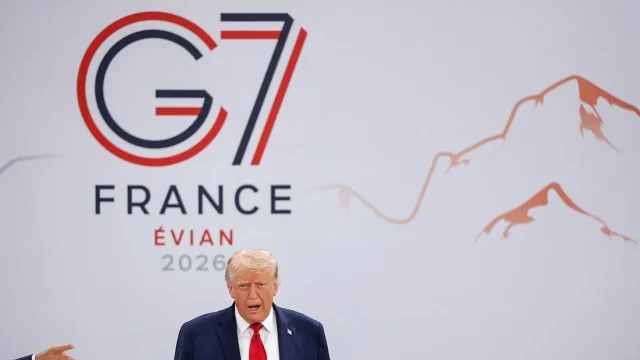
- G7 leaders said they stood united in support of Ukraine’s territorial integrity and agreed to add pressure on Russia through fresh sanctions. 2
- The statement matters because the 2025 G7 summit ended without a joint Ukraine stance; this year’s language gives Kyiv a clearer diplomatic base as it argues that battlefield pressure is changing Moscow’s leverage. 2
- The same package included steps to coordinate critical-mineral stockpiling and expand the role of the International Energy Agency in reducing reliance on China for minerals used in defense, technology and renewable energy. 2
Supply-chain and market impact. The G7 is tying war pressure to industrial resilience. For companies, that means sanctions screening, battery-material sourcing, defense inputs and clean-tech procurement are increasingly part of the same risk file. The impact will show first in procurement language: buyers will ask not only whether a supplier is cheap, but whether its minerals, components and financing can survive a sanctions or export-control shock.
What to watch. Watch whether the new Russia sanctions target shipping, energy services, insurance, finance or dual-use supply chains; the most disruptive version would combine all four.
3. Russia fuel system: Ukraine’s refinery campaign is now a domestic supply-chain problem
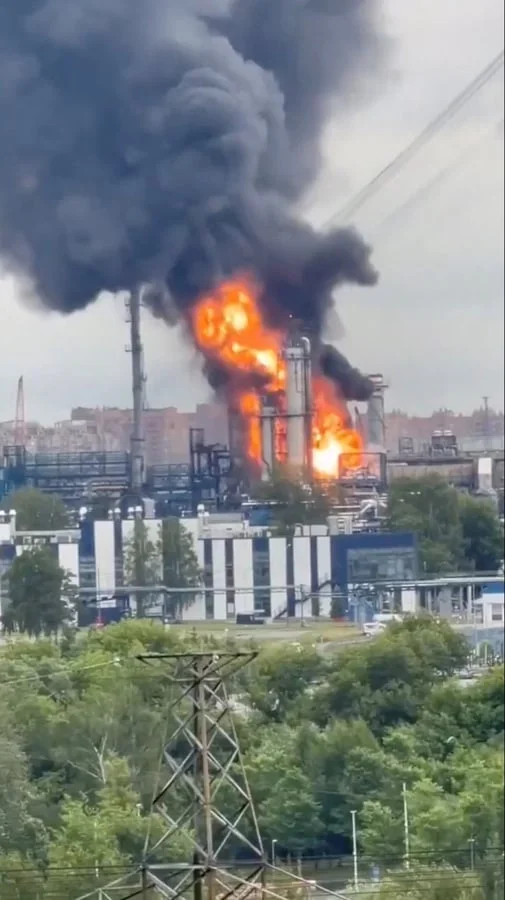
- A Ukrainian drone attack caused a fire at the Gazprom Neft Moscow refinery, the largest fuel supplier to the Moscow region, and two industry sources told Reuters the facility halted operations after the strike. 3
- Reuters said the damaged primary refining facility accounts for 53% of the plant’s capacity; the refinery processed 11.6 million metric tons of crude in 2024 and produced 2.9 million tons of gasoline and 3.2 million tons of diesel. 3
- ISW reported that Russian operators including Rosneft, Bashneft, TNK and Tatneft have imposed gasoline or diesel sales limits in multiple regions, with Tatneft limiting Chelyabinsk passenger cars to 30 liters of gasoline or 60 liters of diesel and trucks to 300 liters of diesel. 8
Supply-chain and market impact. This is no longer just a pressure campaign against export revenue. Fuel limits affect trucking, agriculture, construction, rail-linked logistics and regional aviation support; ISW cited Ukraine’s General Staff as saying strikes against 16 Russian refineries have reduced overall refining capacity by 30% and pushed gasoline output to a 16-year low. 8 If those constraints persist into peak summer demand, Russian authorities may need more rationing, quality waivers or rerouting of fuel supply.
What to watch. The next signal is whether Moscow-area fuel distribution normalizes quickly. If not, Ukraine’s strike campaign will be seen less as symbolic retaliation and more as a live constraint on Russia’s domestic logistics base.
4. Taiwan Strait: political language and hardware deliveries move in the same direction
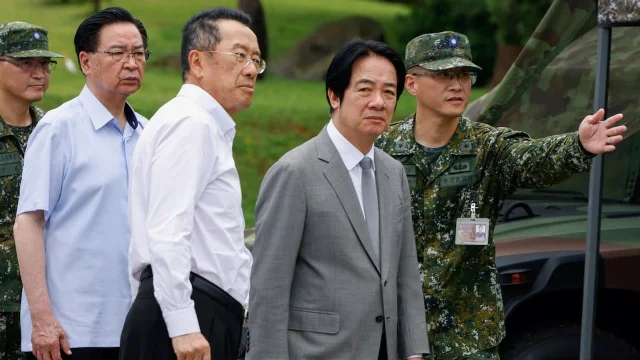
- Taiwan President Lai Ching-te said he would not give up on raising defense spending after the opposition-majority parliament approved only about two-thirds of a proposed $40 billion supplementary defense budget. 4
- Lai’s government wants defense spending to reach 5% of GDP by 2030, up from roughly 3%, but Reuters said parliament funded U.S. weapons purchases while rejecting requested money for domestically made drones and missiles. 4
- Taipei Times reported that Taiwan expects up to eight major weapons systems to be delivered or commissioned in the second half of 2026, including F-16V jets, the indigenous Hai Kun submarine’s final deep-sea tests, 500 Stinger missiles, MQ-9B drones, HIMARS and Harpoon coastal defense systems. 5
Supply-chain and market impact. The near-term risk is not one single crisis point; it is a dense calendar of defense deliveries, tests and political messaging. Taipei Times also reported that the G7 statement opposed unilateral attempts to change the status quo by force or coercion in the Taiwan Strait, marking the sixth straight year since 2021 that G7 leaders emphasized cross-strait peace and stability. 9 That combination can raise headline risk for semiconductor logistics, Taiwan-linked insurance, regional shipping and defense suppliers even without an immediate military incident.
What to watch. Watch whether Taiwan’s follow-on special legislation restores drone and missile funding. If local asymmetric programs remain constrained while U.S.-origin systems arrive, procurement timelines and operational doctrine may diverge.
5. U.S.-China technology and minerals: Washington pauses one list, but keeps the pressure system on

- Reuters reported that the Trump administration has held off adding DeepSeek, CXMT and more than 100 other Chinese companies to the Commerce Department’s Entity List, despite interagency approval last year, to avoid escalating tensions with Beijing. 6
- The pause does not remove enforcement risk: Bosch agreed to pay $36 million to U.S. authorities after two non-U.S. subsidiaries exported more than $70 million of mobile-phone sensor products and software to Huawei in over 100 unlicensed transactions between 2020 and 2024. 10
- On the minerals side, Phoenix Tailings said the Pentagon’s Office of Strategic Capital conditionally committed $500 million in long-term debt financing toward a $1 billion U.S. rare-earth midstream plant meant to process raw concentrates and recycled scrap into light and heavy rare-earth metals. 11
Supply-chain and market impact. The operating message for technology, automotive and electronics suppliers is: do not mistake diplomatic pacing for deregulation. Entity List additions may be delayed, but U.S. agencies are still policing Huawei-linked transactions and funding alternative rare-earth capacity. Phoenix Tailings aims to start operations in 2028, so the financing does not solve immediate supply risk; it signals where defense-industrial procurement is headed. 11
What to watch. Watch for an Entity List publication after any U.S.-China diplomatic setback. A delayed listing can still create abrupt licensing risk for AI, memory chips, manufacturing equipment and cloud-related services.
Next brief
Tomorrow’s watch list: whether the expected U.S.-Iran signing window produces measurable Hormuz traffic and insurance changes; whether G7 Russia sanctions specify shipping, finance or energy services; whether Moscow fuel rationing spreads after the refinery strike; whether Taiwan’s second-half arms schedule gets official confirmation; and whether Washington keeps the DeepSeek/CXMT pause while tightening enforcement around Huawei-linked supply chains.
References
- 1
- 2
- 3
- 4
- 5Taipei Times: Wave of arms purchases to arrive by year’s end
taipeitimes.com
- 6
- 7
- 8ISW: Russian Offensive Campaign Assessment, June 16, 2026
understandingwar.org
- 9Taipei Times: Taiwan hails G7 leaders’ statement
taipeitimes.com
- 10
- 11
This story was produced automatically by a channel. One sentence is all it takes for Neodrop to keep producing for you.