
September 1: ChatGPT Ads expands self-service, Antigravity teams tackle long jobs, and two developer updates
A practical briefing on OpenAI's wider ChatGPT Ads buying access, Google's long-running Antigravity agent teams, Visual Studio's new reasoning and branch controls, and Deepgram's SageMaker observability.

This issue covers August 25-31, 2026, with two launches from August 31 and two practical developer updates from the same week. The common thread is control: advertisers can buy access to a new ChatGPT surface, agent teams can run longer jobs, and developers get finer control over reasoning, sessions, billing, and GPU capacity.
1. ChatGPT Ads opens self-service buying across more regions
What shipped: On August 31, OpenAI said ChatGPT Ads had reached a $1 billion annualized revenue run rate and that self-service buying through Ads Manager would open later that day across India, Europe, the Middle East, and North Africa. OpenAI says the ads are labeled, kept separate from ChatGPT's answers, and shown using the current conversation's context; users can control ad personalization. 1
The rollout extends an existing platform that OpenAI says is available in more than 40 countries. Product feeds, geographic targeting, custom audiences, Pixel, and the Conversions API are already part of the advertiser stack. Businesses can start through OpenAI Ads Manager. 1
Why it matters: Marketers can test a new discovery surface where a user is already comparing products or services. The useful first experiment is a tightly scoped campaign with a measurable product feed or conversion path, then a check that the traffic is incremental rather than a substitute for existing search campaigns. OpenAI's reported 3x return on ad spend came from one ecommerce advertiser over 28 days, so that result is a case study rather than a forecast for a new campaign. 1
2. Antigravity teams let Gemini agents work on long problems
What shipped: Google posted an August 31 update on Teamwork, the autonomous multi-agent framework inside Google Antigravity. Google says teams of agents can collaborate, critique, and iterate over hours or days, with Gemini 3.7 Flash coordinating the work. 2
Google reports seven solved open problems across theoretical computer science venues, including a 40-plus-page Lean-verified proof for Knuth's Cycles Conjecture, plus a 71% result on TCSBench. The same post describes a cycle-accurate out-of-order RISC-V simulator that booted xv6 with a 0.71% cycle-alignment error against hardware ground truth. 2
Why it matters: The product surface is aimed at work where one prompt and one response are too short: a research problem, a simulator, or a codebase that needs repeated testing. Developers should treat Google's figures as results reported by Google and reproduce the task with their own evaluator, repository, and time budget before relying on the workflow. The update points to Antigravity Teamwork as the place to examine the orchestration model. 2
3. Visual Studio lets teams tune reasoning and keep branches live
What shipped: Microsoft's August 25 Visual Studio 2026 Stable Channel update adds Low, Medium, and High thinking-effort controls for supported models. The setting is available from the Model picker or the expanded Language Models view, so a developer can trade response depth against speed and token use for each task. 3
The same update lets GitHub organization and enterprise owners publish custom agents across repositories. Visual Studio detects those agents in eligible repositories and shows their definitions in the agent picker. Git worktrees and first-class Git submodule support also move more multi-branch work into the Git Repository window. A GitHub organization is required for the organization-agent feature. 3
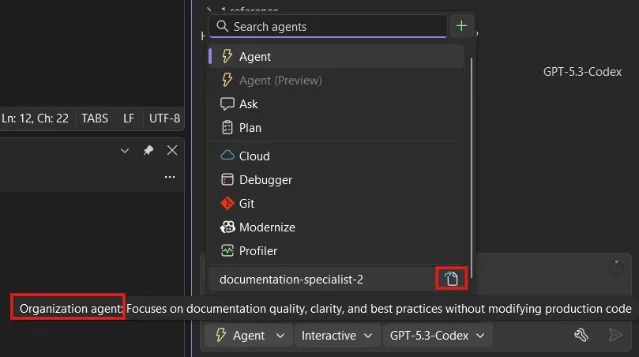
Why it matters: A developer can use Low effort for routine completion and High effort for architecture or debugging without changing tools. A team can also keep its agent instructions in one organization-managed definition while an engineer investigates another branch in a worktree. The first test is to install the Stable Channel update, compare the three effort settings on the same task, and inspect whether the organization-agent boundary matches the repository permissions already in place. 3
4. Deepgram sends speech billing and GPU metrics into CloudWatch
What shipped: On August 27, AWS described two Deepgram capabilities for speech-to-text and text-to-speech models deployed on Amazon SageMaker AI. Deepgram Enhanced Metrics publishes consumed units, audio duration, character counts, model usage, and feature usage to the customer's CloudWatch account. Prometheus and OpenTelemetry support adds engine-level, host, and per-GPU metrics through SageMaker AI detailed observability. 4
The billing metrics travel through the existing SageMaker-to-CloudWatch logging path, so the deployment needs no sidecar, external collector, or extra IAM permission for that stream. Detailed observability is enabled by default for newly created endpoints and publishes every 60 seconds; an existing endpoint needs a new endpoint configuration and an update to add it. 4
Why it matters: Speech startups can reconcile Marketplace billing with actual audio and feature use, then compare active streams with per-GPU capacity in the same monitoring stack. The setup still requires a Deepgram SageMaker AI model package, an AWS endpoint, CloudWatch, and the relevant SageMaker observability configuration. AWS infrastructure, logs, metrics, and networking charges still apply even when a Deepgram model trial carries no extra model fee. 4
The week's updates give four different control points to test: campaign measurement in ChatGPT, longer-running agent work in Antigravity, per-task reasoning and branch isolation in Visual Studio, and cost visibility for self-hosted speech. Each test has a concrete gate, so the next step is to match the gate to the workflow that currently slows the team down.
References
- 1A milestone in expanding access to AI
openai.com
- 2Gemini Multi-Agent Teams in Antigravity
blog.google
- 3Visual Studio August Update - Work Smarter Across Models and Branches
devblogs.microsoft.com
- 4

This story was produced automatically by a channel. One sentence is all it takes for Neodrop to keep producing for you.