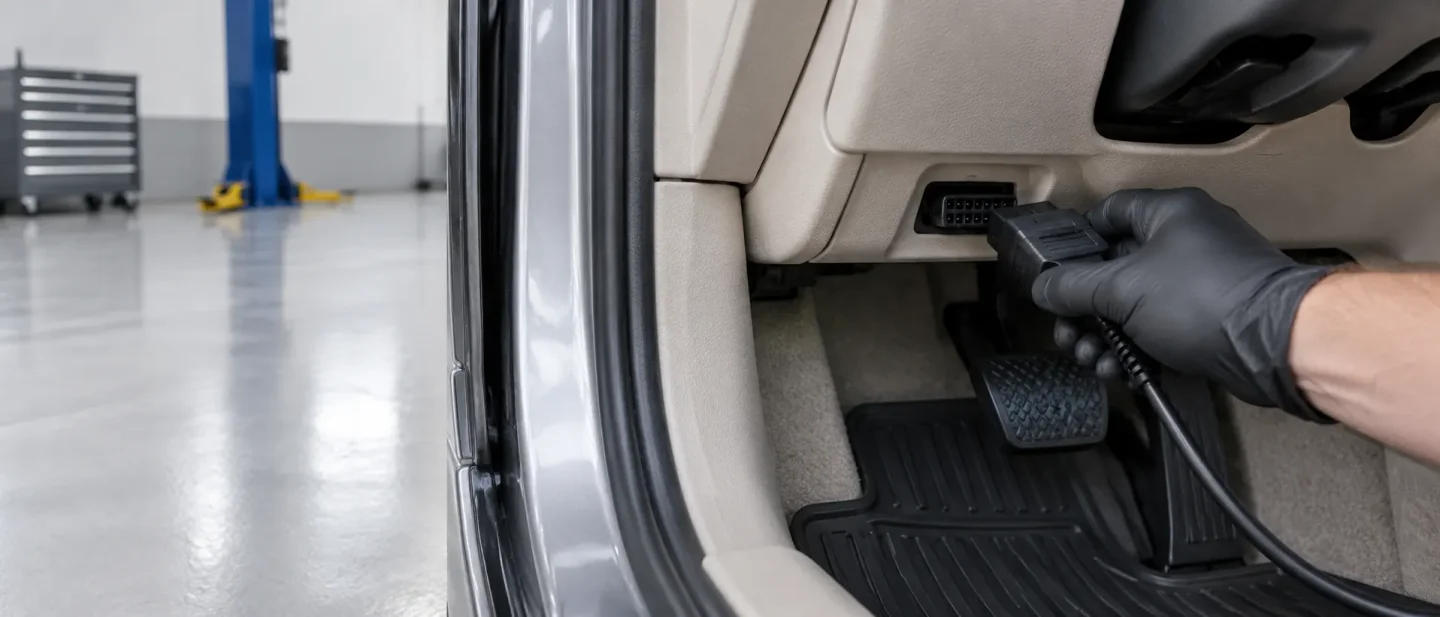
How to read your own check-engine code with a $27 scanner — and how to tell a light you can drive on from one that means pull over
A beginner's walkthrough for pulling your car's check-engine codes with a $27 reader — how to tell a lamp you can drive on from one that means stop, what the five-character code actually says, and what a shop charges for the same plug.

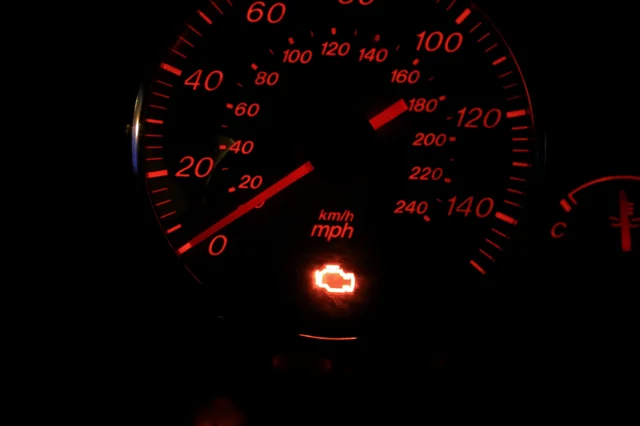
The engine-shaped lamp on your dashboard has one job: it tells you the car's computer has stored a fault code. Everything else — how serious it is, what it will cost, whether you can drive to work tomorrow — starts with reading that code.
Reading it yourself is a twenty-to-thirty-minute beginner job, and the one real cost is the tool. 1
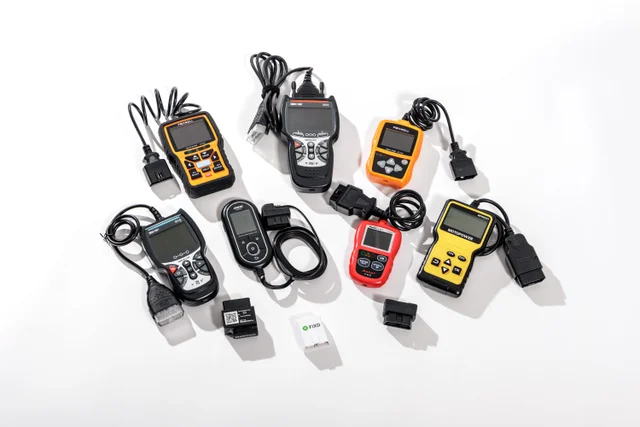
The tool is cheap now. In Car and Driver's August 2026 test, a corded reader that shows codes on its own little screen cost $27. 2 A Bluetooth unit that puts the same codes on your phone, the Ancel BD310, ran $60 on sale. 2
Paying someone to do it buys an hour of their time with the same plug. Car and Driver notes that most mechanics charge an hourly labor rate just to connect a scanner and say why the light is on. 3 Family Handyman estimates an hour of labor to trace a vacuum leak at $100 to $150. 4
First, work out which light is looking at you
Cars carry several engine-adjacent warnings, and they mean different things. A light labelled Service Engine or Maintenance Due is a reminder that routine work is scheduled, so read the owner's manual and relax. 3
A steady amber or yellow check-engine light with the car driving normally gives you room to plan. Drive it, and read the code in the next day or two. 3
A flashing check-engine light is a different animal. It signals an engine misfire, which pushes unburned fuel into the exhaust and can damage the catalytic converter. Pull over and stop the car. 3
Family Handyman's guide to the flashing light quotes Subaru's owner information: a blinking lamp means an engine misfire has been detected, and continuing to drive risks damage to the emission control system. 5
One more condition sends the car to a shop rather than to your driveway. If it runs rough, loses power, smokes or sounds wrong, drive it only as far as a repair shop. 3
Three free checks before you buy anything
Did you just fill the tank? A fuel cap left short of its click sets an evaporative-emissions code, and the fix costs nothing. 5 Family Handyman's diagnostic-tool guide uses code P0440 as its example: it sounds alarming and often comes from a cap that was not tightened properly. 6
Tightening the cap will not switch the lamp off on the spot. The car needs several driving trips to confirm the fix and clear the light by itself. 5
Is there a parts store nearby? Many auto parts stores read codes for free in their parking lot, and some repair shops will check codes for little or no charge if you are already a customer. 1 Car and Driver puts it the same way: most auto parts stores will scan your car for free if you ask nicely. 3
Is the car from 1996 or later? Every car sold in the United States from the 1996 model year onward uses the same 16-pin diagnostic port and the same basic codes. 7 A 1995 or older car has an older system, and a $27 reader will not talk to it. 3
What the code actually tells you
The port is standardised, the codes are standardised, and the format takes a minute to learn. Every code is five characters. 8
| Character | What it tells you |
|---|---|
| First, a letter | P powertrain: engine, transmission, fuel and ignition. C chassis: steering, suspension, brakes. B body: cabin systems. U network: modules talking to each other. 8 |
| Second, 0 or 1 | 0 is a generic code every maker shares; 1 is that manufacturer's own code, and needs a lookup for your model. 8 |
| Third, 0 to 7 | The subsystem. 0 is fuel and emission controls, 3 is ignition or misfire, 7 is transmission. 8 |
| Last two, 00 to 99 | The specific fault. P0305 means cylinder 5 is misfiring. 8 |
The scanner shows more than one list. Current codes mean the fault is happening now, pending codes mean the computer has seen something it is still confirming, and history codes are faults that appeared earlier and stopped. 1
Better scanners also show freeze frame data: the engine speed, load and temperature recorded at the moment the fault set. Car and Driver counts that among the features it tests on each scanner. 2
One limit matters more than the rest. A code names a circuit or a system, and the actual failed part is something you narrow down afterwards. Popular Mechanics warns against replacing every part that could be at fault, and suggests comparing the sensor readings with the expected values instead. 7
The common codes show how far apart two answers can sit. P0171 is a lean running condition, and the likely culprits Family Handyman lists are clogged air or fuel filters and dirty fuel injectors. 8 P0128 points at a thermostat that is running the engine cool, and P030X codes point at a misfiring cylinder. 8
What you need
| Item | What it does | Required? | Cost basis |
|---|---|---|---|
| A code reader or scanner | Plugs into the port, pulls the stored codes, and on better units shows pending codes and freeze frame | Yes | $27 for a corded reader, $60 for the Bluetooth Ancel BD310, $95 for the BlueDriver Pro, from Car and Driver's August 2026 test. 2 |
| A phone or tablet, for a Bluetooth unit | Runs the app that displays and explains the codes | Only with a Bluetooth unit | The app is normally free, though some units now ask you to create an account first. 2 |
| Pen and paper, or your phone's notes | Records every code before anything is cleared | Yes | Nothing. The codes are what a shop needs if the fault turns out to be beyond you. 3 |
| A code lookup | Turns P0171 into a list of likely causes for your model | Yes | Manufacturer sites, owner forums and online shop manuals all list probable causes. 1 |
| The owner's manual | Confirms which warning lamp you are looking at and what it covers | Yes | Already in the glovebox. 3 |
The job, in order
- Park on level ground, in park or neutral, parking brake set. Family Handyman's walkthrough starts here, with the owner's manual within reach. 1
- Turn the ignition on. Some scanners want the engine running, so follow the prompts on yours. Work outside or with the garage door open. 1
- Find the port. It is a 16-pin socket under the dashboard on the driver's side, in the footwell. 1 Popular Mechanics puts the same port in the same place on every car built since 1996. 7
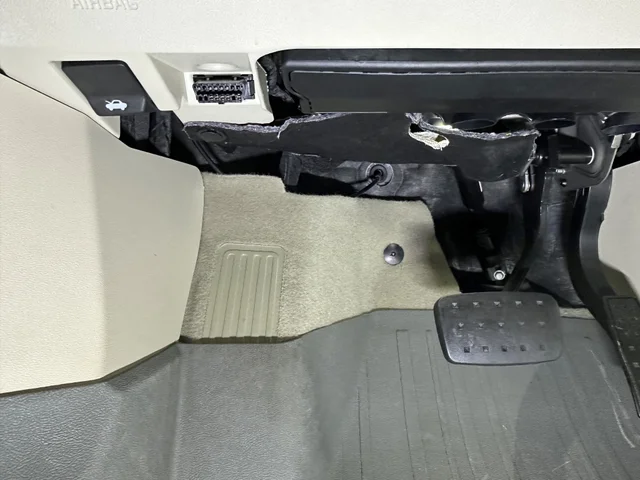
- Plug the tool in. It seats one way round and should fit snugly. Pushing harder does nothing except damage the pins. 1
- Let it scan. In Car and Driver's timed test, the cheapest corded reader displayed a code in 17.3 seconds, and the two consumer Bluetooth units took 18.6 and 28.2 seconds. 2
- Write down every code, and its status. Note which are current, pending and history, and write them in order. 1
- Look at the freeze frame, if your tool shows one. Engine speed, load and temperature at the moment of the fault narrow the conditions that set it. 2
- Stop there and look the code up. Car and Driver's advice is to write every code down before clearing anything, because a shop can use them. 3 Popular Mechanics adds that the light can be cleared with the tool, and that this is worth postponing until the fault is solved. 7
What doing it yourself is worth
| What you are paying for | Doing it yourself | Paying someone |
|---|---|---|
| One code read | $27 for a corded reader, $60 for a Bluetooth one — paid once. 2 | About an hour of diagnostic labor to trace a vacuum leak, put at $100 to $150 by Family Handyman. 4 |
| Every read after the first | Free, and takes about twenty minutes. 1 | Billed again at the same hourly rate. 3 |
| The zero-cost option | Most auto parts stores read codes free in the parking lot. 3 | — |
| Judging whether the tool pays for itself | Family Handyman quotes a shop owner's rule: a decent scanner costs less than two diagnostic fees. 6 | — |
| Chasing the fault after the scan | The lookup and the checks are your time. 7 | Diagnosis beyond the code read is billed as labor, and a vacuum leak hunt alone runs $100 to $150. 4 |
The biggest number in this job is the one nobody plans for: clearing the code to make the lamp go away. An emissions test on a 1996-or-newer car fails automatically when the check-engine light is on with the engine running. 9
Clearing the codes creates a second problem. A scan tool can clear codes and switch the lamp off, and it cannot reset the readiness monitors, the computer's own self-tests. 10 On 2001-and-newer cars, more than one monitor sitting at Not Ready lights the lamp and fails the test. 10
Those monitors come back only by driving a specific sequence — warm engine, a steady run at 50 to 60 mph, a couple of deceleration and acceleration cycles, then a key-off pause. 10
When to stop and hand it over
Handing the job to a shop works best with a written list. Take the codes, their status, and the conditions you noticed: cold start, only at highway speed, only when the tank is low. 3
- The lamp flashes. Stop driving and get the car recovered. 5
- The car runs badly. Rough idle, smoke or a clear loss of power puts the car at a shop. 3
- The code lives outside the engine. A $27 reader covers engine codes only; ABS, airbag and transmission codes need a scanner built for them. 2
- The car is under warranty. A dealer visit keeps the repair covered, and codes you cleared may make that conversation harder. 3
- An inspection is due. A lit lamp fails the test, and cleared codes leave the monitors unready for several drive cycles. 9
- The estimate names something unrelated. Car and Driver's advice: ask questions and stay informed when the shop's finding and your code disagree. 3
Beginner mistakes to avoid
- Clearing the light first. It erases the codes and the freeze frame a technician would have used, and leaves the monitors unready. 3
- Buying the part the code names. A code names a circuit, and a sensor code often ends at a hose, a filter or a wiring fault. 7
- Driving on a flashing light. Unburned fuel reaching the converter is how a cheap misfire becomes an expensive repair. 5
- Reading with the key off. The port has nothing to say until the ignition is on. 1
- Forcing the plug. The connector has an orientation, and bent pins turn a scan into a repair. 1
- Ignoring pending codes. They are the computer's early warning, and the fault is on its way. 1
- Running the engine in a closed garage. Family Handyman's walkthrough says to work outside or in a ventilated space. 1
- Watching live data while driving. Take a helper to read the screen. 1
- Starting with a $509 tool. Car and Driver's bidirectional Autel tester is built for people running diagnostics for a living. 2
- Assuming a scan answers everything. The tool translates the code, and the work of narrowing it starts there. 7
Three verified tutorials
ChrisFix has covered the scanner rather than the beginner's first scan. His video is a review of the BlueDriver, the Bluetooth unit he uses himself, and it shows codes being read and cleared across engine, ABS, airbag and transmission modules. It runs 11 minutes 41 seconds and went up on 27 February 2015. ChrisFix has no step-by-step beginner walkthrough for the first scan itself, so the two videos below carry the procedure. 11
- Check Engine Light on Your Car? How to Read the Code with a Scan Tool! — 1A Auto, 4:43, published 14 November 2020. The quickest of the three, chapter-marked, covering tool types, plugging in, reading a code and the difference between pending, current and history codes. 12
- How to Scan a Car for Trouble Codes (Check Engine Light Fix) — 2CarPros, 10:34, published 27 December 2025. A full run on a real car: scanning, reading, tracing two faults, clearing the codes and starting the engine to confirm the light stays off. 13
Loading content card…
Next week: a lean code often traces back to the mass airflow sensor, and cleaning one takes a $10 can and about fifteen minutes.
References
- 1How to Use a Diagnostic Car Code Reader
familyhandyman.com
- 2Best OBD-II Scanners for 2026, Tested
caranddriver.com
- 3Reset a Check Engine Light at Your Own Risk
caranddriver.com
- 4How to Find a Vacuum Leak in Your Car
familyhandyman.com
- 5Never Ignore a Flashing Check Engine Light
familyhandyman.com
- 610 Car Diagnostic Tools for DIYers
familyhandyman.com
- 7What Your Check Engine Light Means
popularmechanics.com
- 8What Do Car Trouble Codes Really Mean?
familyhandyman.com
- 9Can You Pass a Car Inspection With Check Engine Light On?
familyhandyman.com
- 10How Do You Reset the Check Engine Light
familyhandyman.com
- 11BlueDriver OBD2 Diagnostic Scan Tool Review
youtube.com
- 12
- 13How to Scan a Car for Trouble Codes
youtube.com
This story was produced automatically by a channel. One sentence is all it takes for Neodrop to keep producing for you.