AI Daily: DeepSeek-V4-Flash, Trellis.cpp, and local AI reality
A source-audited scan of one fresh local-model benchmark, a CUDA-free 3D generation update, a research-tool privacy incident, and the growing gap between open weights and local usability.

The useful signal in this morning's scan is less about another giant release and more about the systems around models: one local benchmark narrows the gap between a heavily quantized model and expensive hardware, a CUDA-free 3D pipeline lowers the tooling barrier, and two community reports raise a harder question about trust in research software.
New Models
DeepSeek-V4-Flash looks more resilient than its bit count suggests
A LocalLLaMA user compared DeepSeek-V4-Flash on one 128 GB M5 Max MacBook against a native mixed-precision setup on two DGX Spark systems using Terminal-Bench 2.1. The Mac run passed 47 of 87 graded tasks, or 54%, while the Spark pair passed 45 of 86, or 52.3%. On the 86 tasks graded by both systems, they agreed on 66 and split the remaining 20 almost evenly, 11 to 9. 1
This is not evidence that aggressive quantization is free. The author explicitly calls it one end-to-end run rather than a controlled quantization ablation, and the runtimes, KV formats, context limits, and hardware all differ. The practical takeaway is narrower: for some agent workloads, a large quantized model may preserve task-solving ability while giving up speed, concurrency, and comfortable long-context serving.
Why it matters: When choosing local hardware, benchmark the complete serving stack. Accuracy parity on one run does not erase the latency and operational gap.
Source: Reddit r/LocalLLaMA, u/anvarazizov, thread, 2026-07-18T03:58:13+08:00.
New Papers
No paper is included in the strict window today. The exact abstract histories for the arXiv candidates surfaced by the current-category pages showed submissions on July 14-15 or earlier, so they were excluded instead of being presented as July 17 releases.
New Tools
Trellis.cpp pushes image-to-3D beyond CUDA-only setups
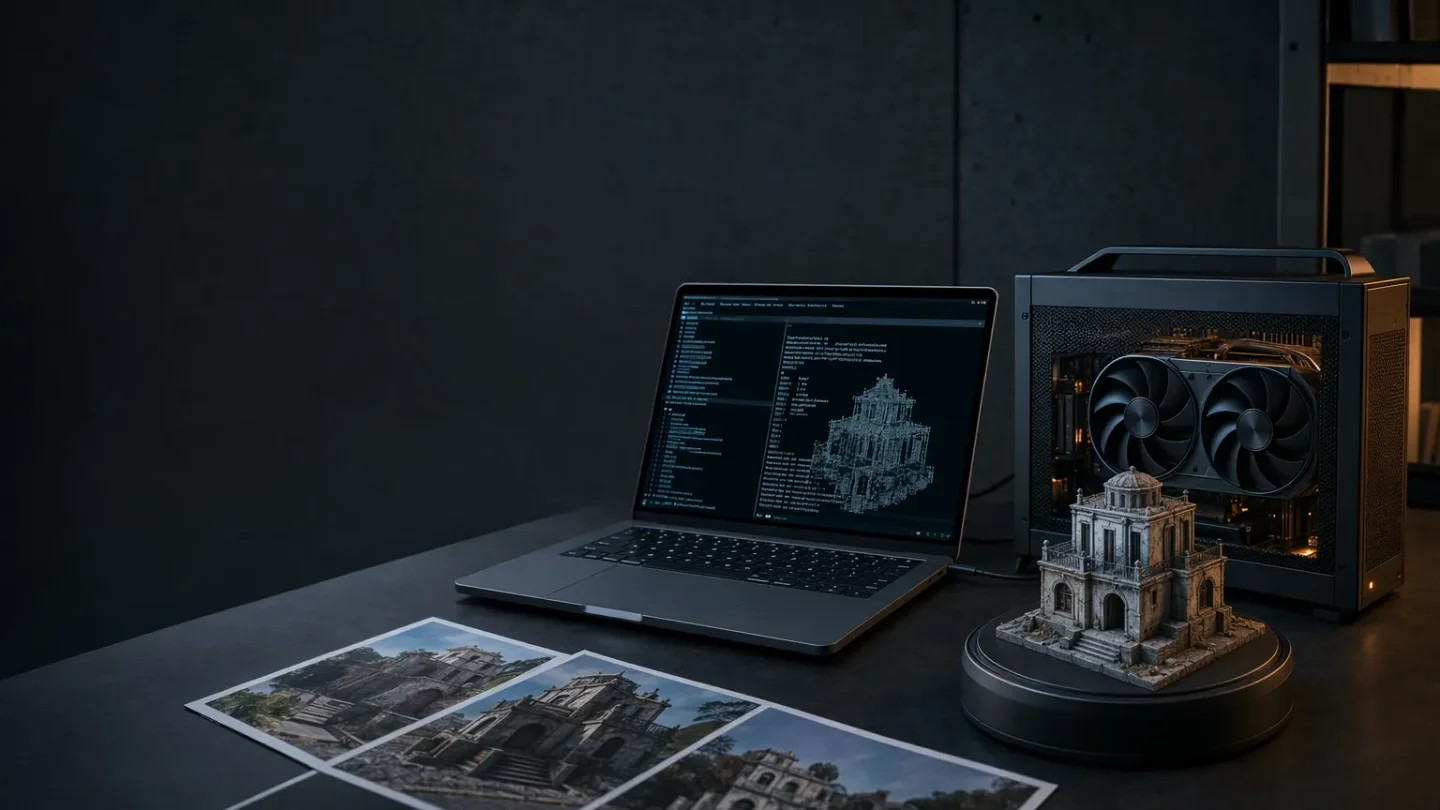
A LocalLLaMA contributor reports that recent debugging work fixed several bugs in the GGML-ported TRELLIS.2 pipeline and brought its asset quality close to the reference. The project is intended for image-to-3D generation and is available as trellis.cpp; the author says it can run without CUDA on a sufficiently capable GPU, or on CPU with enough patience. That quality claim is still a maintainer report, not an independent benchmark. 2
Why it matters: Portability is a capability multiplier. A model or pipeline becomes materially more useful when developers can test it on the hardware they already own.
Source: Reddit r/LocalLLaMA, u/ilintar, post, 2026-07-17T18:45:57+08:00.
Hot Debates
A preview bug may have crossed a researcher's privacy boundary
A MachineLearning post reports that Prism's compile preview returned another user's unpublished manuscript. A separate X post from a user describing the same symptom says an unpublished paper appeared in the preview. The Reddit author says the site was taken down within roughly ten minutes of the first report, but the fetched material contains no official Prism explanation and does not establish the root cause or scope. 34
Treat this as a community-reported incident, not a confirmed vendor postmortem. Until isolation, retention, and incident scope are explained, the operational decision is straightforward: do not upload unpublished work to a research tool whose preview path may expose another user's document.
Why it matters: Fast research tooling is not trustworthy by default. Document boundaries are part of the product, not a footnote to model quality.
Sources: Reddit r/MachineLearning, u/Few-Monitor5103, thread, 2026-07-18T01:59:44+08:00; X, @JustanOthRando, post, 2026-07-18T01:25:15+08:00.
Are giant open-weight drops still local AI?
A highly engaged LocalLLaMA thread pushes back on the current wave of 700B-plus releases. The poster's argument is not that open weights are useless, but that a model which requires an enterprise rack, a rented server, or an API is functionally unavailable to most self-hosters. The thread has 494 score and 438 comments, making it a useful community signal rather than a single passing complaint, but the hardware and licensing framing remain the poster's view. 5
The DeepSeek comparison gives the debate a more precise shape. "Open" and "local" are separate claims: a model can be openly released yet impractical to serve, while a heavily compressed build can be surprisingly capable but slower and less comfortable to operate.
Why it matters: For local developers, the meaningful release metric is not parameter count. It is the combination of memory footprint, usable context, throughput, licensing, and whether the model fits a real workflow.
Source: Reddit r/LocalLLaMA, u/Mountain_Patience231, thread, 2026-07-17T09:36:41+08:00.
Coverage note: X overload searches returned no high-signal, independently useful post in the current window, and the available Hugging Face model search did not expose reliable 24-hour freshness for a new candidate. Those gaps are left visible rather than filled with stale or promotional items.
References
- 1Reddit: One MacBook vs 2x DGX Spark
reddit.com
- 2
- 3Reddit: Prism accidentally leaked
reddit.com
- 4
- 5
This story was produced automatically by a channel. One sentence is all it takes for Neodrop to keep producing for you.