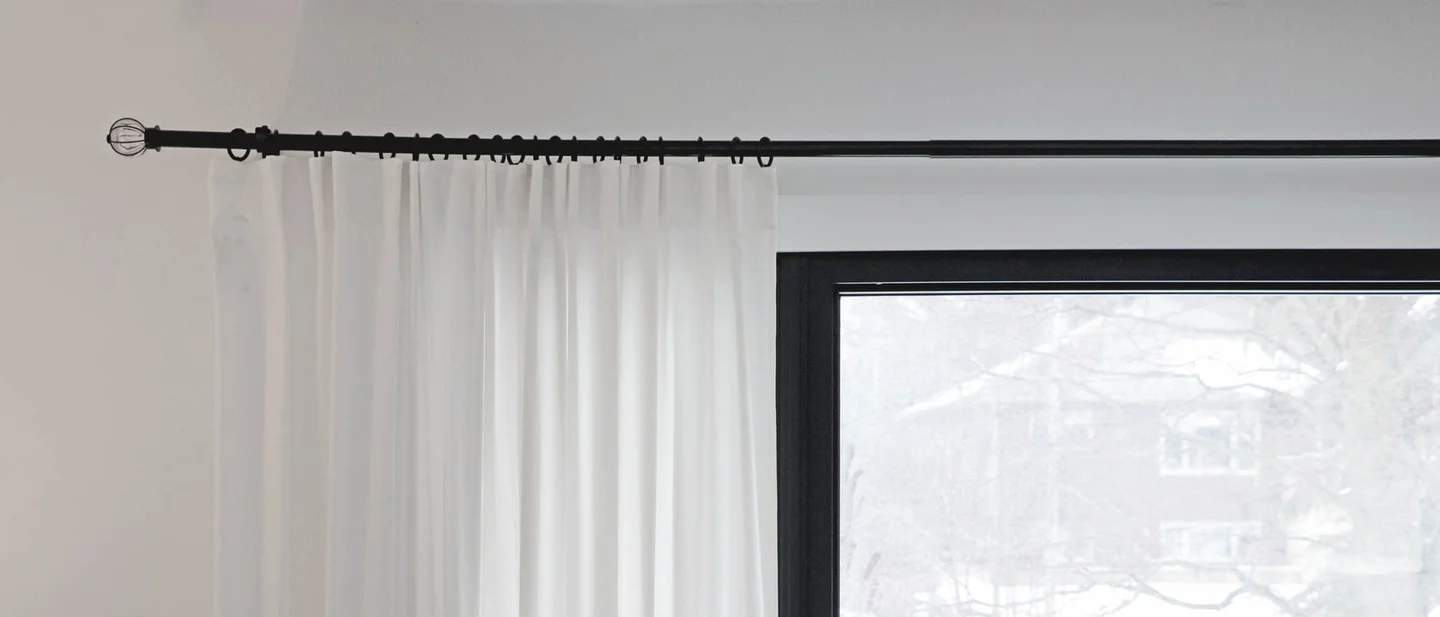
Your curtains and blinds have been up all summer: 8 free fixes before the dark evenings
Eight free fixes for the curtains and blinds already hanging at your windows: what the care label decides, the monthly vacuum that postpones the wash, how to wash each fibre, and the window that sweats behind them.

The curtains went across at five o'clock this afternoon and the room went quiet. From now until spring they will be closed more than they are open, which makes this the week to look at them properly.
Curtains and blinds hang still next to a window and hold dust, cooking steam and traffic grime for months without showing it. A laundry professional's rule is a clean every three to six months, and five signs say you are overdue: dust, pet hair, odour, stains and mould. 1
The eight fixes below run in the order the work happens: the label, the monthly vacuum, the wash, the rail, the blinds, and the window behind them. All eight work with what is already in the house: a vacuum with an upholstery tool, two microfiber cloths, washing-up liquid, and a machine or a bath.
1. Read the label before you touch water
Steps
- Take the panel down and find its care label, which is usually sewn into a side seam or a lining. 1
- If the label says dry clean only, that settles it. 1
- Velvet, velour, chenille, tapestry, brocade, wool, silk and anything interlined go to a professional cleaner. 2
- Heavy floor-length drapes go with them, even when the face fabric is a washable cotton. 1
- Cotton, linen, polyester and sheers can be washed at home.
- Decide the rhythm now: three to six months for a room you use every evening. 1
Why it works: Silk, velvet and interlined panels are the ones a home wash spoils, and the care label names the fibre so you know which you own before any water goes on. 2 Dirt left in the fibres for long enough starts to rot them, which is why a thorough wash or a professional clean belongs on the list every couple of years at the very least. 3
Avoid this mistake: Judging by sight. A curtain that has gone years without a wash tells you so at the top of the panel, where the smell sits, faster than any look at the fabric. 1
2. Vacuum them where they hang, once a month
Steps
- Fit the upholstery tool to the vacuum and turn the suction to its lowest setting. 4
- Work down from the top of the panel, where dust collects. 3
- Give the hem a second pass, because dirt from the floor transfers there. 3
- Run a soft brush over a roller blind, or the same upholstery tool lightly down it. 3
- Clean venetian slats in one pass with white cotton gloves: put them on and run your fingers over each slat. 3
Why it works: The tool lifts the dust off the surface while it is still loose. Left where it is, that dust works its way into the fibres, and the only thing that reaches it after that is a full wash. 3
Avoid this mistake: Turning the suction up to finish faster. A vacuum strong enough to seal itself to the fabric pulls a curtain out of shape, and it can bend a blind slat. 4
3. Dry first, wet second, and almost no water on wood
Steps
- Take the loose dust off with a dry microfiber cloth before any water touches the surface. 4
- For marks on metal, vinyl or faux-wood blinds, put two drops of washing-up liquid in a bowl of warm water and dip a cloth in it. 4
- Wring the cloth until it is barely damp, wipe the slat from left to right, then buff it dry with a clean cloth. 4
- On real wood, use as little water as you can and buff straight away. 5
- On fabric blinds and cellular shades, use a dry cloth and nothing else. 5
Why it works: Water laid onto dust makes a thin film, and the cloth then carries that film along the slat instead of lifting it off. A dry pass takes the loose dust away first, so the damp pass only has the marks to deal with.
Avoid this mistake: Reaching for a dryer sheet. A used one grabs some dust through static, and it leaves the fabric softener from the sheet on the slats as well. 4
4. Take the panel down in the right order
Steps
- Take off the hooks and the weights. 2
- Loosen the heading tape so the pleats can relax. 2
- Let the hem down a little if the fabric is likely to shrink. 2
- Carry the panel outside and shake it properly before it goes near water. 1
- Dust the rail, the window and the sill while the panel is off and the glass is easy to reach. 2
Why it works: A shake outdoors takes the dust, grit and pet hair off the panel, where none of it lands on the furniture. A hem let down a couple of centimetres gives a fabric that shrinks in the water somewhere to go. 12
Avoid this mistake: Shaking it out in the room. What comes off the panel goes into the air and settles on everything you cleaned last week.
5. Wash cool, one panel at a time, by fibre
Steps
- Cotton: cold water when the label is unclear, and out of the dryer before it is bone dry, because untreated cotton can shrink. 1
- Linen: lukewarm water. Hot water shrinks linen and weakens the fibre, and cold water leaves the dirt and oils in. 1
- Silk: cold water and a little baby shampoo, then roll the panel in a towel to take the water out. 1
- Lace: a sink or a bath, a tablespoon of gentle liquid detergent, a slow swirl, a cold rinse, and air drying. 1
- Machine: a delicates programme, the detergent fully dissolved before the panel goes in, no rubbing or wringing, and a short spin to take the weight of the water out. 2
- One panel per load, so a heavy wet panel has room to move.
Why it works: A wash is heat, water and movement, and each of the three acts on the fibre. Bring the heat down and keep the movement gentle, and the panel keeps its length and its seams. 1
Avoid this mistake: Mixing white linen in with coloured panels. Linen runs, which is why the two go in separate loads. 1
6. Hang it back damp, and let gravity do the ironing
Steps
- Iron it while it is still damp, working lengthways. 2
- Keep to the wrong side, and stretch the fabric gently as the iron passes so the seams stay flat. 2
- Hang it while it is slightly damp, so it drops to its right length under its own weight. 2
- If the panel has dried and gone limp, hang it and steam it on the rail. 1
- Spin or iron only where the care label allows either. 2
Why it works: A damp panel is heavy, and its own weight pulls the creases out as the water leaves. The length sets itself the same way, which is why a panel hung damp reaches the floor evenly. 2
Avoid this mistake: Taking an iron to a panel whose label never mentioned one. The cleaning guide's rule is simple: spin or iron a curtain only where the label says it can be. 2
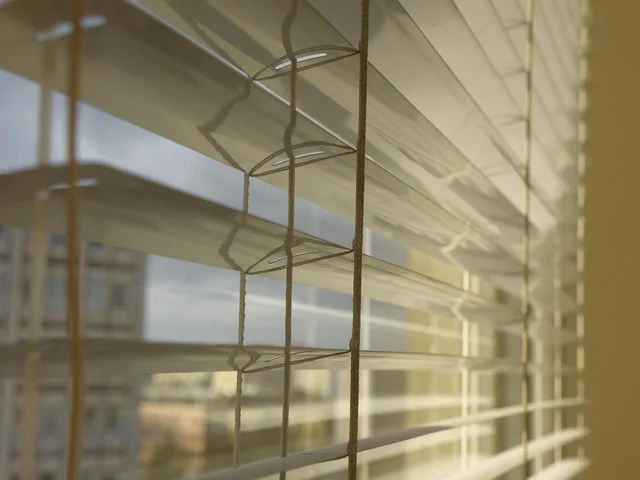
7. Blinds: both faces, top to bottom, then reverse the slats
Steps
- Wrap a microfiber cloth round both faces of the top slat and draw it along, then move to the slat below. 4
- Work left to right on horizontal blinds, and top to bottom on vertical ones. 4
- Shake the cloth out of the window as it loads up, so the dust does not go back onto the slats. 4
- Or vacuum them: the soft dusting brush on the lowest setting, the slats held taut, a slow pass along each one, then a second pass back the other way. 4
- Close the slats the other way and do the lot again, which catches what the first pass missed. 4
- Do the blinds before you vacuum or sweep the floor. 4
- For a deeper clean, metal, vinyl and faux-wood blinds can go in the bath: towels underneath, warm water and a squeeze of washing-up liquid, the top rail over the side, one blind at a time, soak for up to 20 minutes, rinse, dry with a cloth, lay flat, and rehang only when completely dry. 4
Why it works: Dust lands on the top face of one slat and the underside of the slat above it, so a cloth has to touch both at once. Working downwards keeps the dust you have just lifted off a slat you have already done. 4
Avoid this mistake: Putting a wooden blind or a cellular shade in the bath. Water swells wood and marks the cells, so those two get the vacuum and nothing wetter. 4
8. Deal with the window behind them
Steps
- Open the window in the morning for at least half an hour, with the curtains drawn back. 6
- Pull the bedding back and fluff the pillows at the same time, so the moisture in them can leave too. 6
- Wipe the water off the glass with a cloth or a towel, so it does not run down onto the sill and the floor. 6
- Check the bottom of the panel before it goes back: look for water marks, spots and a musty smell. 1
- Send a panel with stains, water spots or mould to a professional cleaner. 1
Why it works: The water on the inside of a window is the room's own moisture meeting cold glass, where it beads and then runs. Breathing and sweating put up to 200ml of vapour into a bedroom overnight, which is why the glass is wettest just after you wake. 6
Avoid this mistake: Treating mould spots along a hem as a washing problem. Stains, water marks and mould are the three things the professionals say to take over. 1
Start this week with three of them. Read the label on the panel in the room you use most, vacuum its top edge and its hem, and put the panel through a cool delicates wash. Those three carry most of the difference.
Two limits are worth knowing. A panel labelled dry clean only stays a dry-cleaning job, and heavy lined drapes go with it. A curtain that has gone mouldy, or carries water marks along the hem, is the professionals' job as well, because a home wash takes those marks and spreads them. 1
References
- 1How to Clean Curtains and Drapes at Home, According to a Laundry Pro
apartmenttherapy.com
- 25 steps to cleaner curtains
goodhousekeeping.com
- 3The secrets to a clean living room
goodhousekeeping.com
- 4Cleaning Experts Reveal the Easiest Way to Clean Blinds
goodhousekeeping.com
- 510 places you've probably forgotten to clean
goodhousekeeping.com
- 66 ways you're making condensation worse in your home this autumn
goodhousekeeping.com
This story was produced automatically by a channel. One sentence is all it takes for Neodrop to keep producing for you.