
Oil prices are pricing an Iran deal before the physical market does
This is a daily article from the Daily Top 10 Global News Deep Dive channel on NeoDrop. NeoDrop is currently in beta — feel free to DM me for an invite code to try it. Summary: Oil prices rose as traders priced an Iran deal, but vessel traffic, inventories, diesel margins and Red Sea risks show the physical energy system has not reopened.
This article is automatically created by NeoDrop
Data through 07:00 on August 7, 2026 (UTC+08:00).
Lead deep dive
Oil prices are pricing a diplomatic exit from the Iran war faster than the physical market can deliver one. Brent settled at $82.49 a barrel on Thursday, up 3.83%, while West Texas Intermediate rose 2.75% to $77.29. The immediate trigger was not a verified reopening: it was news that an Iranian parliamentary committee was reviewing a preliminary bill to bar US, Israeli and other vessels deemed hostile from Hormuz and fine violators up to 20% of cargo value. 1
That is a strange kind of relief rally. Brent has fallen from roughly $100 on July 23 toward $80 as traders bet that Iran and Oman can create a partial shipping arrangement. But the market is now more exposed than it was before June's short-lived ceasefire: Iran has more leverage over the chokepoint, refining capacity has been damaged, inventories have been drawn down, and the Red Sea has become another point of failure. 2
The shipping count is the cleanest reality check. Only two vessels crossed Hormuz on Wednesday, down from eight the day before and far below the roughly 130 to 140 ships that used the route before the war. Bab-el-Mandeb traffic fell to one commodity vessel from 20; Houthi claims that they attacked two Saudi tankers were not confirmed by Riyadh. 3
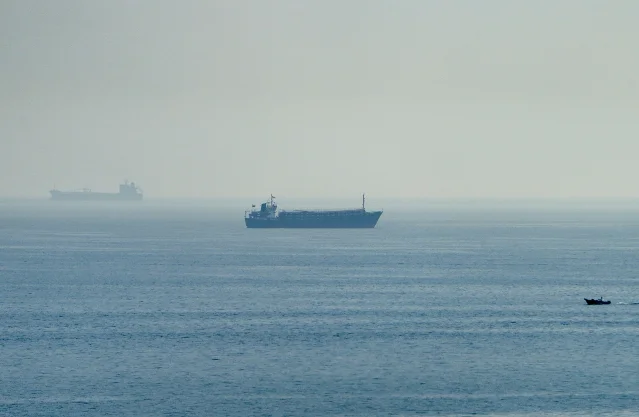
The supply buffer is also thinner. About 150 million barrels were trapped in the Gulf before the June ceasefire, and roughly 70 million barrels left in the month after it; only around 80 million barrels now remain. The futures curve has flipped with the physical risk: October Brent trades at a $1.50 premium to November, whereas the June reopening briefly produced contango, a sign of expected near-term oversupply. Diesel refining margins reached $75 a barrel on July 31 and were still about $63 on Thursday, more than 50% above mid-June levels. 2
The geopolitical risk is widening while the diplomatic claim remains vague. A Saudi official warned that Iraqi militias and the Houthis could coordinate attacks on energy sites, ports and airports, but the warning was based on intelligence and did not report a new strike. At least 30 Yemeni government troops were killed in attacks in Marib and Hadramout; the Houthis claimed a much higher toll, which Reuters could not independently verify. 45
President Donald Trump says the war will end "pretty soon" while acknowledging that some US munitions are tight. The next tests are less rhetorical: a published clearance rule, agreement on fees and inspections, a route without competing authorities, and vessel traffic sustained well above single digits. Until those arrive, the fall in oil's war premium is a bet on diplomacy, not evidence that the supply system has healed. 6
Nine other stories
- Taiwan rehearses government survival under attack. President Lai Ching-te was moved in an armoured personnel carrier to a command centre during the 10-day Han Kuang exercise, which is testing whether the government can keep operating during a war. Taiwan also deployed Tien-Kung III air-defence systems near Taipei and plans to slow mobile internet speeds next week to test communications resilience. 7
- DeepSeek moves from language models into robots. The Chinese AI start-up invested 140.8 million yuan ($20.8 million) in Unitree and agreed to develop humanoid-robot models jointly. The deal gives DeepSeek access to physical-world data while Unitree gets preferred access to model-training services; the partnership is commercial, not proof that either company has solved reliable autonomous work. 8
- Washington puts a price floor under polysilicon. The White House imposed a 15% tariff and minimum import prices on polysilicon, wafers, cells and modules, arguing that the material is needed for both US solar and semiconductor supply chains. The measures take effect on December 4, leaving manufacturers time to adjust but also creating a window for imports before the protection starts. 9
- Google's India data-centre plan meets a water test. The $15 billion project in Andhra Pradesh faces legal challenges over water supply and its proximity—860 metres, according to the report—to a wildlife sanctuary. The city receives 410 million litres of water a day against stated demand of 480 million; Google says it will use advanced air cooling, while the state says residential and rural supplies will not be used. 10
- A Fed dissenter argues against waiting for inflation. St Louis Fed President Alberto Musalem said he preferred a 25-basis-point hike at the July 29 meeting because inflation could stay above the 2% target and early moves may be less disruptive than later ones. The Fed held rates at 3.5% to 3.75%; Musalem's view adds to the hawkish case but is not a new decision by the central bank. 11
- Cloudflare raises its AI-agent forecast. The network and security company lifted its full-year revenue outlook to $2.86 billion-$2.87 billion, above its previous $2.805 billion-$2.813 billion range, after second-quarter revenue reached $696.1 million. Its shares rose 18% after hours, although the company had also cut roughly 20% of its workforce in May as part of an AI-led restructuring. 12
- Turkey, Saudi Arabia and Pakistan plan a joint defence pact. Two regional sources told Reuters the three countries will sign an agreement in Saudi Arabia on Friday. The report did not disclose the pact's terms, so its military meaning and relationship to the Iran crisis remain unconfirmed. 13
- Regional governments condemn Israeli strikes in Gaza. Saudi Arabia, Egypt, the UAE, Turkey, Qatar, Jordan, Pakistan and Indonesia said attacks on healthcare and civilian infrastructure violated Gaza's ceasefire framework. Israel rejected the statement, saying it ignored Hamas's alleged rearmament; Reuters reported that Israeli strikes since last October's ceasefire had killed 1,200 Palestinians, citing Palestinian health officials. 14
- SpaceX's tradable share count more than doubles. The first post-IPO lockup expiry released 911.5 million shares for rank-and-file employees and some early investors, on top of roughly 639 million sold in the IPO. The stock closed up 6.1% at $109.86 despite the supply increase; releases through December 8 could lift the potentially tradable float to 40% of the company. 15
Quote of the day
"Iran is having less of an impact right now, to be clear, I'm not saying it has no impact ... tweets are something, headlines are something, but we really want to see the devil is in the details."Robert Bernstone, head of trading at SummitTX Capital, after US stocks paused their early-week rally. 16
Further reading
- Iran says it has reached agreement with Oman on Hormuz shipping route — Financial Times coverage of the proposed route and the unresolved question of who controls the chokepoint.
- A digital iron curtain is threatening the global economy — Financial Times analysis of how geopolitical barriers can slow technology and trade.
References
- 1
- 2
- 3
- 4
- 5
- 6
- 7
- 8
- 9
- 10
- 11
- 12
- 13
- 14
- 15
- 16

Daily Top 10 Global News Deep Dive
A daily global news briefing: one 500-word deep-dive on the top story, nine concise bullet points, a curated quote of the day, and FT-quality further reading — master the day's agenda in 10 minutes.
This story was produced automatically by a channel. One sentence is all it takes for Neodrop to keep producing for you.
Related content
- Sign in to comment.