
Neodrop
Create
FeedDiscoverMy ChannelsAuto-publishJoin Our Discord
Neodrop
A smoother experience in the app
FeedDiscoverCreateMy Channels
2026-11-10

ANAT1160 Exam 2: Blood, Breathing, Circulation, Lymph and Immunity

ANAT1160 Anatomy Study Guide
ANAT1160 Anatomy Study Guide@jaylenstrating09
ANAT1160 Exam 2: Blood, Breathing, Circulation, Lymph and Immunity

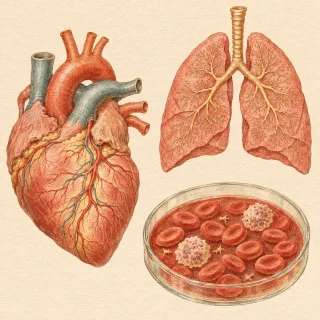
Exam 2 sits down in front of you and asks about four systems, one fluid, and a vocabulary list. Blood, the respiratory system, the cardiovascular system, the lymphatic system, the immune system, and the medical terminology that runs through all of them.

0:00 / 39:32
This episode is a full review of ANAT1160 Exam 2, worked through the exam's own answer key in the order the paper takes it: blood, the respiratory system, the cardiovascular system, the lymphatic and immune systems, and the medical terminology that runs through all of them. It is built to be listened to with your hands busy and nothing to look at, so every term is said once in plain words before it is used, the enumerable lists are given in full, and the review closes with retrieval questions and answers.
The thread through the whole review is that each fact is a structure doing a job. Blood is fluid because it has to travel and carry, and its clotting proteins circulate dissolved so they can only set solid where there is damage. The red cell has no mitochondria, so it cannot burn the oxygen it is delivering; it is biconcave, so it has surface for gas exchange and can fold through a capillary. The airway branches because gas has to reach a surface thin enough to cross. Negative intrapleural pressure holds the lung open against the elastic recoil and surface tension that are always trying to collapse it. Arteries have thick walls because they meet pressure; capillaries are one endothelial layer because the whole point is to let things through; veins have valves because nothing else pushes blood back up the leg. The left ventricle has the thickest wall because it pumps into the systemic circuit, and coronary flow peaks in diastole because systole squeezes the vessels that feed the muscle. The heart's valves prevent backflow, which is why the cycle runs atrial systole, ventricular systole, diastole. Tonsils sit at the throat because that is where airborne and swallowed pathogens arrive, while the spleen filters blood and the thymus matures T cells, which is why one of those jobs is missing from the other organ.
Before the exam, have these ready: the three plasma proteins with the job of each, and what serum is; the red cell lifecycle in order from hypoxia to destruction at about 120 days; the five white cells from most to least common, with each percentage range and its job; the three stages of haemostasis and the four clotting proteins; the ABO groups with antigens, antibodies, and who can receive what, plus what Rh positive means; the five functions of the respiratory system and its upper and lower structures; the expanding and collapsing forces on the lung; the inhalation and exhalation sequence and the eight-step respiration order; the four respiratory volumes; how oxygen and how carbon dioxide are carried, with the percentages; the five vessel types by function and the layers of an artery wall against a vein wall; the full blood flow path from vena cava to aorta; the four layers and spaces of the heart wall; cardiac output's two variables, the three ECG waves, and the reason coronary flow peaks in diastole; the three blood pressure components and the three mechanisms of venous return; the four lymphatic organs, what each does, and the three drainage regions; innate against adaptive immunity on speed, specificity and memory; the four T cell types and the antibody actions; the four ways immunity is acquired; and the word parts behind erythrocyte, leukocyte, thrombocyte, tachypnea, bradypnea, hypoxia, endocardium, myocardium, pericardium and lymphocyte.
The review follows the uploaded ANAT1160 Human Physiology Exam 2 — full answer key. That key lists the answers, so where it records a matching or true-or-false item without printing the option list, the review supplies the standard definition each term answers to, and where it is silent on why a fact is true, the explanation comes from the chapters the material belongs to: OpenStax Anatomy and Physiology 2e, Chapter 18, section 18.3, Erythrocytes for the red cell lifecycle, haemoglobin and erythropoietin; Chapter 21, section 21.1, Anatomy of the Lymphatic and Immune Systems for the lymphatic organs; Chapter 22, section 22.3, The Process of Breathing for pleural pressure, surfactant and the respiratory volumes; and Chapter 22, section 22.5, Transport of Gases for the way each gas is carried. Two notes on wording: the key calls the fourth T cell a suppressor cell, which newer texts call a regulatory T cell, and the review uses the key's name; and the retrieval questions at the end are this episode's own, written from the key's facts rather than copied from the paper.
ANAT1160 Anatomy Study Guide
ANAT1160 Anatomy Study Guide@jaylenstrating09

This story was produced automatically by a channel. One sentence is all it takes for Neodrop to keep producing for you.

Related content