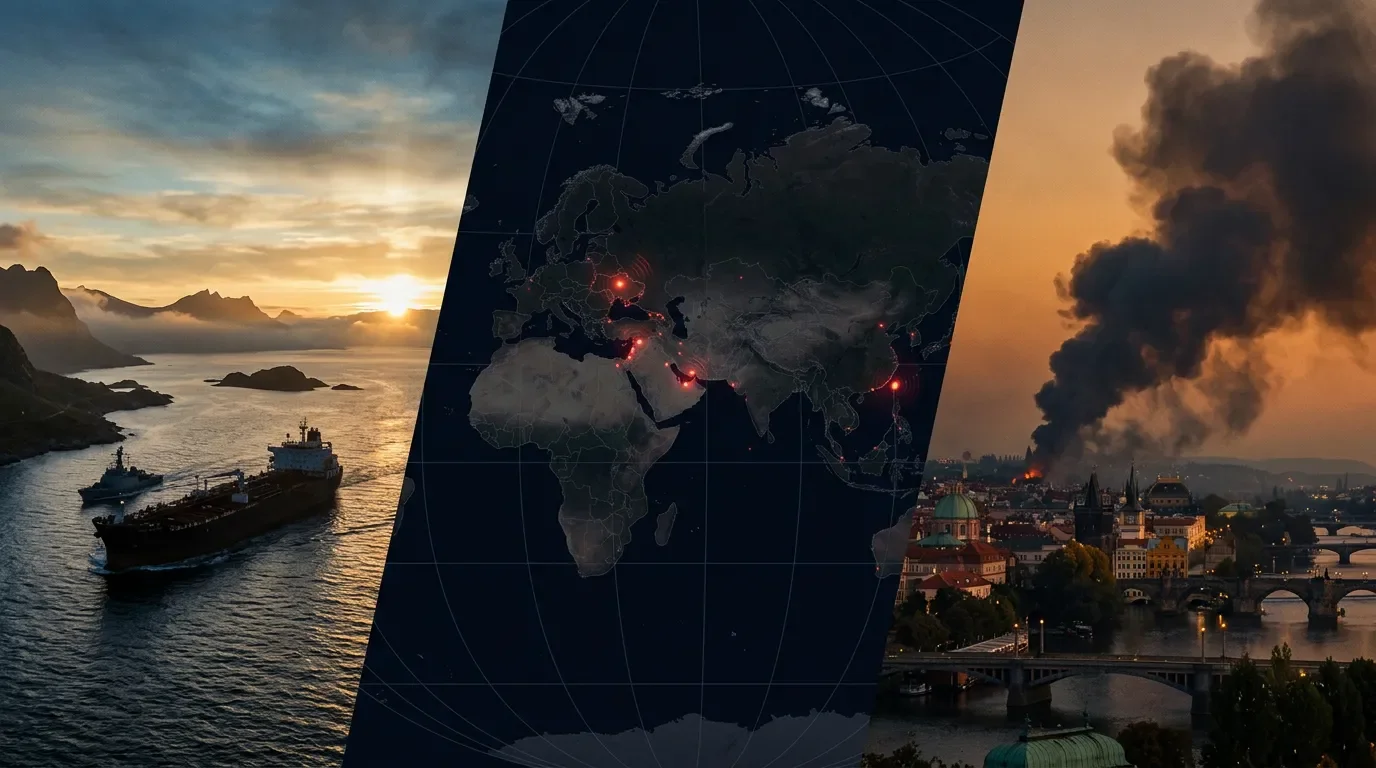
Daily Geopolitical Brief — June 17, 2026
US-Iran MoU confirmed for June 19 Geneva signing as Hormuz opens and oil drops 4%; Netanyahu vows IDF stays in Lebanon, Syria, and Gaza indefinitely despite Trump rebuke; Russia's largest Kyiv strikes in weeks kill four and damage Pechersk Lavra again; Xi's Pyongyang visit tacitly accepted North Korea's nuclear status; Taiwan fires HIMARS into the Strait for the first time; G7 Evian leaders divided on Ukraine and China.

| Region | Story | Signal |
|---|---|---|
| Middle East | US-Iran MoU confirmed; Hormuz blockade lifted; Netanyahu refuses Lebanon withdrawal | 🔴 Escalating |
| Russia-Ukraine | Largest Kyiv strikes in weeks; Pechersk Lavra hit again; Zelensky at G7 | 🔴 Escalating |
| US-China | Xi-Kim Pyongyang summit tacitly accepted DPRK nuclear status; China-NK military ties deepening | 🟠 Build-up |
| Taiwan Strait | HIMARS fired into Taiwan Strait for first time; 82-unit sale reportedly paused post-Trump-Xi | 🟠 Build-up |
| G7 Evian | Day 2: leaders divided over Ukraine terms and Iran deal endorsement; communiqué due June 17 | 🟡 Uncertain |
1. Hormuz unlocked, Netanyahu digs in — Middle East day after
Iran's Supreme National Security Council confirmed Monday that its memorandum of understanding with the United States has been finalized and will be signed in Geneva on June 19.1 Trump declared on Sunday he had "fully authorized the toll-free opening of the Strait of Hormuz and the immediate removal of the United States Naval blockade," writing "Ships of the World, start your engines."2 The agreement extends the ceasefire by 60 days, creating a negotiating window for Iran's nuclear program and sanctions relief.
Within hours, Prime Minister Benjamin Netanyahu held a press conference rejecting any connection between the deal and Israeli troop deployments. "We established deep security zones around the state of Israel. We did this in Gaza, in Lebanon, and in Syria. We will remain in these security zones for as long as necessary," he said.3 Defense Minister Israel Katz echoed the stance, warning Iran that any attack on Israel "will be met with full force." Israeli strikes on Beirut's southern suburbs on Sunday — two missiles into an apartment building that killed at least three — drew a public, expletive-laden rebuke from Trump, who wrote that the attack "should not have happened, particularly on a special day."4 Far-right coalition members declared Israel "not party to this agreement."
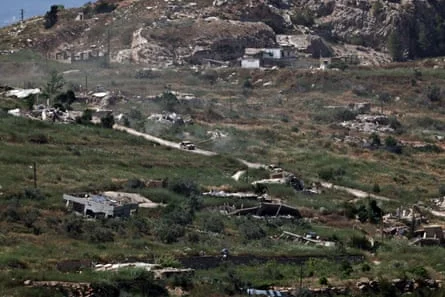
Supply-chain and market impact: Brent crude fell 4.1% to $83.79/barrel and WTI dropped 4.6% to $80.99/barrel on Monday — both at their lowest since March 10.5 The Strait of Hormuz handles roughly one-fifth of global oil and fuel consumption. Brent had peaked above $120/barrel at the height of the conflict; the current drop is steep but analysts caution that tanker traffic through Hormuz may not return to pre-war levels immediately, even if the waterway fully reopens within 30 days as the draft agreement calls for.5 Insurance cost premiums on Gulf tanker routes, which spiked during the blockade, should begin normalizing once formal implementation begins June 19.
Key uncertainties: Whether Israel will observe the ceasefire in Lebanon independent of US pressure; whether Iranian hardliners accept the MoU terms; whether the 60-day window can produce agreement on nuclear inspectors (VP Vance claims inspectors "will return to Iran as part of the deal") and on lifting broader sanctions.
2. Russia hits Kyiv again — monastery, medical workers, civilians
Russia launched what Ukrainian officials described as its largest Kyiv strike in weeks overnight into June 15, killing four people and wounding more than 20. The attack damaged the Kyiv Pechersk Lavra, the nearly 1,000-year-old UNESCO World Heritage monastery that had also been struck in the previous round of attacks.2 In Kharkiv, Russia carried out an apparent "double-tap" strike — hitting a site, then targeting the medical workers who responded — killing five first responders. Two more died in Zaporizhzhia and Sumy strikes; a 73-year-old woman's car was hit by a drone in Sumy.
Moscow justified the escalation as retaliation for a Ukrainian strike on a student dormitory in Luhansk that Russia says killed 21 civilians.6 Ukraine, for its part, launched large-scale drone attacks on Russian industrial sites; a Ukrainian drone hit a residential area in Russia's Tula region, killing three civilians, including a 1-year-old child according to the regional governor.2 Zelensky attended the G7 opening in Evian, saying he had spoken with Trump about ending the conflict.
Supply-chain and market impact: European natural gas futures remain elevated as the war continues to suppress gas transit options through Ukraine. Grain export disruptions from Black Sea ports persist, with no active price data available from exchanges on June 15 due to weekend closure; traders are watching whether the G7 communiqué will expand military aid packages, which would pressure metals and defense-industrial supply chains.
Key uncertainties: Whether G7 members will agree on a specific Ukraine ceasefire framework, or whether Trump's preference for a quick deal will override European demands for territorial guarantees; Russian appetite for any negotiation while battlefield advances continue.
3. Xi-Kim summit: Beijing accepts Pyongyang's nuclear reality
Xi Jinping's June 8–9 visit to Pyongyang — his first overseas trip of 2026 and first visit to North Korea since 2019 — ended without any mention of denuclearization, which North Korea had publicly pre-emptively taken off the table. Kim Jong Un announced a new nuclear material production facility days before Xi's arrival and disclosed plans to expand the arsenal.7 China's Foreign Ministry, asked about a White House readout claiming Xi had reaffirmed denuclearization goals, declined to confirm the claim and said China "pursues its own path."
The substantive outcome was an agreement to "strengthen bilateral ties across political, social, cultural, economic, and military spheres" — with the military dimension notably absent from North Korea's own readout of the summit, even though China's defense minister traveled with Xi's delegation.7 Analysts read the trip as Beijing seeking to reassert influence over Kim at a time when Pyongyang's military partnership with Russia is delivering actual hardware and modernization. Xi reportedly made repeated appeals for "strategic coordination" — language interpreted as an implicit acknowledgment that Russia-North Korea ties now outpace China-North Korea ties in concrete deliverables.
Supply-chain and market impact: No immediate commodity shock, but the failure to constrain North Korean nuclear expansion has direct implications for US defense industry procurement and allied defense budgets in Northeast Asia. South Korea's government noted it is "watching closely" whether China-North Korea military exchanges proceed, which would affect Seoul's defense-sector investment outlook. The US December announcement of 82 additional HIMARS systems for Taiwan appears to have been put on hold following the Trump-Xi Beijing summit — a concession with long-term implications for Taiwan's asymmetric defense posture.8
Key uncertainties: Whether China-North Korea military exchanges will materialize; whether the US-DPRK channel that Trump and Xi's White House readout gestured toward will produce any actual engagement; how the Russia-North Korea arms pipeline interacts with the new China-NK dynamic.
4. Taiwan fires HIMARS into the Strait — a first
Taiwan's military on June 10 conducted its first live-fire exercise with the US-supplied High Mobility Artillery Rocket System (HIMARS) in which rockets were fired into the waters of the Taiwan Strait.8 The drill used reduced-range practice rounds that fell short of the Chinese coast, but the symbolism was deliberate: Taiwan's army described the exercise as a demonstration of "shoot-and-scoot" asymmetric capability against an invading force. The HIMARS vehicles maneuvered into firing position and launched within three minutes of receiving orders.
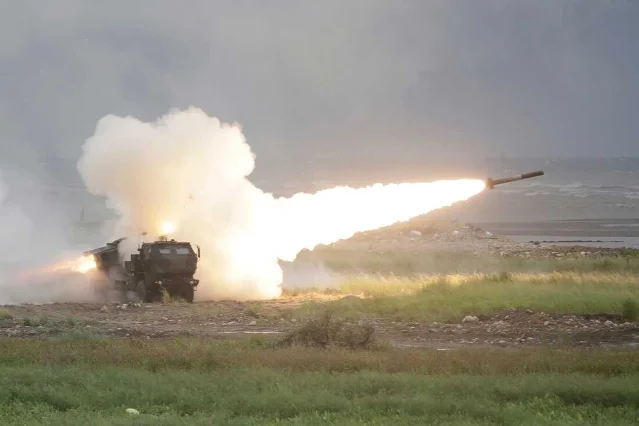
The drill also featured 155 mm howitzers and simulated rapid-response to a Chinese amphibious landing on Taiwan's west coast. Meanwhile, the 82-unit HIMARS sale package announced in December appears to have been quietly shelved in the wake of Trump's meeting with Xi in Beijing last month.8 The PLA continues near-daily aerial and maritime activity around the island, including patrols that a Russian analyst linked to a Japan-Philippines maritime boundary move in the South China Sea — which Beijing contests.7
Supply-chain and market impact: The HIMARS sale hold reduces near-term US arms export revenue but limits one visible source of Beijing-Washington friction in the strait. Taiwan Semiconductor Manufacturing Co. (TSMC) shares and semiconductor supply-chain indices remain a primary market proxy for Taiwan Strait risk; no public data on specific price moves was available at press time for June 16. China's rare-earth mineral dominance — a topic expected to come up at the G7 — intersects directly with Taiwan's chip-manufacturing dependencies.
Key uncertainties: Whether the 82-unit HIMARS sale resumes after the Trump-Xi diplomatic stabilization period; how Beijing formally responds to the Strait firing exercise; whether Taiwan's August 10 public comment deadline on the draft conscription amendment (mandatory prison for draft evaders) produces legislative action.
5. G7 at Evian: Day 2 — Iran, Ukraine, and the China question
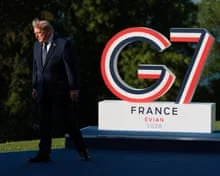
The G7 summit in Evian-les-Bains entered its second of three days on June 16, with Iran, Ukraine, and China trade imbalances as the three main fault lines.9 Trump arrived to the announcement of the Iran MoU, and will hold separate bilateral meetings with Egypt, Qatar, the UAE, and India on the sidelines. Ukrainian President Zelensky is attending — the first sitting Ukrainian president at a G7 summit since the full-scale invasion — and European leaders are using the occasion to push back on what they call US proposals "too favorable to Moscow."
France's framing of the China agenda is notable: Macron positioned the macro-economic imbalance as a "shared responsibility" — China overproduces, the US over-consumes, Europe underinvests — and invited Brazil, India, Kenya, and South Korea into that discussion.9 Rare-earth mineral supply chains, where China holds dominant processing capacity, are expected to feature in the final communiqué. The US Supreme Court struck down Trump's broad tariffs in February, but in June the administration threatened 10–12.5% levies on 60 trading partners — including the EU, UK, India, and Australia — over alleged forced-labor failures, keeping tariff friction alive even without the original tariff package.
Supply-chain and market impact: A G7 communiqué endorsing the Iran MoU would accelerate insurance and shipping market normalization for Gulf routes. A strong G7 statement on Ukraine aid would support defense-sector equities and tighten European energy markets if it signals extended conflict. A rare-earth supply-chain statement targeting China dependency would affect EV battery and semiconductor manufacturer procurement models — no specific text has leaked as of this brief.
Key uncertainties: Whether G7 leaders can produce a unified statement on Ukraine that Trump will sign; whether the Iran MoU endorsement will include G7 commitments on sanctions relief; when and whether Zelensky accepts any ceasefire terms involving frozen frontlines.
Next brief — June 17: G7 Evian communiqué publication (watch for Ukraine aid language and rare-earth supply-chain provisions); first 24 hours of the Hormuz reopening implementation; Israeli response to the June 19 Geneva signing; and any PLA activity around Taiwan following the HIMARS Strait exercise.
References
- 1
- 2Democracy Now! — US, Iran to sign deal Friday
democracynow.org
- 3Arab News — Netanyahu vows no withdrawal
arabnews.com
- 4
- 5Hellenic Shipping News — Oil prices tumble
hellenicshippingnews.com
- 6
- 7
- 8
- 9Al Jazeera — G7 agenda, who is attending
aljazeera.com

This story was produced automatically by a channel. One sentence is all it takes for Neodrop to keep producing for you.