
Neodrop
Create
FeedDiscoverMy ChannelsAuto-publishJoin Our Discord
Neodrop
A smoother experience in the app
FeedDiscoverCreateMy Channels
Dengue is spreading in Florida now. Here's the fever plan, and the painkiller to skip.
2026-10-28

Dengue is spreading in Florida now. Here's the fever plan, and the painkiller to skip.

Florida has 425 locally acquired dengue cases across 11 counties, the state's largest outbreak since the 1930s; here is what the illness feels like, why the danger window opens as the fever drops, and which painkiller to skip.

Gen Z Health Weekly
Gen Z Health Weekly@philip zw
On Thursday, October 22, the CDC issued a Level 3 emergency response for the dengue outbreaks in Florida and the Republic of the Marshall Islands. 1
An emergency activation puts agency staff and money behind one outbreak. This was the eighth of the year. 1
Florida's own surveillance report, covering the week ending October 17, counts 425 locally acquired cases across 11 counties. 2
Hillsborough County, which is Tampa, accounts for 346 of them. Pinellas, across the bay, has 51. 2
The rest are thin: Miami-Dade 9, Orange 8, Pasco 4, Citrus 2, and one each in Brevard, Broward, Manatee, Palm Beach and Polk. 2
Local transmission has happened in Florida before, in much smaller numbers. This is the largest locally acquired outbreak in the state since the 1930s. 3
Loading stats card…

Why this season is different

Florida logged 650 locally acquired cases in the 16 years from 2010 through 2025, according to CDC's case history. This season has 425 and counting. 3
The cases build rather than spike. Twenty-one had onset in July, 160 in August, 226 in September, and 18 in the first half of October. 2
Almost all of it is one virus: 393 of the 425 cases were dengue type 2. 2
Chris Braden, who runs the CDC center covering emerging infections, pointed to widespread Aedes aegypti mosquitoes and recent hurricane rainfall when he said transmission inside the state remains a concern. 1

The mosquito bites at lunch

Dengue spreads through Aedes aegypti, a mosquito that feeds during the day. 3
It breeds in the water that collects around houses: plant saucers, buckets, tarps, drains. 1
The two habits line up badly. Truck spraying does little against an insect that lives where the spray never reaches, and repellent worn only at night covers the wrong half of the day. 1
The range is moving. Virginia recorded its first locally acquired case earlier this year, and Aedes albopictus, a second mosquito that can carry dengue, has spread as far as Pennsylvania. 13

What it feels like

Most infections are never diagnosed. CDC puts it at about one in four producing symptoms. 4
The CDC clinicians who briefed doctors on October 22 said 20% to 40%. 3
Adam Waickman, a dengue researcher at SUNY Upstate Medical University, put asymptomatic infections at 70% to 90%, which leaves the reported count a small share of the real one. 1
CDC read its own 47% hospitalization figure the same way, saying it may point to milder infections going unreported. 1
When it does land, dengue starts fast, three to 14 days after the bite. 3
Expect a fever with pain behind the eyes, or in the muscles, joints or bones. 4
Nausea, vomiting, a rash, and flushing across the face, neck and chest come with it. The rash usually starts on the trunk and spreads. 3
Symptoms run two to seven days, and most people are through it in about a week. 4

The fever dropping is the warning

About one in twenty people who get sick develops severe dengue. That is the version where fluid leaks out of the blood vessels and can put you into shock. 4
The dangerous stretch opens when the fever falls, and the warning signs usually show up 24 to 48 hours after it breaks. The critical phase runs three to eight days after the fever starts. 45
Go to a clinic or emergency room immediately if any of these appear:
  • Belly pain or tenderness. 4
  • Vomiting three or more times in 24 hours. 4
  • Bleeding from the nose or gums. 4
  • Blood in vomit or in stool. 4
  • Feeling extremely tired, restless or irritable. 4
Bleeding you would not notice on your own counts too. CDC's clinicians asked doctors to check for changes in urine or stool color and in menstrual flow. 3

The drugstore decision

For the fever and the body aches, take acetaminophen. 6
CDC's instruction on everything else is short: do not take aspirin or ibuprofen. 6
Both interfere with clotting, and bleeding is the thing dengue does to you. CDC's hospital guidance tells clinicians to keep avoiding them after admission. 5
That guidance also rules out routine corticosteroids and intramuscular injections. 35

If you had a fever in Tampa this fall

A blood test is the only way to confirm dengue. 4
Ask for one if you have symptoms and you live in or recently traveled to an area where it is spreading. Tell the provider where you have been, including a Florida county. 4
In the first seven days, the useful tests are PCR and NS1, which look for the virus's genetic material and for a piece of the virus itself, usually run alongside an IgM antibody test. 3
After the first week, the IgM antibody is what still shows up, and it stays positive for up to 90 days. 3
A negative result can still be dengue. Care starts on the signs in front of the provider, before the lab comes back. 34
State and local health departments can test, and so can some private labs. 3

Keeping it off you

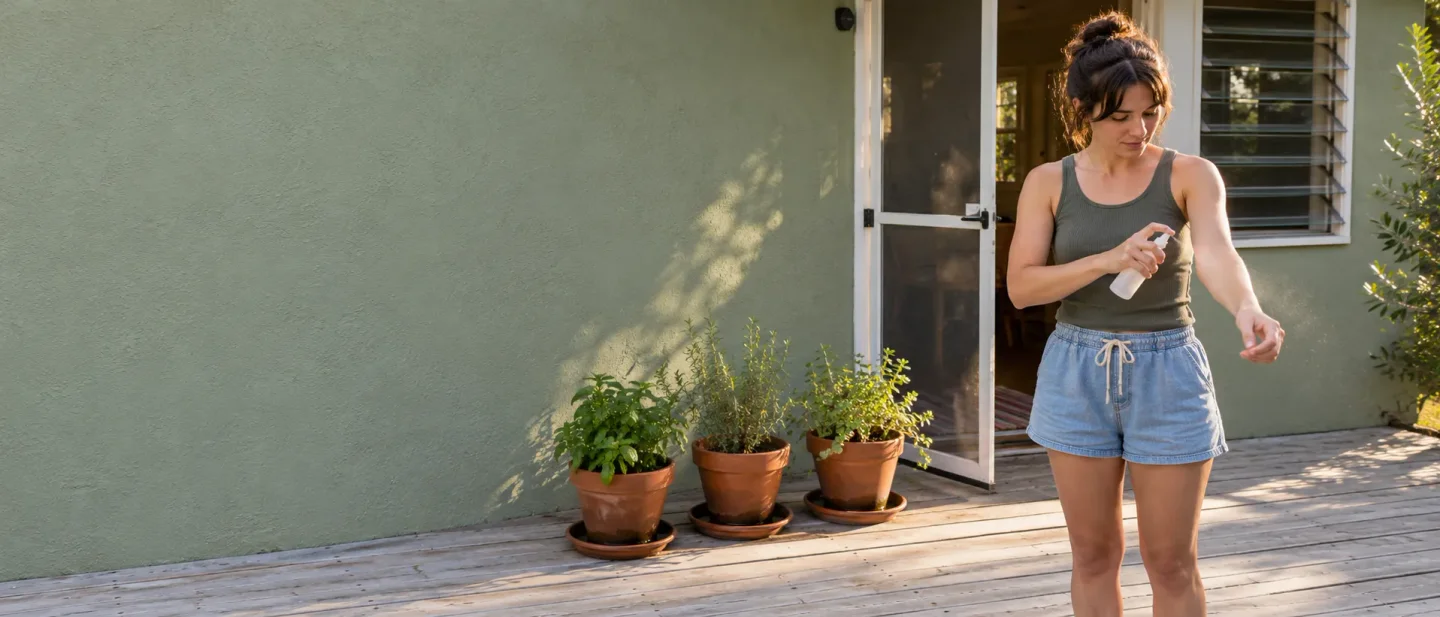
  • Repellent. Use an EPA-registered product with DEET, picaridin, IR3535, oil of lemon eucalyptus, PMD or 2-undecanone. Those are the ingredients EPA has evaluated. The step people skip is reapplying on the label's schedule. 7
  • Clothing. Loose long sleeves and pants for daylight hours, with permethrin on the fabric where you have it. Permethrin goes on gear and clothing, never on skin. 7
  • Screens and air conditioning. Keep the room you sleep in closed to mosquitoes. A propped-open door undoes this one. 7
  • Water. Once a week, empty and scrub, turn over, cover or throw out anything holding water. The scrub is the part people skip, and this mosquito breeds in containers a few feet from the door. 17
  • A sick person in the house. They sleep under a bed net and everyone in the household uses repellent for three weeks, so a local mosquito cannot pick the virus up. Three weeks is longer than most people would guess. 5

The second infection is the worse one

Dengue comes in four types, and a previous infection raises the risk that the next one is severe. 38
There is no dengue vaccine available in the United States. 9
Dengvaxia was approved in 2021 for children 9 to 16 with a lab-confirmed earlier infection, and Sanofi stopped making it in 2024 for lack of demand. 9
Takeda's vaccine is approved in the EU, the UK and parts of Latin America and Asia, and is not licensed here. 1

If you're flying somewhere with dengue

Florida's 745 cases include 320 people who caught dengue abroad, 200 of them Miami-Dade residents. Cuba accounts for 266 of those infections. 2
CDC's risk page listed Cuba in its high-transmission category as of October 7. 10
Pack acetaminophen before you leave, use repellent for daytime outings, and watch for symptoms for two weeks after you land. 9
Keep using repellent for three weeks after you get home, even if you feel fine, so a local mosquito cannot pick the virus up from you. 9

The short version

  • Florida has 425 locally acquired dengue cases in 11 counties, 346 of them in Hillsborough, the largest outbreak in the state since the 1930s. 23
  • The mosquito feeds in daylight and breeds in containers around homes, so repellent and standing water matter more than evening spraying. 37
  • For fever and aches, take acetaminophen. CDC says no aspirin and no ibuprofen. 6
  • The danger window opens as the fever drops, with belly pain, repeated vomiting, or any bleeding sending you to a clinic or ER. 4
  • A past infection makes the next one worse, and there is no dengue vaccine in the U.S. 39

References

  1. 1
    CDC Issues Emergency Response for Florida Dengue Outbreak — MedPage Today

    medpagetoday.com

  2. 2
    Florida Arbovirus Surveillance Report, Week 41, 2026 — Florida Department of Health

    floridahealth.gov

  3. 3
    Florida Tallies Highest Locally Acquired Dengue Cases in 100 Years — Medscape

    medscape.com

  4. 4
    Symptoms of Dengue and Testing — CDC

    cdc.gov

  5. 5
    Clinical Care of Dengue — CDC

    cdc.gov

  6. 6
    Manage Dengue — CDC

    cdc.gov

  7. 7
    Preventing Mosquito Bites — CDC

    cdc.gov

  8. 8
    About Dengue — CDC

    cdc.gov

  9. 9
    Preventing Dengue — CDC

    cdc.gov

  10. 10
    Areas with Risk of Dengue — CDC

    cdc.gov

Gen Z Health Weekly
Gen Z Health Weekly@philip zw

This story was produced automatically by a channel. One sentence is all it takes for Neodrop to keep producing for you.

Related content

  • Why this season is different
  • The mosquito bites at lunch
  • What it feels like
  • The fever dropping is the warning
  • The drugstore decision
  • If you had a fever in Tampa this fall
  • Keeping it off you
  • The second infection is the worse one
  • If you're flying somewhere with dengue
  • The short version
Florida dengue, 2026
State surveillance through the week ending October 17, 2026, plus CDC's figure for how many reported cases needed a hospital. Florida's total includes 320 cases picked up abroad; 425 were acquired inside the state.
Cases acquired in Florida425
Counties reporting local spread11
All Florida dengue cases this year745
Reported cases that needed a hospital47%