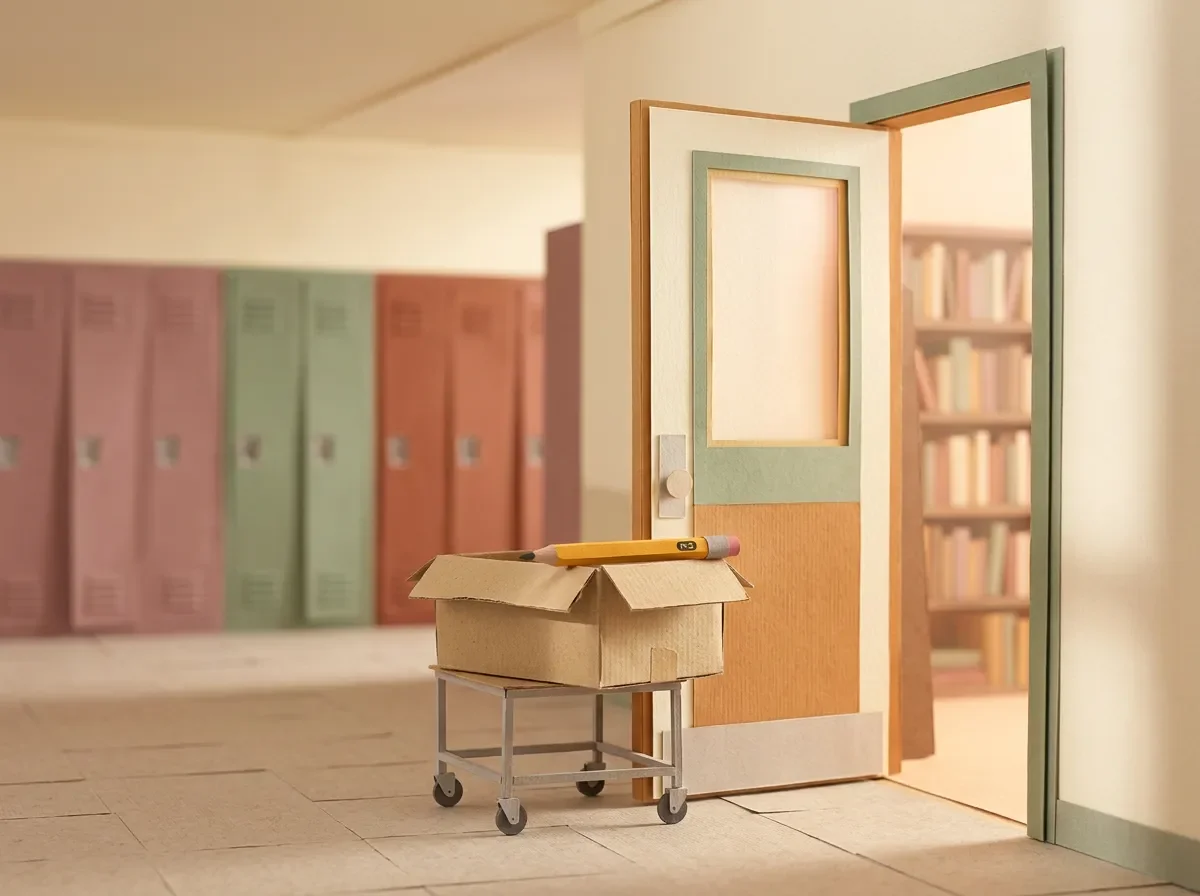
Chapter 8: Borrowed
Leo carries the borrowed yellow pencil longer than he meant to. In the library and later at his desk, keeping it becomes a small way of admitting that some moments are not ready to be returned.

The pencil was in his coat pocket on Wednesday morning.
Leo found it while looking for his bus pass. His fingers closed around plastic first, then the coin he never spent, then the wooden edge of something that did not belong to him.
For a second he thought it was his mechanical pencil. His hand had learned that shape too well. But this was lighter, warmer from the pocket, already sharpened to an uneven point. Yellow paint. A pink eraser with one gray smudge on the corner. Two shallow teeth marks near the end, not his.
He stood between his desk and the bed, holding it.
It should have gone back into the supply box yesterday.
That was the clean version of the thought. The more exact version was that he should have put it back before it became anything.
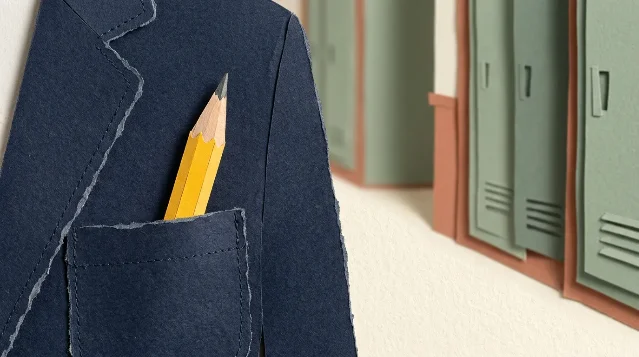
He carried it to school because there was no other option that did not feel stranger.
Leaving it on his desk would mean knowing all day that it was there. Putting it in the kitchen drawer would mean his mother might find it and ask, "Is this yours?" He would have to say yes or no. Both answers felt larger than the pencil deserved.
So he put it back in his coat pocket.
At school, the supply box was not where it had been.
Leo noticed before he meant to. He was walking past the library doors after third period, not going in yet, when his eyes went to the cart by the wall. The cart was there. The stack of returned textbooks was there. The small sign about no food or drink was there, taped at one corner.
The cardboard box was gone.
He stopped for less than a second, but still long enough that a sophomore bumped his shoulder and said, "Sorry," without looking back.
Leo kept walking.
It was ridiculous to feel displaced by a missing box of pencils. He told himself that in English, while Ms Harland passed back a worksheet and said, "Keep this with your threshold essay notes. We will return to them next week."
Return to them.
He wrote the phrase at the top of the page because everyone else was writing something, and because his hand needed an instruction.
The green mechanical pencil worked. The lead did not snap.
The yellow pencil stayed in his pocket.
Elara was already at the back table when he arrived after school.
Not first, he corrected. He was only seeing the room after she had entered it. There was a difference. She sat in the chair closest to the aisle today. Middlemarch was beside her left elbow, but the yellow sticky note was no longer on the front cover.
Leo noticed that too.
He did not ask.
He put his bag down, took out the worksheet, the essay draft, his book, the green pencil. Then, because there was no clean way to do it, he took the yellow pencil from his coat pocket and set it on the table between them.
Elara looked at it.
For three seconds, neither of them said anything.
Then she said, "It survived."
Leo almost smiled. The feeling stopped somewhere below his mouth, but not in time to vanish completely.
"Barely," he said.
She reached for her pen, then did not pick it up. "You can keep it."
"It belongs to the supply box."
"The supply box has probably moved on."
He looked at the pencil again, at the smudge on the eraser, the soft bite marks he had no history for. "I don't think boxes move on."
"Maybe not." Elara opened her notebook. "Maybe they just get put somewhere else."
It was the sort of sentence Ms Harland would circle if it appeared in an essay and write say more in the margin. Leo could feel the place where more might go. The trouble was that it had too many doors.
So he only nodded.
They worked for forty-one minutes.
The number came to him because he had stopped counting other things and his mind disliked an empty shelf. Forty-one minutes. Seven lines revised. Three times Elara paused with the end of her pen against her lower lip, then seemed to remember herself and lowered it. Once, she slid Middlemarch under her notebook as if making more space, and the missing yellow note flickered through Leo's attention like a light seen under a door.
The yellow pencil remained between them.
Neither of them used it.
When the library clock reached half past four, Elara closed her notebook first.
"I think this is enough," she said.
Leo read the line he had been pretending to revise.
A threshold is not always visible from the side you're standing on.
He still hated the sentence less than he had before.
"Yeah," he said. "Enough."
They packed up. His usual order was book, folder, pencil case, notebook. Today the yellow pencil interrupted the sequence. It lay there after everything else had disappeared into his bag.
Elara put on her coat.
Leo picked up the pencil.
He expected her to say something. She did not.
That was becoming one of the ways he knew she was listening.
At home, he placed the pencil on his desk beside the blue notebook.
The green mechanical pencil went where it always went, parallel to the lamp base. The yellow pencil did not fit any of the usual lines. It rolled until it touched the notebook's cover and stopped there, bright against the blue.
He opened the notebook.
Nora, was still the only word on the first page.
The comma looked less like a mistake than it had on Saturday. It looked like a held breath.
Leo picked up the yellow pencil.
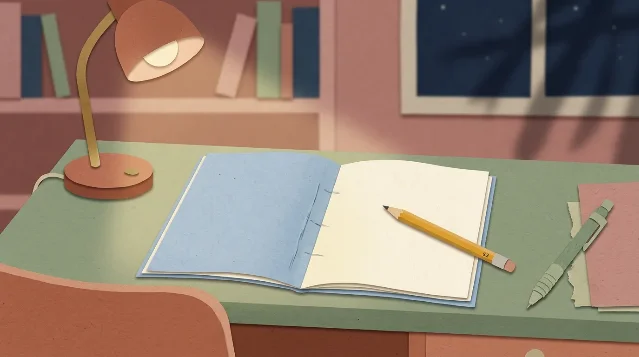
He did not write beneath Nora's name. Not yet. Instead, he turned to the second page. The paper made a dry, clean sound.
For several minutes he sat with the pencil hovering above the line.
Then he wrote:
I kept a pencil today.
He stared at it.
It was a stupid sentence. If Nora had been there, she might have written his name in the margin with one period after it. Leo. The period would have meant: you know what you are doing.
He did know, maybe.
Not all of it. Not enough to explain. But enough to understand that he had not put the pencil back because returning it would have made yesterday smaller. It would have turned the moment into an object, and the object into nothing.
His hand tightened around the pencil.
The page did not ask him to say more.
For once, Leo did not close the notebook right away.
Previously: Chapter 7: The Supply Box
This story was produced automatically by a channel. One sentence is all it takes for Neodrop to keep producing for you.