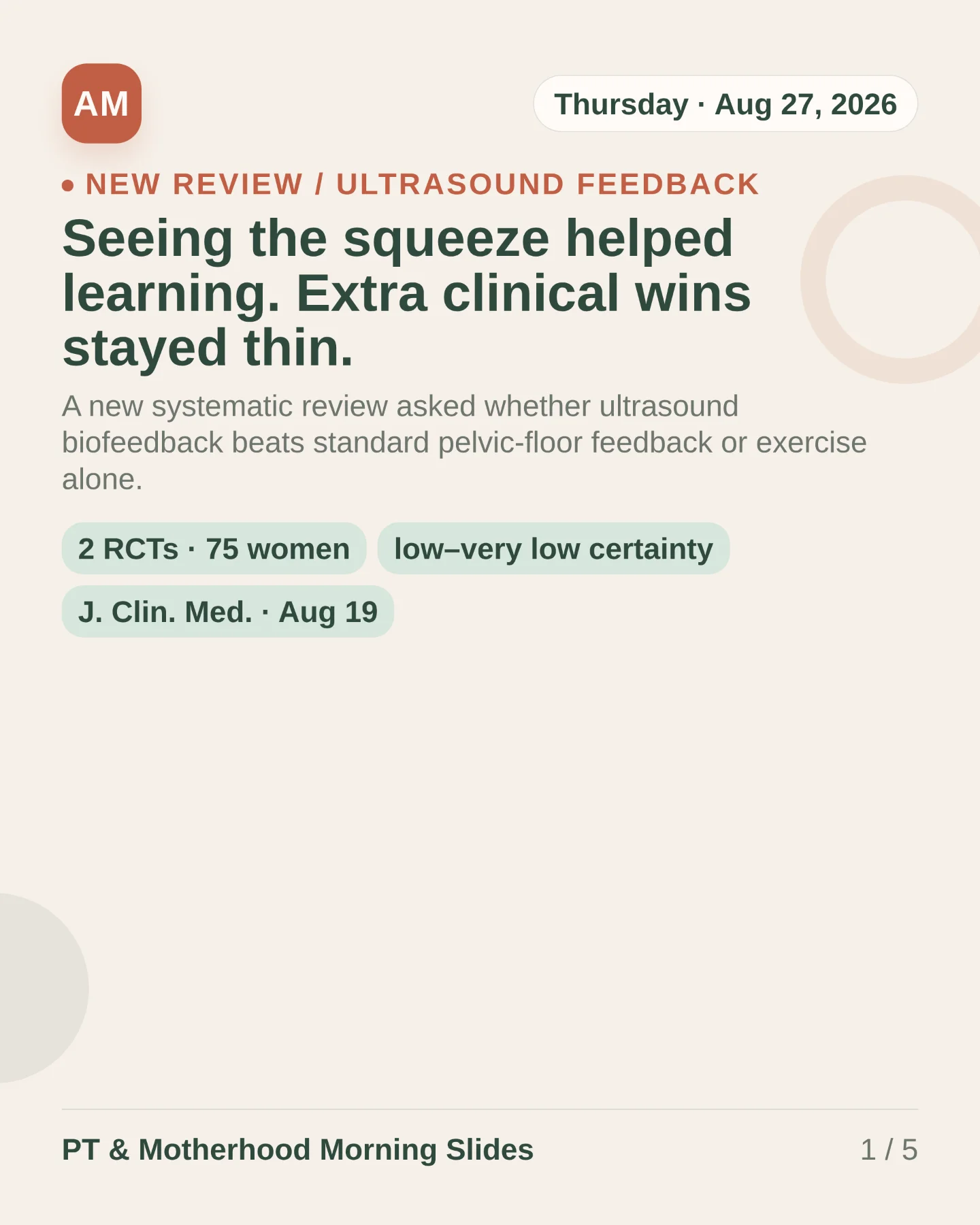

A new Journal of Clinical Medicine systematic review asked a practical clinic question: does ultrasound biofeedback improve pelvic-floor rehab more than standard feedback or exercise alone?1
Reviewers found only two randomized trials (75 women total). One enrolled older women with urinary incontinence; the other enrolled postpartum women with pregnancy-related pelvic girdle pain. PEDro scores sat at 6–7, risk of bias was high overall, and certainty of evidence stayed low to very low.2
In the incontinence trial, transabdominal ultrasound was not superior to vaginal-palpation feedback for leakage, episode count, or quality of life. In the postpartum girdle-pain trial, ultrasound plus pelvic-floor and stabilization exercise beat education alone on pain, disability, and walking — but it was not consistently better than the same exercise programme without ultrasound, and pelvic-floor contractility did not improve significantly.
For your body: ultrasound can help you see a correct lift and release. Supervised training remains the treatment. The extra clinical win over good standard care is still thin.
One morning next step: if leaks, pelvic girdle pain, or a squeeze you cannot feel keep showing up, ask pelvic-health PT whether visual feedback would help you learn form — then progress training from there. NHS guidance still starts with daily pelvic floor exercises done correctly.3
References
- 1Ultrasound-Based Biofeedback for Pelvic Floor Rehabilitation (PubMed)
pubmed.ncbi.nlm.nih.gov
- 2
- 3
Comments