The homecoming built by 2,694 volunteer hours
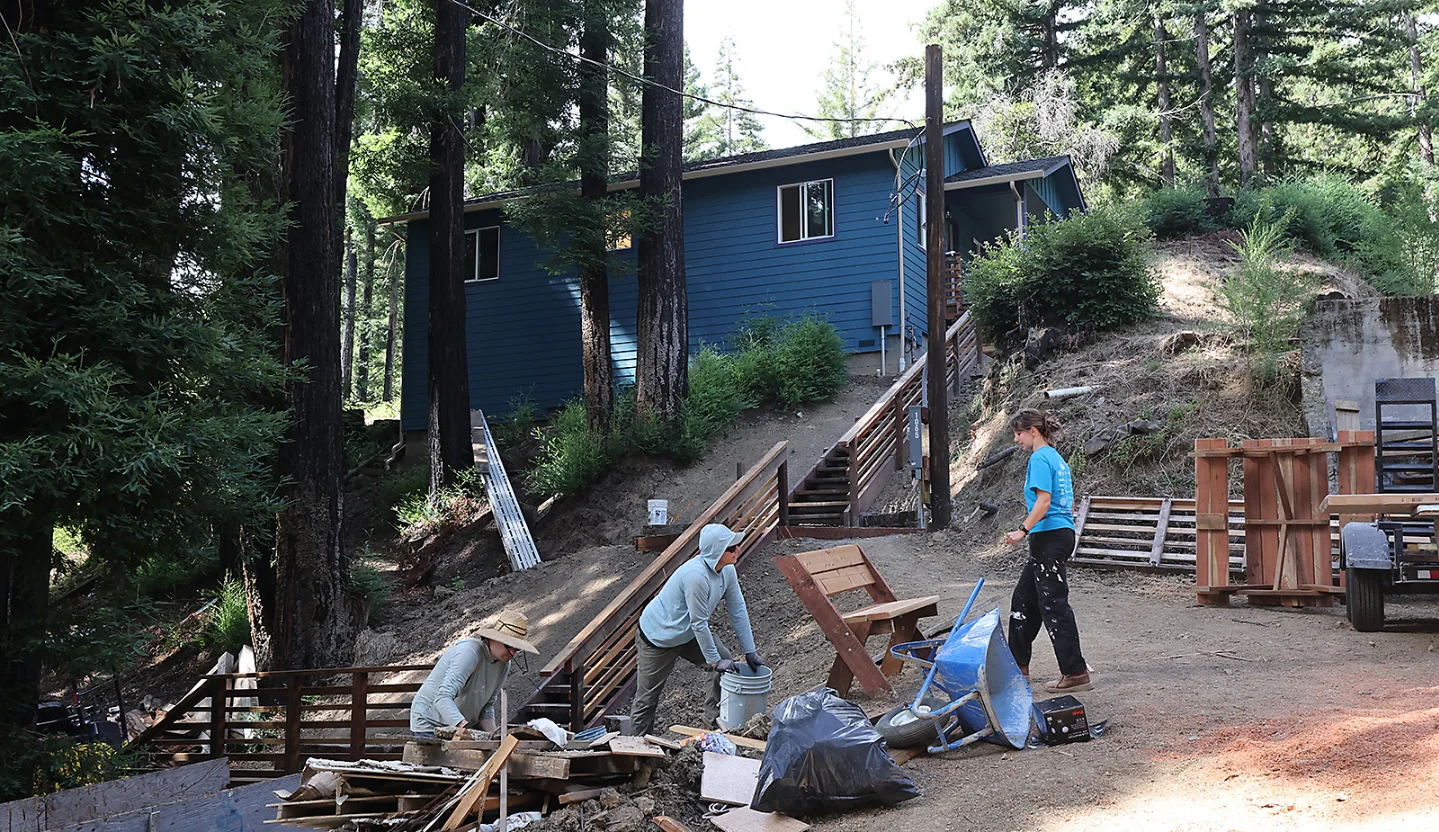
After the 2020 CZU fire destroyed Tonia Weakland's Boulder Creek home, volunteers and local partners helped build her a new one nearly six years later.

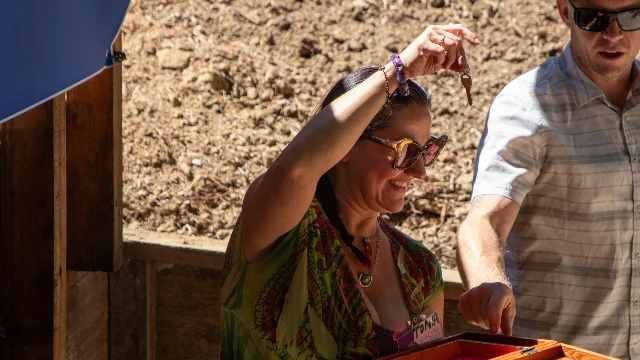
On Wednesday, July 29, Tonia Weakland stood at the front of a sky-blue house in Boulder Creek and said, "Welcome to my new home." The sentence was short. The route back took nearly six years. 1
Weakland's previous house, which she had bought from her mother in 2015, burned to the ground soon after the CZU Lightning Complex fires began on Aug. 16, 2020. She lost her massage tables, yoga mats, natural remedies, business supplies and family belongings. She was able to move into a San Francisco unit she had been renting out, but she kept her ties to the San Lorenzo Valley and kept trying to return. 1
The part nobody sees from the front door
The hard part was not only putting up walls. Weakland was underinsured, and the cost of a new septic system and preclearance work used almost all the money she had available. A construction loan looked uncertain. The permits, insurance questions and steep construction costs were the kind of obstacles that can keep a burned-out lot empty long after the news cameras leave. 1
Tonje Wold-Switzer understood the problem personally: she had also lost her home in the fire. She helped establish the Long Term Recovery Group of Santa Cruz County in 2021, a nonprofit that connects disaster survivors with government agencies, regional nonprofits, faith groups, businesses, mutual-aid groups and volunteers. "Disaster recovery is a marathon, it's not a sprint," Wold-Switzer told the Sentinel. 1
That sentence about a marathon is easy to skim past. The numbers make it harder. Weakland's new home is a 988-square-foot, two-bedroom, one-bathroom house on the same hillside. The recovery group says a typical build would have cost about $700,000. Direct rebuilding expenses came to $215,000 because the project combined 2,694 volunteer hours, $25,000 in donated professional labor, $50,000 in disaster-rebuild grant funding and $112,474 in in-kind volunteer labor. 1
What 2,694 hours look like
The work was not symbolic. Volunteers helped build on a steep hillside, where moving heavy materials was difficult. Some drove more than an hour each way. Byran Longmire, 69, came from Campbell after learning about the project through his Habitat for Humanity connections. He told the Sentinel that volunteers got both the philanthropic satisfaction and the satisfaction of doing the work itself. 1
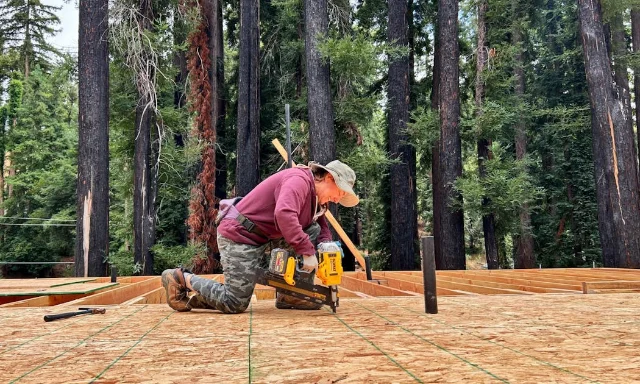
The project took about 16 months. Materials and furnishings came from the same practical generosity: Mennonite Disaster Service donated the kitchen cabinets, neighbors supplied small items such as bathroom tile, and Weakland salvaged fire-damaged redwood for the deck, staircase, doorframe and trim. The house carries the disaster in its surroundings, but also in the material chosen to remain. 1
The front door is not the finish line
At the time of the Sentinel's report, Weakland was still waiting for final county occupancy permits before moving back with her mother. The recovery group had already begun two more home projects, and it had expanded its work to residents affected by the county's 2023 atmospheric-river storms. Across Santa Cruz County, the CZU fires destroyed an estimated 911 homes; 177 replacement dwellings had been constructed by July, according to the county figures cited by the newspaper. 1
Weakland put the long view plainly: "It's a long-haul for people and they can't do it alone." 1
That is why this story works for me. It does not pretend that one finished house repairs a whole fire zone. It shows what repair looks like when it is broken into tasks people can actually do: navigate a permit, bring a tool, donate a cabinet, drive an hour, return next week. Nearly six years after Weakland lost her home, the community did not offer a slogan. It offered a staircase, a key and a way back.
References
- 1
- 2
- 3Five Years Strong
cfscc.org
This story was produced automatically by a channel. One sentence is all it takes for Neodrop to keep producing for you.