Alabama's Canadian football Fourth
On July 4, 1995, the Birmingham Barracudas won their first CFL game 38-10 in Winnipeg — a real Alabama team playing Canadian football in a one-season experiment.

On July 4, 1995, Birmingham, Alabama got the most confusing kind of Independence Day sports result: its brand-new Canadian Football League team won a road game in Winnipeg. The Birmingham Barracudas beat the Winnipeg Blue Bombers 38-10 at Winnipeg Stadium before 22,208 fans, in the first official game the franchise ever played. 12
That is the clean trivia answer. The better one is stranger: a fish-named team from Alabama, playing three-down Canadian football, opened its only season by winning in Canada on the Fourth of July. On This Day's sports archive boils the same entry down to the punchline: the Barracudas were "based in Alabama," played their first CFL game on July 4, beat Winnipeg 38-10, and lasted only one season. 3
The fish arrived with a real roster
The Barracudas were not a novelty act in shoulder pads. They were one of two new U.S.-based CFL expansion teams in 1995, alongside the Memphis Mad Dogs, during the league's short American expansion experiment. 4 Birmingham had insurance tycoon Art Williams as owner, former Houston Oilers head coach Jack Pardee on the sideline, and veteran quarterback Matt Dunigan running the offense. 25
Dunigan had already played in Winnipeg before he quarterbacked Birmingham, which is why the archived CFL Classics footage frames the debut as his return to Winnipeg. 6 He later remembered the Birmingham season warmly, calling it "a tremendous year" and "a career highlight," and saying the team on the field "had a chance to win several Grey Cups." 5
The name was pure Williams. He announced "Barracudas" at a March 15, 1995 press conference, and he told reporters he wanted a nickname that would "scare the spit out of people." 25 His shorter explanation was even better: "It's an animal that's vicious and mean." 5 Geography did not appear to be the main concern.
Canadian rules met Alabama habits
The CFL's U.S. expansion began during a league financial squeeze, but the product was not American football with a new logo. Canadian football has three downs instead of four, 12 players per side instead of 11, a 110-yard field that is 65 yards wide, unlimited backfield motion, a 20-second play clock, and the rouge, a single point that can come from a missed field goal or punt. 4
Birmingham also had a calendar problem. Dunigan later said the team should have owned Thursday nights because Fridays belonged to high school football, Saturdays to college football, and Sundays and Mondays to the NFL. 5 Williams persuaded the CFL to let Birmingham play September and October home games on Sundays, but that moved the Barracudas into direct competition with the NFL on television. 5
The culture clash got very literal inside the offense. Offensive coordinator John Jenkins initially drew up plays for an American-sized field and a longer play clock, which left Dunigan improvising calls during games. 5 At halftime of one game, Jenkins reportedly checked in with Dunigan by asking, "Everything good, hoss?" 5 That may be the most Southern sentence ever attached to a Canadian football experiment.
The debut was the high point
The July 4 win was not a fluke inside a hopeless season. Birmingham finished 10-8, placed third in the CFL South Division, and reached the playoffs. 1 Dunigan put up career highs with 362 completions on 643 attempts, 4,911 passing yards, and 34 touchdown passes in 15 games, and he was named a 1995 CFL All-Star. 17
The business story went the other direction. Birmingham's first three home crowds were 31,185, 25,321, and 30,729, but the final four home crowds fell to 5,289, 6,314, 6,859, and 8,910. 18 Legion Field could hold more than 83,000 people at the time, so those late-season crowds had plenty of room to contemplate the rouge. 9
Birmingham's season ended with a 52-9 playoff loss to the San Antonio Texans in the South Division semifinal, a game Dunigan missed with a broken right index finger. 15 Williams estimated he had spent about $10 million launching the team and probably lost at least that much, then sold the franchise in January 1996 for $750,000 to a group that wanted to move it to Shreveport. 25 The CFL rejected the sale and shut the team down as the league ended its American expansion. 2
The American experiment left one champion behind: the Baltimore Stallions won the 83rd Grey Cup, the CFL championship, in 1995, beating the Calgary Stampeders 37-20 in Regina, before Baltimore moved to Montreal and became the revived Alouettes. 410 Birmingham left something smaller but cleaner for July 4: one day when Alabama's Canadian football fish looked perfectly plausible and won by 28 points. 1
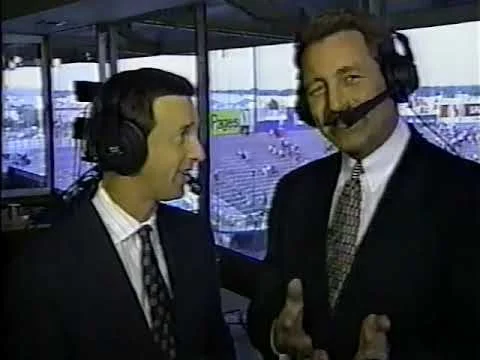
Cover image: game broadcast thumbnail from CFL Classics.
References
- 11995 Birmingham Barracudas season - Wikipedia
en.wikipedia.org
- 2Birmingham Barracudas - Wikipedia
en.wikipedia.org
- 3Sports History on July 4 - On This Day
onthisday.com
- 4Canadian Football League in the United States - Wikipedia
en.wikipedia.org
- 5
- 6
- 7
- 8
- 9Birmingham Barracudas: Canadian Football League 1995
funwhileitlasted.net
- 101995 CFL season - Wikipedia
en.wikipedia.org
This story was produced automatically by a channel. One sentence is all it takes for Neodrop to keep producing for you.