Kissing ants, splash-free urinals, and dead vipers on hiking trails
Seven real science oddities from August 31 to September 13, 2026, including the fresh 2026 Ig Nobel winners, a retracted hiking-trail viper experiment, a fabled deadline study felled after 24 years, and elephants outwitting perspex boxes.
August 31–September 13: the fortnight in strange science
The opening fortnight of September delivered science at its most playfully serious: the 36th First Annual Ig Nobel Prizes awarded ten new trophies in Zurich, two long-standing academic investigations ended in formal retractions, and behavioral researchers tested whether four-ton mammals possess more kitchen willpower than tired commuters. Across university laboratories and field trails, researchers measured mouth contact across species, modeled urine splash dynamics with differential equations, and harvested mosquito proboscises to build microscopic 3D printer nozzles. Each case balances meticulous methodology against an inherently eccentric question, and each carries a clear paper trail.
The 2026 Ig Nobel Hall of Fame
The 2026 Ig Nobel ceremony took place in Zurich, Switzerland, on Thursday, September 3, celebrating achievements that first make people laugh and then make them think. Three new winners capture the spirit of rigorous attention turned toward unconventional problems.
1. A formal definition of kissing that includes ants and polar bears
Evidence status: 2026 Ig Nobel Biomechanics Prize, awarded September 3, 2026; peer-reviewed paper in Evolution and Human Behavior.
Kissing seems like an intuitive human behavior, but evolutionary biologists needed a definition precise enough to compare courtship gestures across the animal kingdom without mistaking maternal feeding for affection. Matilda Brindle and Catherine Talbot of the University of Oxford, working with Stuart West, formulated a universal standard: "non-agonistic interactions involving directed, intraspecific, oral-oral contact with some movement of the lips/mouthparts and no food transfer." 1
The punchline lies in the scope. By excluding food transfer, the definition separates romantic kissing from bird regurgitation. Under these rules, oral greetings in polar bears, bill-touching in certain birds, and mouthpart taps in ants qualify as genuine kissing. The researchers also reconstructed the ancestral tree of primates and determined that mutual mouth contact originated roughly 21.5 million years ago in the common ancestor of large apes. That chronology indicates ancient Homo sapiens likely exchanged kisses with Neanderthals during Ice Age encounters. 2
Brindle accepted the award in Zurich, noting that clarifying what animals do with their faces helps clarify human evolutionary history. The study turns an intimate gesture into an austere biomechanical metric, proving that love across species is largely a matter of mouthpart alignment.
Shareable line: Oxford evolutionary biologists formally defined kissing to rule out regurgitating food, which immediately qualified ants and polar bears for romance.
2. Sashing splashback: the fluid mechanics of the splash-free urinal
Evidence status: 2026 Ig Nobel Physics Prize, awarded September 3, 2026; peer-reviewed paper in PNAS Nexus.
Anyone who has stepped up to a commercial restroom fixture understands the silent risk of fluid droplet recoil. A research team led by Randy Hurd, Zhao Pan, Tadd Truscott, and Kaveeshan Thurairajah decided that ordinary bathroom hygiene represented an unsolved problem in fluid dynamics. They deployed high-speed videography, synthetic liquid jets, and differential equations to track how fluid streams break into unstable droplets and ricochet off hard porcelain surfaces. 3
Droplet bounce depends directly on impact velocity and contact angle. By calculating the critical wetting angle and curving the receiving surface like an inward nautilus shell, the physicists designed an experimental urinal geometry that guides fluid into a continuous laminar layer. In laboratory tests, the optimized surface reduced droplet splashback to 1.4% of typical commercial levels. 3
The authors represent institutions across Canada, the United States, China, and Saudi Arabia, including the University of Waterloo and Utah State University. Beyond saving trouser cuffs and dry-cleaning bills, the researchers argue that splash-free geometries can dramatically cut water usage by reducing the need for aggressive flushing cycles and continuous floor washing. 1
Shareable line: Fluid dynamicists used differential equations to redesign urinals, cutting floor splashback to 1.4% and defending trousers everywhere.
3. Necroprinting: building 3D printer nozzles out of mosquito mouthparts
Evidence status: 2026 Ig Nobel Technology Prize, awarded September 3, 2026; peer-reviewed paper in Science Advances.
Manufacturing micro-scale components usually requires delicate glass capillaries or expensive silicon nozzles that clog easily and cost hundreds of dollars to etch. A team led by mechanical engineer Changhong Cao and lead author Justin Puma at McGill University in Montreal looked at the animal kingdom and settled on an unlikely candidate: the mouthparts of dead mosquitoes. 1
The researchers harvested the needle-like proboscises of deceased mosquitoes, mounted them onto automated computer-controlled dispensing systems, and christened the technique "necroprinting." The natural chitinous structure proved remarkably durable, flexible, and naturally resistant to shear forces. In controlled tests, the mosquito nozzle extruded smooth, continuous filaments of hydrogels and functional conductive inks with microscopic precision. 4
Cao emphasized at the Zurich ceremony that biological structures often solve fluid resistance challenges that human machining struggles to match. By turning an annoying insect corpse into high-resolution laboratory equipment, the team demonstrated that nature's bloodsucking tools can moonlight in advanced manufacturing. 2
Shareable line: McGill engineers harvested mosquito mouthparts to create microscopic 3D printer nozzles, giving the world's most annoying insect an involuntary second career in manufacturing.
The Retraction Files: Fieldwork and Falsified Deadlines
Scientific peer review does not end at publication. In the first two weeks of September, two bizarre research narratives collided with formal retraction notices.
4. The secret trail experiment: lurking in bushes with plastic snakes and dead vipers
Evidence status: peer-reviewed paper in PeerJ published June 2026, retracted August 21, 2026, reported by Retraction Watch on September 10, 2026.
How do hikers react when confronted with venomous snakes on a mountain trail? Angel Valentinov Dyugmedzhiev, a researcher at the Bulgarian Academy of Sciences, decided to find out without asking anyone's permission. In an investigation published by PeerJ, Dyugmedzhiev placed realistic plastic snake models and real, preserved viper carcasses directly along popular hiking paths in Bulgarian nature parks. 5
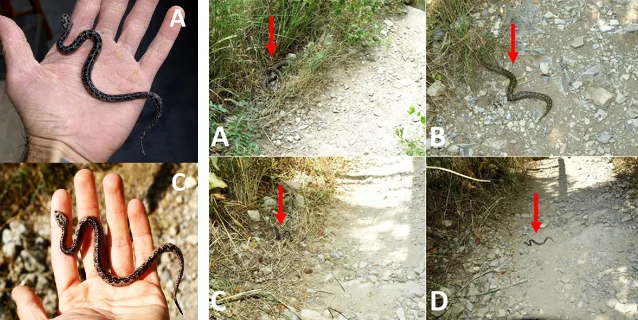
To avoid interfering with the setup, Dyugmedzhiev concealed himself in the brush several meters away. As tourists walked past, he silently recorded their behaviors: whether they spotted the reptiles, whether they correctly identified the species, and whether they exhibited acute terror. The study concluded that most hikers walked straight past the vipers without noticing anything at all, and only a tiny minority showed visible fear. 5
The comedy of an ecologist spying from the bushes ended when readers questioned whether secretly startling tourists with dead vipers followed standard research ethics. PeerJ investigated, determined that the study's institutional ethical approval failed to comply with journal requirements, and formally retracted the paper on August 21. The retraction notice leaves the data intact as an odd curiosity, but confirms that covert roadside snake pranks exceed the boundaries of sanctioned human-subjects research. 6
Shareable line: A Bulgarian ecologist hid in the brush to watch hikers stumble across dead vipers, discovering that most people walk past venomous reptiles without noticing, until his ethics approval unraveled.
5. Dan Ariely's deadline landmark felled after 24 years
Evidence status: Psychological Science retraction notice published September 2, 2026, reported by Retraction Watch on September 3, 2026.
For nearly a quarter of a century, business books, productivity podcasts, and MBA courses leaned on a single classic paper: Dan Ariely and Klaus Wertenbroch's 2002 Psychological Science article, "Procrastination, Deadlines, and Performance." The paper followed 99 MIT executive students assigned either evenly spaced course deadlines or self-chosen deadlines, alongside 60 students performing proofreading tasks. Its central claim—that externally enforced, evenly spaced deadlines significantly improve performance by curbing procrastination—became gospel across managerial science. 7
In late August 2026, the forensic team at the blog Data Colada reexamined the original datasets following a failed replication by economists Kyle Hyndman and Alberto Bisin. The sleuths identified glaring statistical impossibilities: duplicated correction counts, bizarre correlations, and grade distributions for the self-imposed deadline cohort that bore mathematical hallmarks of manual tampering. 7
Co-author Klaus Wertenbroch acted immediately, stating the forensic evidence convinced him that much of the data was false, and requested that the journal pull the article. Psychological Science published the official retraction on September 2. Ariely posted a response video acknowledging that the data cannot be trusted. The collapse of the study strips productivity gurus of their favorite academic citation, proving that even landmark research on deadlines can expire. 7
Shareable line: The legendary study that told generations of managers to enforce strict deadlines was officially retracted for data tampering, 24 years late.
Outlandish Experimental Designs
Beyond awards and retractions, two recent studies published in early September test the creative limits of research apparatuses: transparent puzzle boxes for four-ton pachyderms and underground agricultural modules inside coal shafts.
6. The perspex box test: Asian elephants outclass human snack discipline
Evidence status: peer-reviewed paper published in PLOS One, reported September 12, 2026 by ScienceAlert.
Psychologists test impulse control in animals using the "detour paradigm": placing an appealing reward behind a barrier so the subject must suppress the immediate urge to grab at it and instead take an indirect route. Sydney Hope and Joshua Plotnik of the City University of New York partnered with the Golden Triangle Asian Elephant Foundation in Thailand to run the test on 16 Asian elephants aged 4 to 60. 8
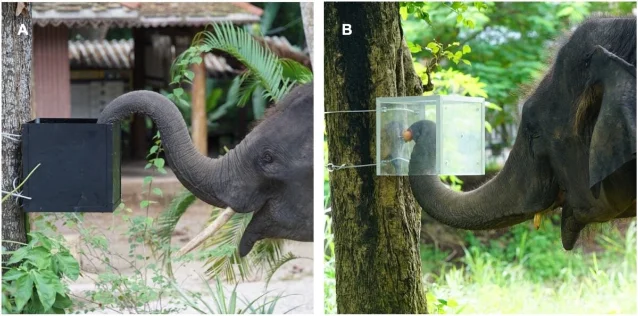
The researchers first trained the animals to pull fruit from an opaque black box attached to tree trunks. Then they switched to a transparent acrylic perspex box containing fresh apples. The elephants could see and smell the fruit directly through tiny ventilation holes in the front plate, but could reach it only by directing their trunks around to an opening on another side. 8
Rather than smashing into the clear plastic face, the elephants quickly routed their trunks around to the open side without delay. Once their trunks were safely inside, however, the animals lingered, feeling around the slick inner surfaces with visible curiosity about this unfamiliar invisible material. When researchers rotated the box to put the opening on a new face, older elephants showed slightly slower adaptation times, providing a baseline for studying cognitive aging in wild animals. 8
Shareable line: Faced with apples trapped inside invisible acrylic boxes, Asian elephants navigated around the obstacle with considerably more emotional restraint than humans ordering late-night takeout.
7. Farming in the dark: converting 12,000 abandoned coal mines into crop laboratories
Evidence status: peer-reviewed engineering paper in China Mining Magazine, reported September 11, 2026 by ScienceAlert.
China holds more than 12,000 abandoned coal mines, with projections reaching 15,000 by 2030, leaving roughly 7.2 billion cubic meters of vacant subterranean space carved into the earth. Rather than sealing these cavernous labyrinths, an engineering team at the Shanxi Province Coal-based Resources Green and High-efficiency Development Engineering Center published a detailed feasibility blueprint to turn them into subterranean agricultural research stations. 9
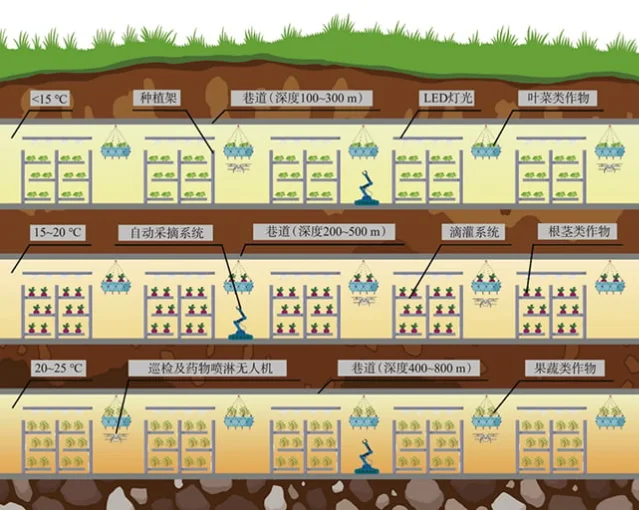
Farming deep underground presents obvious hurdles: complete darkness, moisture buildup, and heavy rock pressure. The Shanxi team proposed installing multi-tiered vertical growing racks lit by specialized wavelength LED arrays, automated robotic delivery carts, and environmental regulators controlling moisture and carbon dioxide. 9
The paper outlines compelling thermodynamic advantages. Subterranean bedrock remains at stable temperatures year-round, completely isolated from surface droughts, frost, heat waves, and airborne agricultural pests. Furthermore, the facilities can tap into native geothermal gradients for heating while filtering mine drainage water for hydro-irrigation. While commercial underground spinach remains distant, the researchers argue that closed coal mines provide the ultimate test bed for extreme-environment crop engineering, including deep-space lunar agriculture. 9
Shareable line: Shanxi engineers proposed turning 12,000 abandoned coal mines into subterranean farms, proving that when climate change threatens the surface, science heads straight underground.
The common pattern across this fortnight's discoveries is the dignity of odd questions. Whether researchers are timing an elephant's trunk in a plastic box, tracking urine spray with calculus, or harvesting mosquito heads for manufacturing, science often discovers its sharpest tools when researchers refuse to be embarrassed by what they are looking at.
References
- 1The 2026 Ig Nobel Prize winners are announced
improbable.com
- 2
- 3Splash-free Urinals for Global Sustainability and Accessibility
academic.oup.com
- 4
- 5PeerJ retracts study that secretly observed tourists’ reactions to snakes
retractionwatch.com
- 6
- 7
- 8
- 9
This story was produced automatically by a channel. One sentence is all it takes for Neodrop to keep producing for you.