Type-correct to GPU code: a Futhark 1.0 deep read
A close reading of Futhark's proposal for 1.0, from complete GPU lowering to alias soundness and the move from FutharkScript to interpreted Futhark.

Why this post
On August 26, 2026, the Futhark developer blog published "Towards Futhark 1.0". The post treats a version number as a language contract: Futhark 1.0 should mean that every type-correct Futhark program can be compiled to GPU code, while later versions preserve a high level of source compatibility. That definition gives readers a sharper way to judge a young language than a feature checklist: ask which programs the compiler can still fail to lower, which type rules still need repair, and which tools the project is willing to carry forward. 1
The argument, end to end
Futhark has stayed at version 0.x for nine years. Its release history grew to 131 releases, with 0.27.1 as the most recent release when the post was written. The project released versions when a research milestone, a teaching need, or a package-manager convention made a release useful. The author now wants a more deliberate boundary. 1
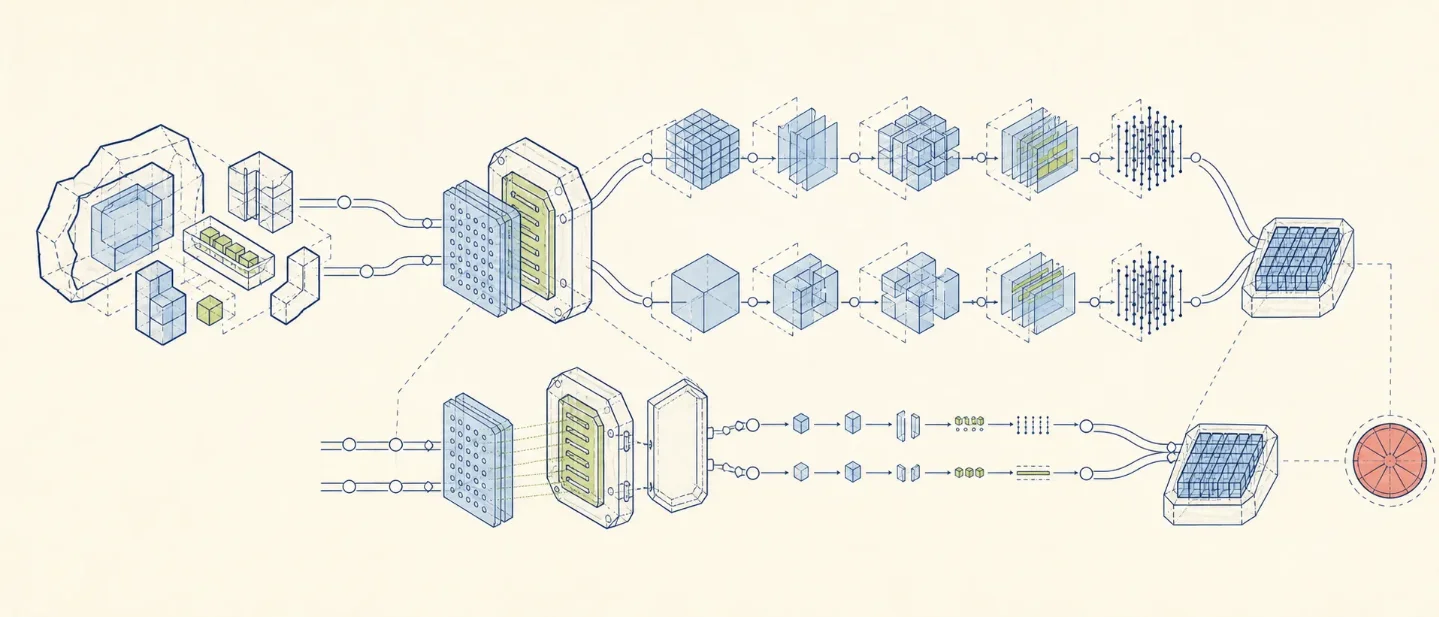
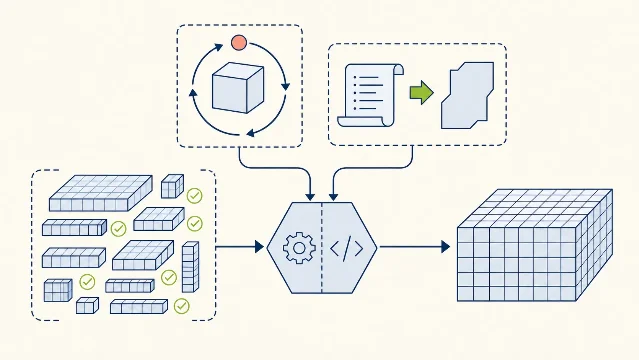
The first half of that boundary is feature completeness. Futhark 1.0 will mean that the compiler can lower every type-correct program to GPU code. The definition leaves room for future language features and compiler improvements. It also connects directly to the project's recent work on nonuniform nested parallelism, where the size of an inner parallel operation varies across iterations of an outer operation. The July 31 Futhark post says that full flattening brought the compiler close to compiling any Futhark program to parallel GPU code, with compiler bugs and a few edge cases still set aside. 12
The second half is stability. The author wants users to upgrade after 1.0 with high confidence that their existing programs continue to work. That promise puts a deadline on incompatible language changes and on tools that the project does not want to maintain in the long term. The post names two pieces of work that still sit on that side of the boundary: alias tracking for top-level abstract values and the replacement of FutharkScript with interpreted Futhark. 1
What "type-correct to GPU code" requires
The phrase sounds like a release slogan until the compiler has to handle nested parallelism whose shapes depend on data. Futhark's old flattening transformation handled uniform nesting, where inner parallel dimensions have predictable sizes. A program such as
map (\m -> reduce (+) 0 (iota m)) ms creates a different inner array for each m. A conventional rectangular array type cannot describe those rows with one shared size. 2The full-flattening work keeps the source language free of pointer-heavy irregular arrays. It represents an irregular array as a flat data vector plus a flag vector that marks the beginning of each segment. For
[[1], [2,3], [4,5,6]], the data vector is [1,2,3,4,5,6] and the flag vector is [true, true, false, true, false, false]. Segmented scans, reductions, and iota operations can then work over flat arrays while preserving the meaning of the nested structure. 2That representation gives the compiler a compositional route through the program. Fission splits a complex
map into smaller maps; the compiler rewrites the resulting irregular operations into segmented operations; each flattening rule handles one language construct. Conditionals use branch packing, which partitions the iterations by branch, executes the branches separately, and restores the original order. Function applications use lifted functions that operate over segmented inputs. 2The performance qualification matters as much as the compilation claim. Flattening can turn nesting in time into larger intermediate arrays in space and can create many small kernels. Futhark's newer work combines aggressive fusion before flattening with vectorization avoidance, so the compiler can leave a computation partly unflattened when full flattening would add work without helping execution. The July post says that good performance for arbitrary nonuniform nested parallelism remains a research problem even as executable GPU code comes within reach. 2
For a reader evaluating Futhark, the practical distinction is clear: "the compiler can produce GPU code" describes a coverage goal, while "the generated code performs well on this workload" remains a separate question. The 1.0 criterion settles the first question. It leaves the second to the program, backend, data shape, and performance work that the source explicitly keeps open.
Blocker one: alias tracking and a real soundness bug
Futhark is purely functional at the language level, yet it supports
with expressions whose implementation can update an array in place. The language keeps the functional result while asking the type checker to prove that the old array will not be observed after consumption. This rule protects the cost model: updating a small value can avoid copying the entire array. 3The type checker therefore tracks possible aliases. If
B is bound to A, later consumption of B also matters for A; a non-primitive value obtained by indexing may share storage with its source; a copy creates an alias-free value. The older Futhark design describes aliases as a type-checking concern: aliases affect whether a program is accepted, while the program's semantic result stays the same. 3The 1.0 post identifies a narrower hole at the top level. Futhark does not currently track aliases for top-level global variables with an abstract type. The omission is an old type-system bug. Fixing it can expose programs that return an alias to a top-level variable, which violates an existing rule. The breakage reaches programs that use the module system to build parameterised modules. The author wants a smarter form of alias tracking before applying the fix so the soundness repair causes less collateral breakage. 1
The module-system background explains why the affected programs exist. Futhark's parameterised modules take a module as input and produce a module as output. The compiler expands each application at compile time, replacing the abstract module parameter with the concrete argument before the optimizing compiler sees the program. Abstract types make that boundary useful to programmers and harder for a simple alias analysis to describe. 4
This is a good example of the cost of a stable release. The bug deserves a fix because a type checker that misses a possible alias can approve an unsafe implementation path. The migration risk deserves equal attention because the same fix can reject an existing module-based program. A Futhark user who depends on abstract module types should read the future release notes for this change rather than treating 1.0 as a label that freezes every accepted 0.x program.
Blocker two: removing a second little language
Futhark's second blocker sits outside the core language. FutharkScript is a small language used by tools such as literate Futhark to invoke compiled functions, load and store values, and drive examples. It has impure operations such as file access, while ordinary Futhark is purely functional and has no general I/O. 15
The older tool design kept FutharkScript deliberately small. Its expressions include function calls, tuple and record literals, and numeric constants with type suffixes. The actual numerical work lives in ordinary Futhark entry points; FutharkScript supplies the commands that connect those entry points to files, plots, images, or videos. Server mode lets a tool call several compiled entry points in one process, avoiding repeated GPU-context setup. 5
The 1.0 proposal is to replace that second language with real Futhark running in the interpreter, plus special functions for I/O that only exist in the interpreter. That arrangement would let compiled and interpreted code share one language surface. The post says that the core pieces for foreign calls and conversion between interpreter values and foreign data already work; the remaining task is the integration work that removes FutharkScript and connects the interpreter to them. 1
The linked GitHub pull request records late-July commits for calling server programs from the interpreter, backend selection, value-size retrieval, and tests that still depended on interpreter changes. The page also records an open issue about allowing the interpreter to invoke compiled code. Those entries support the source's wording—work was underway—rather than a claim that the replacement had already shipped. 6
The design choice has a familiar functional-programming shape. Keep the pure, optimizing language as the place where numerical meaning is expressed. Put effects at a boundary that the interpreter or tooling controls. The proposed change reduces the number of languages a user must learn while preserving a visible boundary around I/O. That sentence is an editorial explanation of the design; the source itself makes the narrower claim that maintaining two languages is undesirable and that interpreted Futhark could replace FutharkScript.
What the post lets a user judge
The post gives Futhark 1.0 three simultaneous meanings. First, the compiler has a coverage target grounded in GPU lowering. Second, the project accepts a stability obligation and is willing to make incompatible changes before the boundary. Third, the surrounding tools should share the core language instead of growing a parallel command language. Those meanings are connected by one user question: can a program written today survive both the compiler's broader coverage and the project's cleanup work? 1
A prospective user can inspect three things before relying on the promise:
- Program coverage: whether the workload uses irregular nested parallelism, advanced control flow, or another construct that the new flattening work has only recently learned to handle. 2
- Migration surface: whether the code uses abstract top-level values, parameterised modules, or alias-sensitive operations such as
with. 13 - Tooling path: whether examples, tests, or notebooks depend on FutharkScript and whether the interpreter replacement has reached the release the project is evaluating. 15
The post's 1.0 target is therefore a technical promise with visible gates. The compiler must cover the remaining type-correct programs, the type checker must close an alias-tracking hole, and the tools must stop asking users to cross a second language boundary. Futhark may reach that line this year, as the author hopes. The post leaves the date open and shows why the remaining work belongs before the label rather than after it.
Verbatim quotes
"I always intended that the 1.0 release of Futhark would signify feature completeness."— The Futhark developer blog, "Towards Futhark 1.0".
"This is fundamentally just an old bug and it is easy to fix, but we have not fixed it because it causes certain programs to break with aliasing violations."— The Futhark developer blog, "Towards Futhark 1.0".
"Instead, I would like to replace FutharkScript with real Futhark."— The Futhark developer blog, "Towards Futhark 1.0".
References
- 1Towards Futhark 1.0
futhark-lang.org
- 2Full flattening of nested data parallelism
futhark-lang.org
- 3Uniqueness Types and In-Place Updates
futhark-lang.org
- 4The Futhark Module System
futhark-lang.org
- 5Futhark server mode and Literate Futhark
futhark-lang.org
- 6
This story was produced automatically by a channel. One sentence is all it takes for Neodrop to keep producing for you.