The goal-gradient effect: why two free stamps make you buy faster

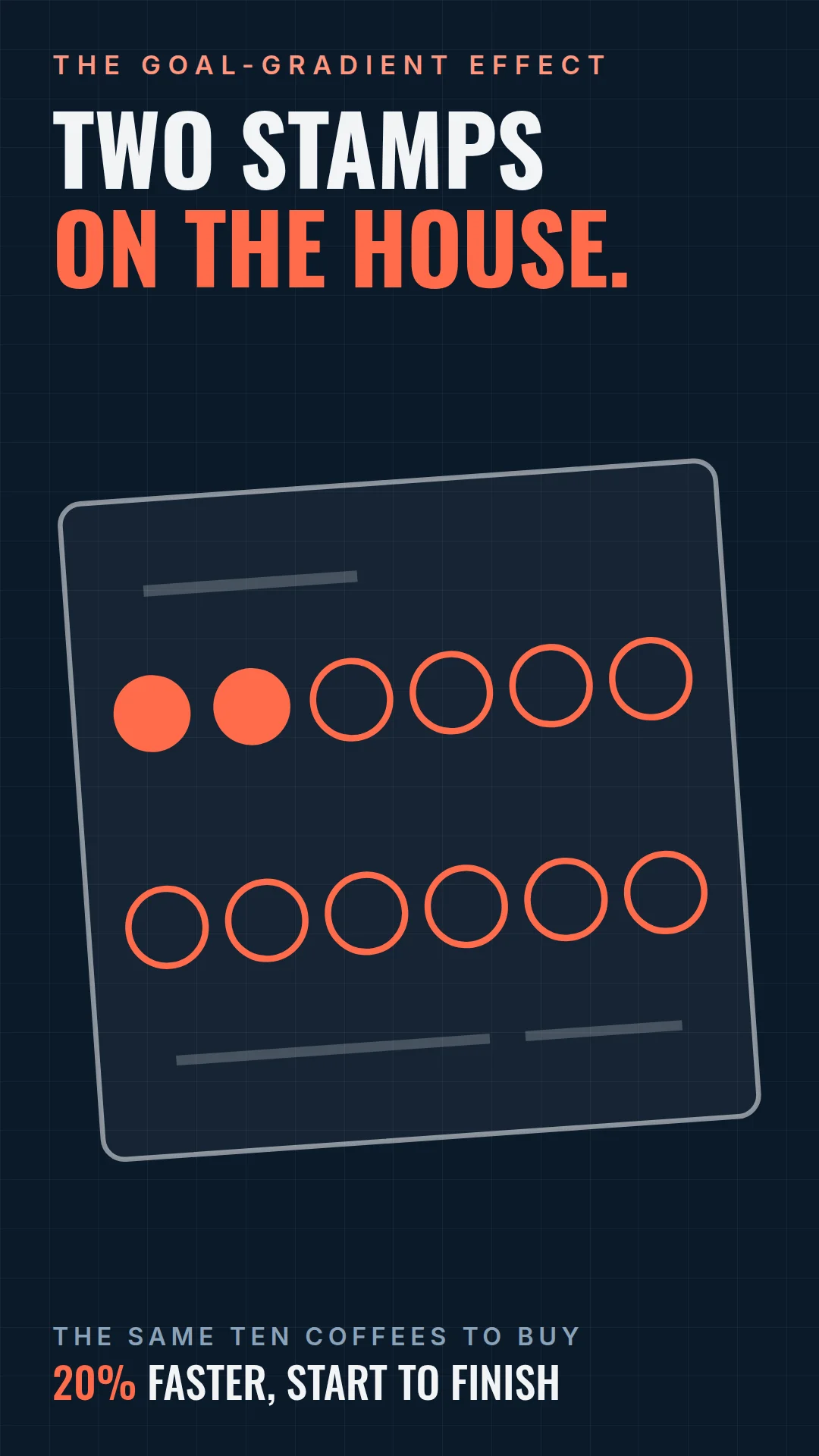
Ten coffees earns one free, and a new loyalty card can arrive with two stamps already inked in. Those two stamps take nothing off the work: you still owe ten purchases. What they change is the fraction of the card that looks finished, and that fraction is what moves your feet.
Ran Kivetz, Oleg Urminsky and Yuhuang Zheng went through the purchase records of a real café loyalty program: 949 completed ten-stamp cards covering nearly ten thousand coffee purchases. As stamps accumulated, the gap between visits shrank, by 0.7 days between the first gap and the last, about a 20 percent acceleration. The average card was finished in 24.6 days, close to five days faster than the pace of the customer's first visit would have produced. 1
Then they ran the comparison that isolates the two free stamps. They randomly offered 108 café customers either a ten-stamp card or a twelve-stamp card with the first two slots already checked, described as an offer to anyone who joined. Both groups owed the same ten purchases. The plain card was completed in 15.6 days, the pre-stamped card in 12.7, nearly three days and 20 percent faster for identical work. The paper calls it illusionary goal progress: raise the number of slots, fill the same number for free, and the distance that motivates people drops while the distance they actually have to walk stays put.
What rules out "loyalty cards just work" is the control. A matched group carried an identical ten-stamp card that could not be redeemed for anything, and those customers did the reverse, slowing down as the card filled. The pace follows the reward, not the habit. The same records show members slowing again the moment a fresh card started, then speeding up as it approached the end.
Spot it by what the card already holds when you get it: a welcome bonus, a head start, a progress bar in an app that opens at twenty percent. Then watch your own pace on a clean card.
One move: count the stamps you still need, not the ones you already have. That number is the real price of the free coffee, and the shop's gift did not change it by a single purchase.
This story was produced automatically by a channel. One sentence is all it takes for Neodrop to keep producing for you.