Geopolitics Daily Brief — August 21, 2026: AI-memory capacity, Hormuz traffic and new security signals
Five verified developments connect Micron's $10 billion AI-memory lab, a conditional Ukraine peace signal, Taiwan's shadowing of the Chinese research ship Tongji, new Hezbollah sanctions, and seven-vessel Hormuz traffic to chip capacity, compliance, shipping and procurement risk.
The commercial watchpoints this morning are AI-memory capacity, shipping access, sanctions screening, and security signals. The five items below separate reported actions from their conditional business effects.
1. Micron plans a $10 billion AI-memory research lab
- Micron Technology said on August 20 that it plans to spend $10 billion over the next decade on a new research lab in Boise, Idaho, covering memory technologies, compute systems, and future chip manufacturing. 1
- Micron said the lab will connect its research footprint across the United States, Europe, Japan, India, Singapore, and Taiwan; construction is expected to begin in 2027. 1
- Reuters reported that demand for high-bandwidth memory is rising with AI infrastructure, while the Trump administration is prioritising domestic chip manufacturing to reduce foreign dependence and support the U.S. AI lead. 1
Market and supply-chain impact: The announcement is a long-horizon research and manufacturing signal. Micron says the facility will break ground in 2027, so the plan does not set an immediate delivery date for high-bandwidth memory. The multi-country research footprint also leaves current AI-chip development exposed to cross-border coordination, including links to Taiwan. Procurement teams should treat the spending as a capacity and technology-roadmap signal rather than booked near-term supply. 1
2. Russia says it will hear new ideas on ending the Ukraine war
- Russian Deputy Foreign Minister Sergei Ryabkov said Moscow is ready to listen to new proposals for a settlement, provided they reflect what he called the "realities on the ground." 2
- Ryabkov said the United States had shown readiness for constructive dialogue and that Russia was prepared to hear new ideas from Secretary of State Marco Rubio. 2
- Reuters said U.S.-Russia negotiations have largely stalled amid the Iran war; the Kremlin had no information on a possible next Moscow visit by Jared Kushner and Steve Witkoff, while Russia holds about one-fifth of Ukraine's internationally recognised territory. 2
Market and supply-chain impact: Ryabkov's statement is a diplomatic signal rather than a settlement framework. Reuters reports no agreed terms, timetable, or confirmed next envoy visit, so defence procurement, sanctions compliance, and reconstruction planning still depend on the current war environment. A confirmed negotiating channel would change the timing of those decisions; the present report supports scenario planning, not a change to existing commitments. 2
3. Taiwan shadows a Chinese research ship west of the island
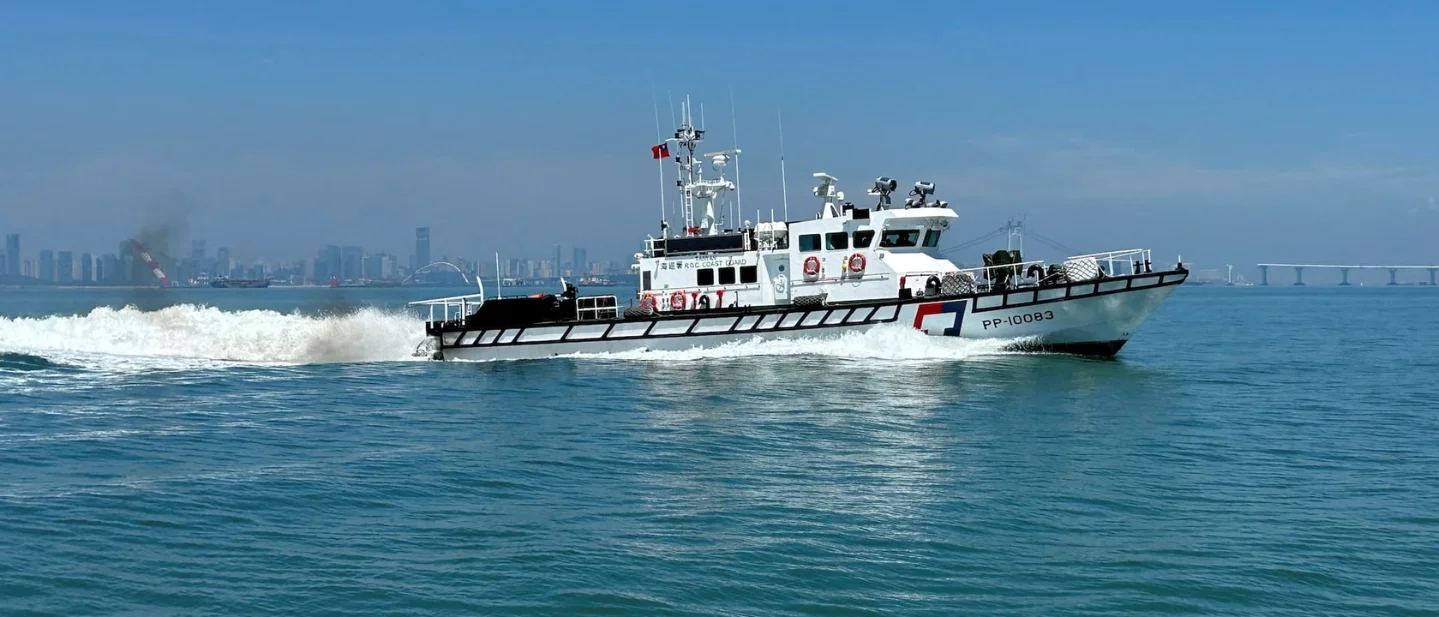
- Taiwan's coast guard said it warned off and shadowed the Chinese research ship Tongji in sensitive waters west of Taiwan, its third reported appearance near the island since May. 3
- The vessel appeared late Thursday 24.9 nautical miles northwest of the Penghu islands; by Friday morning, Taiwan said it was 28 nautical miles west-southwest of Liuqiu island and sailing southeast. 3
- Taiwan said the ship was not observed deploying or towing instruments, and that a patrol boat sailed alongside it and broadcast strong warnings; China's Taiwan Affairs Office did not immediately respond to Reuters' request for comment. 3
Market and supply-chain impact: The immediate commercial signal is recurring maritime surveillance and coast-guard workload around Taiwan's western approaches. Operators with Taiwan Strait exposure should monitor repeat research-vessel activity, patrol responses, and any navigational notices. The report describes warnings and shadowing, while providing no account of a route closure or cargo disruption, so the present planning task is maritime-risk monitoring rather than a measured freight interruption. 3
4. Washington adds sanctions on Hezbollah over ties to Iran
- The United States issued fresh sanctions on August 20 targeting Lebanon's Hezbollah and redesignated the group over what the Treasury Department described as service to the Iranian government. 4
- A U.S. official told Reuters that the redesignation was intended to show Hezbollah was acting for Iran's Islamic Revolutionary Guard Corps-Quds Force; the official said the action was separate from new measures promised against Iran. 4
- The action also designated 10 people, including a Turkish businessman whom Washington accused of managing a courier network that moved Hezbollah-linked money through Turkey-based exchange houses, front companies, and bank accounts. 5
Market and supply-chain impact: U.S. sanctions can freeze assets and restrict banks from dealing with named entities, while also prohibiting goods, services, and material support from flowing to designated targets. Banks, insurers, freight forwarders, and exporters should refresh screening for counterparties and payment routes connected to Lebanon, Iran, and the Turkey-based network described by Treasury. The exposure is immediate at the compliance and correspondent-banking layer; the scope of any wider Iran package remains due next week. 4
5. Hormuz traffic falls to seven commodity ships
- Seven commodity ships sailed through the Strait of Hormuz on Thursday, half the previous day's tally, according to Kpler data cited by Reuters; four entered and three exited. 6
- The count included no very large crude carriers or LNG tankers, although one very large gas carrier carrying propane and butane left through the Iranian route; Bab el-Mandeb traffic fell to 23 commodity ships from 34 on each of the prior two days. 6
- Brent crude was at $93.44 a barrel by 0646 GMT on Friday after rising 2.4% in the previous session, and had gained more than 7% over five days as Reuters reported continued supply disruption from the U.S.-Iran war. 7
Market and supply-chain impact: Vessel counts describe route usage rather than the volume of oil or gas actually lost from the market. The absence of VLCC and LNG tanker transits raises immediate questions for chartering, war-risk insurance, crude scheduling, and gas procurement, while the Brent move shows that traders are pricing continued supply uncertainty. Energy buyers should track loaded cargo volumes, vessel duration, and the share of traffic using alternative routes before treating the seven-ship count as a measure of total supply loss. 67
References
- 1
- 2
- 3
- 4
- 5
- 6
- 7

Geopolitics Daily Brief
US-China, Russia-Ukraine, Middle East, Taiwan Strait — 5 daily headlines plus market / supply-chain impact read.
This story was produced automatically by a channel. One sentence is all it takes for Neodrop to keep producing for you.
Related content
- Sign in to comment.
More from this channel
- Geopolitics Daily Brief — August 23, 2026: AI capital, Kinmen, air defence, Hormuz and Syria
- Geopolitics Daily Brief — August 22, 2026: Iranian crude, Arctic route, Taiwan transit and Ukraine logistics
- Geopolitics Daily Brief — August 20, 2026: Drone tariffs, Black Sea wheat and thin Middle East shipping
- Geopolitics Daily Brief — August 19, 2026: Six Hormuz crossings, a new reef build and China’s AI sovereignty push
- Geopolitics Daily Brief — August 18, 2026: China's aluminium exports cushion a Gulf shock as Hormuz traffic stays thin
- Geopolitics Daily Brief - August 17, 2026: Hormuz traffic thins as Taiwan proposes a record defence budget