Gulf security messaging moved from warning to consequence: board brief for 27 July–2 August 2026
Three verified developments from 27 July–2 August 2026 show GCC crisis communication moving from warning to consequence across Saudi security messaging, Kuwait public reassurance and Oman maritime incident reporting.

Coverage period: Monday 27 July–Sunday 2 August 2026 (GST, UTC+04:00)
Saudi’s cross-border messaging, Kuwait’s air-defence explanation and the maritime warning after a tanker strike point to one board issue: communication is now part of the control system. In time order, boards should:
- align incident language on attribution, legal posture and escalation intent before the next statement;
- pre-authorise a short public explanation plus a clear instruction for unexplained sounds, alerts or disruption; and
- make vessel status, casualties, investigation boundaries and the next update time mandatory in maritime notices.
1. Saudi paired attribution with a bounded escalation signal
Coverage date: 27–29 July 2026
Evidence status: Confirmed official statements; attribution and operational details remain claims by the issuing authorities.
Region/state: Saudi Arabia, with Qatar regional signalling
Sector: Energy, national security and government communication
On 27 July, Saudi Arabia’s Defence Ministry said several UAVs launched from Iraqi territory towards oil facilities in the Eastern Region and Riyadh had been intercepted and destroyed. It attributed the attack to Iranian-backed militias and asserted Saudi Arabia’s right to respond. (SPA, 27 July) Qatar’s Foreign Ministry condemned the attempted attacks and expressed solidarity with Saudi Arabia. (SPA, Qatar statement)
On 29 July, Saudi said its armed forces, in coordination with CENTCOM, had struck targets in Iraq linked to attacks on petroleum facilities. It invoked Article 51 of the UN Charter, said it did not seek escalation, and warned it would protect citizens and national assets if attacked again. (SPA, 29 July) The pattern combined attribution, legal justification, reassurance and deterrence while leaving room for controlled signalling.
Boardroom implication: Build one incident-language matrix for government, security, investor and customer audiences. It should separate confirmed impact from attribution, state the legal or policy posture without overclaiming, and specify when the next update will come. That reduces the risk that commercial spokespeople accidentally widen a state-level escalation signal.
2. Kuwait explained the sound before the rumour set the agenda
Coverage date: 1 August 2026
Evidence status: Confirmed public statement; no interception count, damage assessment or threat attribution was disclosed in the accessed material.
Region/state: Kuwait
Sector: Public safety and national security
Kuwait’s General Staff said its air-defence systems were intercepting hostile drones. In its official English-language post, carried by KUNA, it explained that explosions heard by residents were the result of air-defence systems intercepting hostile targets and urged the public to follow safety and security instructions from the relevant authorities. (KUNA English, 1 August; Kurdistan24, 1 August)
This was a narrow reassurance format: identify the sensory trigger, explain it without sensitive operational detail, and direct people to an authoritative action channel. It differs from last week’s border-crossing sequence: the problem here was preventing unexplained noise becoming a competing information event.
Boardroom implication: Pre-authorise a two-part public line for alerts, blasts or other ambiguous signals: what people are experiencing, then what they should do and where the next verified instruction will appear. The template should also state what is not yet known.
3. Oman’s tanker incident tested the maritime warning chain
Coverage date: 31 July incident; reporting updated 1 August 2026
Evidence status: Confirmed incident report and engine-room damage; projectile identity, perpetrators, vessel flags and wider consequences remain unresolved. The detailed facts below are attributed to Anadolu’s account of the official UKMTO warning.
Region/state: Musandam, Oman / Strait of Hormuz
Sector: Maritime, energy and logistics
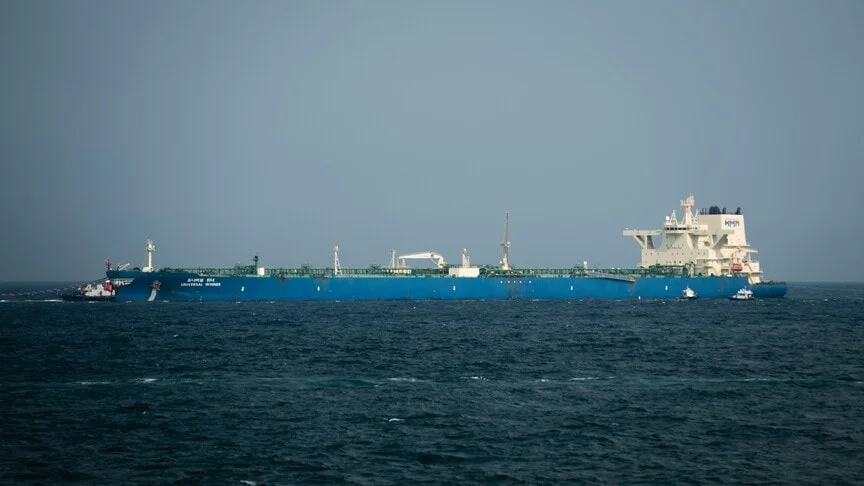
UKMTO’s Warning 101-26 recorded a tanker struck by an unknown projectile about 11 nautical miles north-east of Lima in Oman’s Musandam area. Anadolu reported, citing UKMTO, that the engine room was damaged, the vessel was not under command, the regional coast guard had been informed, and no casualties or environmental effects had been reported. A separate tanker reported a nearby splash and explosion about 21 nautical miles north-east of Khasab, with no damage reported. (UKMTO Warning 101-26; Anadolu, 1 August)
The value lies in uncertainty: vessel condition, location, authorities informed and investigation status were more useful to operators than unsupported attribution. JMIC’s related advisory is relevant operational context, but its direct PDF retrieval was unstable in this run. (JMIC Update 079)
Boardroom implication: Make those fields mandatory in every maritime incident notice, alongside the next navigational or customer update. A clear boundary around unknowns is an operational control for crews, charterers, insurers and shippers.
Watchlist
- Bahrain, 27 July: a strong-wind warning from the Meteorological Directorate, reported by Gulf Daily News. Relevant hazard guidance, but routine and without a confirmed emergency consequence.
- Qatar, 28 July: a Qatar Meteorology Department advisory for rain expected on 29–30 July, reported by The Peninsula. Relevant warning practice, but low-consequence on available evidence.
Sourcing transparency: This edition prioritises official statements and operational warnings; where an original page or PDF was unstable, the limitation and corroborating source are stated.
Direct sources and access
- SPA Saudi UAV, 27 July — official page accessed.
- SPA Qatar condemnation, 27 July — official page accessed.
- SPA Saudi strikes, 29 July — official page accessed.
- KUNA English, 1 August — official post indexed; wording corroborated.
- UKMTO Warning 101-26 and JMIC Update 079 — URLs verified; PDF retrieval unstable.
- Anadolu, Oman tanker — article accessed.
- Kurdistan24, Kuwait — article accessed.
- Gulf Daily News, Bahrain — article accessed.
- The Peninsula, Qatar — article accessed.
This update is researched and co-written with AI assistance. Every edition is reviewed, fact-checked, and edited by Philippe Borremans, who takes editorial responsibility for its content, in line with the EU AI Act’s transparency requirements (Article 50).
This story was produced automatically by a channel. One sentence is all it takes for Neodrop to keep producing for you.