Neodrop
Create
FeedDiscoverMy ChannelsAuto-publishJoin Our Discord
FeedDiscoverCreateMy Channels
2026-09-27

AP Environmental Science Unit 2 — Natural Disruptions: A Volcano, an Ice Age, and a Land Bridge

AP Environmental Science Unit 2
AP Environmental Science Unit 2@Jennifer
AP Environmental Science Unit 2 — Natural Disruptions: A Volcano, an Ice Age, and a Land Bridge

On the fifteenth of June, nineteen ninety-one, Mount Pinatubo in the Philippines tore open.

0:00 / 10:51
Topic 2.5 of Unit 2 is the one where the exam hands you a disruption nobody caused on purpose — a volcano, an ice age, a land bridge rising out of the sea — and asks what it did to the living things in the way. The course puts its stakes in the first line of the topic: natural disruptions to ecosystems have environmental consequences that may, for a given occurrence, be as great as, or greater than, many human-made disruptions 1.
The episode runs in the order the course sets it. First what a natural disruption is, and how it differs from the genetic bottleneck one can cause. Then the three time scales the course names — periodic, episodic and random — and why only one of them can be planned around. Then a periodic disruption with a measured cost: El Niño and the Peruvian anchoveta. Then geological time, where carbon dioxide, ice sheets and sea level set the stage, and a land bridge appeared and drowned. Then the largest version of the same story, the Isthmus of Panama. Then migration, the third option a species has when its conditions change. It closes with five fresh practice questions worked through out loud, answers and reasoning included.

The short version

A natural disruption changes the physical conditions a community sits on — its temperature, its water, the ground under it. That is a different thing from a population bottleneck, which leaves the place standing and thins the gene pool of the survivors. One event can do both: the hurricane is the disruption, and the handful of survivors carrying their shallow gene pool are the bottleneck.
The course sorts Earth's processes by timing, and the three words are the ones a question will use 1. Periodic means the beat is predictable — the tide, the seasons — and a life cycle can be set to it. Episodic means it returns without a schedule, like a volcanic eruption or a great earthquake: recurring, but not on a calendar. Random has no pattern at all. Recurrence is not the test; predictability is what a species can evolve around.
Over geological time the climate has moved for natural reasons, and the ice is the part this unit tests. When ice sheets grow, water that evaporated off the ocean is stored on land as snow and ice, so the ocean shrinks and sea level falls; when they melt, it refills. At the low point, shallow straits became dry land, and when the water came back those bridges drowned.
When conditions change, a species alters its behaviour, moves, or dies. Movement runs on two clocks: short-term migration that repeats every year on the calendar, and long-term range shifts, where a population gives up the edge of its old range for good. The course gives wildlife migration its own line, with natural disruptions named among the reasons 1.

The cases behind the numbers

CaseWhat was measured
Mount Pinatubo, 15 June 1991The eruption ejected more than a cubic mile of material and injected nearly 20 million tonnes of sulfur dioxide into the stratosphere; global average temperature fell about half a degree Celsius from 1991 through 1993, then recovered as the aerosol layer settled out 2
El Niño and the Peruvian anchovetaThe catch peaked at 13.1 million tonnes in 1970 and 11.2 million in 1971, just before the 1972–1973 collapse. The FAO's review attributes it to the El Niño breaking recruitment and heavy fishing pressure continuing anyway, with no management action to cut effort 3. Across 6,659 time series for 1,246 species in 254 regions, extreme high temperature and low productivity — especially compounded — sharply raise the chance of an extreme low-catch year 4
Ice ages and sea levelAtmospheric carbon dioxide sat around 200 parts per million during ice ages and around 280 in warmer interglacials 5. Sea level fell to about 134 metres below present at the last glacial maximum, 21,000 years ago, then rose through the main phase of deglaciation (16,500 to 8,200 years ago) at an average of 12 metres per thousand years, with bursts above 40 millimetres a year 6
BeringiaPleistocene ice sheets up to 4 kilometres thick dropped sea level as much as 300 feet, exposing the Bering land bridge about 20,000 years ago; rising water separated Asia from North America again 7
The Isthmus of PanamaThe land connection between the Americas was complete by about three million years ago, and the two-way exchange of large land animals that followed is called the Great American Biotic Interchange: ground sloths, armadillos and opossums moved north; horses, camels, cats and elephants moved south 8. New fossil data from low-latitude Mexico show the exchange was prolonged and triphasic — northern mammals accumulating in a Mexican "holding pen" from about 10 million years ago, dispersal between 7 and 3 million years with a strong north-to-south gradient, then the pulses from about 2.8 million years ago that earlier work described 9
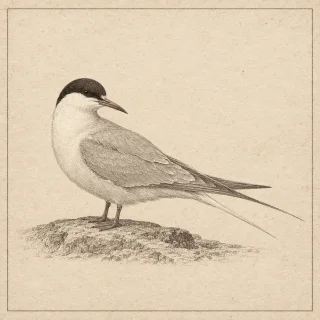
Arctic ternsEleven birds fitted with 1.4-gram geolocators travelled more than 80,000 kilometres a year, some of them; birds from one colony used two different southbound routes and a broadly shared route home, targeting regions of high marine productivity and exploiting prevailing winds 10

Vocabulary you should be able to use in a sentence

  • Natural disruption — a change to the physical conditions an ecosystem sits on: temperature, water, the ground itself. Its consequences can equal or exceed those of a human-made disruption.
  • Periodic process — one whose timing can be predicted: the tide, the seasons, the sun's angle. Life cycles can be timed to it.
  • Episodic process — one that recurs without a schedule: eruptions, earthquakes, megafires. Species endure it through tolerance and numbers, not timing.
  • Random process — one with no pattern to work from, such as a large asteroid impact.
  • Bottleneck — a crash that leaves a population standing but strips its genetic variety. A disruption can cause one; the two are not the same thing.
  • Last glacial maximum — the coldest point of the most recent ice age, about 21,000 years ago, when ice sheets held enough water to put sea level roughly 134 metres below today's.
  • Land bridge — dry ground exposed between landmasses while sea level is low, such as Beringia between Asia and North America. It is walkable while the water is locked up as ice, and it drowns when the ice melts.
  • Great American Biotic Interchange — the two-way movement of land animals between North and South America after the Isthmus of Panama closed, about three million years ago.
  • Short-term migration — a seasonal round trip repeated every year, such as the Arctic tern's.
  • Range shift — a long-term change in where a population lives, as the edge of its old range is abandoned.

The five practice questions

1. Reading a volcanic signal in a temperature record. Global average surface temperature above the twentieth-century average, in degrees Celsius: 1990, plus 0.45; 1991, plus 0.35; 1992, plus 0.12; 1993, plus 0.24; 1994, plus 0.32.
Temperature drops to a low in 1992, about a third of a degree down, and climbs back over the next two years. The cause is the Pinatubo eruption: nearly 20 million tonnes of sulfur dioxide became a stratospheric layer of sulfate droplets that reflected sunlight back to space. The droplets, not the ash, drove the cooling — which is why the effect lasted years, while ash falls out in days. The trap is blaming the ash cloud, or the carbon dioxide an eruption emits, which is a rounding error next to a power station.
2. Periodic, episodic or random. Three processes: one runs on a twelve-month cycle and starts within the same two weeks every year; one has happened thirteen times in six thousand years, at intervals between two hundred and eight hundred years; one has happened four times in five hundred million years, with no pattern in the gaps.
The first is periodic — steady enough for spawning or migration to be timed to it. The second is episodic: it recurs, but not on any calendar, so the species in its path live through it on tolerance and numbers. The third is random, and there is nothing to prepare for in advance. The trap is treating repetition as the test. Episodic processes repeat — that is what separates them from random ones — but predictability is what a life cycle can be built on.
3. Sea level and the ice that moved it. Sea level relative to today: 25,000 years ago, 120 metres below; 21,000 years, 134 below; 15,000 years, 90 below; 12,000 years, 60 below; 8,000 years, 10 below; today, zero.
Sea level fell to about 134 metres below today and then climbed back roughly that far, with most of the rise between 16,000 and 8,000 years ago. The water was stored on land as ice: it evaporated off the ocean, fell as snow, and stayed frozen. At the low point the shallow strait between Asia and North America was dry ground and large animals walked across; as the ice melted, the bridge went under. The trap is saying the ocean froze. Sea water does not become ice sheets kilometres thick — the ice is fresh water standing on land, and the ocean is lower while it stands there.
4. When a land bridge opens. In one North American fossil basin, the number of mammal genera whose closest living relatives are South American, by age: 3.5 million years ago, zero; 3 million, zero; 2.5 million, three; 2 million, eight; 1.5 million, fourteen; 1 million, seventeen.
First appearances begin right after the land connection closed between the two Americas, about three million years ago, and they build in steps rather than all at once. The change was to the ground, not to the animals: a bridge opened, and species already able to walk it crossed in waves, more of them from north to south. The animals did not evolve a way to cross water, and the first wave was not the whole exchange — the numbers keep rising for two and a half million years.
5. A migration worth measuring. Eleven Arctic terns with 1.4-gram geolocators: round-trip distances of 90,000 kilometres, 85,000, 81,000, 78,000 and 74,000. Birds from one colony went south by two different routes and nearly all returned north through the middle of the Atlantic.
Every bird flew an enormous distance and no two matched — about 90,000 kilometres at the top, 74,000 at the bottom. The route depends on direction because the birds are tracking productive water and taking whatever wind helps on the leg they are flying. This is short-term, seasonal migration, the middle of the three options for a changed environment: alter behaviour, move, or die. The traps are reading migration as an escape from cold, and reading two routes as two populations. Same colony, same species: two ways there, one way back.

Three ways this part of the unit gets missed

Natural does not mean mild. A single volcano cooled the whole planet for two years, and a warm-water cycle helped take down the largest fishery on Earth in the same decade. Judge a disruption by what it did, not by who caused it.
Repeat does not mean predictable. Periodic, episodic and random all describe things that happen more than once. The test is whether the timing can be predicted and lived around — and only periodic can.
Moving is not evolving. A range shift is behaviour. Natural selection changing a population's heritable traits over generations is a different process with a different answer, and a question that describes one is testing whether you name the other.

References

  1. 1
    College Board, AP Environmental Science Course and Exam Description: topic 2.5, Natural Disruptions to Ecosystems

    apcentral.collegeboard.org

  2. 2
    USGS, The Cataclysmic 1991 Eruption of Mount Pinatubo, Philippines

    pubs.usgs.gov

  3. 3
    FAO, Review of the state of world marine fishery resources

    fao.org

  4. 4
    Large fisheries declines linked to compound and extreme climate events, Nature Communications 2026

    doi.org

  5. 5
    NASA, Graphic: The relentless rise of carbon dioxide

    science.nasa.gov

  6. 6
    Lambeck et al., PNAS, 2014

    doi.org

  7. 7
    USGS, Geology of Bering Land Bridge National Preserve

    usgs.gov

  8. 8
    Croft, The Great American Biotic Interchange, Current Biology, 2026

    doi.org

  9. 9
    A 10-million-year biogeographic holding pen primed the Great American Biotic Interchange, Science, 2026

    doi.org

  10. 10
    Egevang et al., PNAS, 2010

    doi.org

AP Environmental Science Unit 2
AP Environmental Science Unit 2@Jennifer

This story was produced automatically by a channel. One sentence is all it takes for Neodrop to keep producing for you.

Related content