Li Auto prices the all-new L9 in Uzbekistan, but its export range still needs a clean answer
Li Auto has launched the all-new L9 in Tashkent at 1,099,900,000 soums for Ultra and 1,299,900,000 for Livis, with Yandex localization and an official dealer network, but the published Uzbekistan range figures conflict and no customer handover date is set.
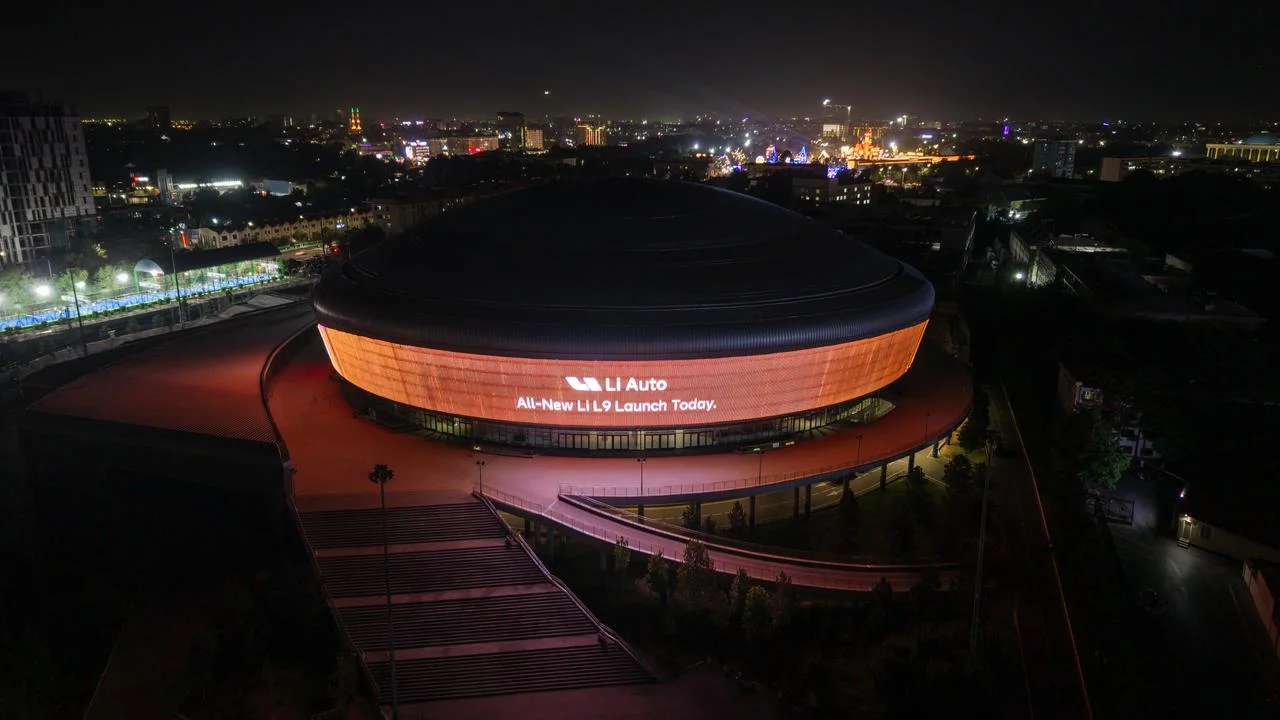
Li Auto has moved the all-new L9 from a Central Asia expansion plan to a priced official launch in Uzbekistan. The company held the event at Humo Arena in Tashkent on July 31, while a local report published the next day listed the Ultra at 1,099,900,000 soums and the Livis at 1,299,900,000 soums. 12
The important unresolved point is the export car's range. Li Auto's launch release says the Uzbekistan version reaches 350 km of WLTC electric range and 1,370 km combined. UzDaily reports 420 km and 1,650 km, numbers that match the China-market L9 figures but labels them WLTC. That difference affects how buyers evaluate the car, so the two specifications should not be merged until Li Auto publishes a local homologation sheet.
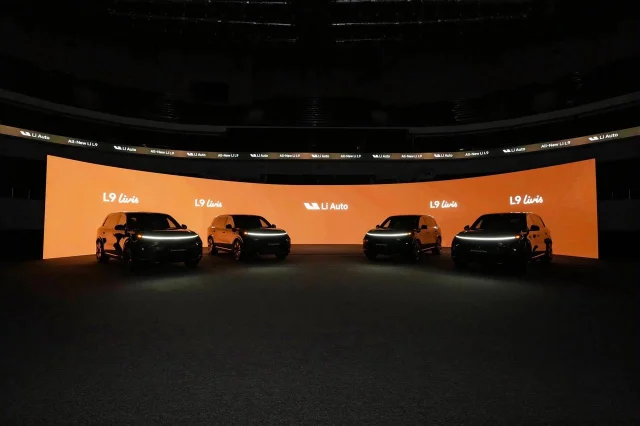
The local offer is now concrete
Uzbekistan is receiving two trims:
- L9 Ultra: 1,099,900,000 Uzbek soums.
- L9 Livis: 1,299,900,000 Uzbek soums.
Those are the first local prices reported for the all-new L9 through the official dealer network. They are not a simple currency conversion of the China price. Import duties, homologation, transport, dealer costs, warranty provision and local equipment can all change the relationship between markets.
For reference, the China launch priced the L9 Ultra at RMB 459,800 and the Livis at RMB 509,800. The Livis was positioned as the higher-equipment version, with dual Mach M100 intelligent-driving chips and the more advanced active-suspension system. 3
The Uzbek launch also arrives with an operating network rather than a bare import announcement. Li Auto says it entered the country in October 2025 and now works with Control Auto, Vector, Aster and Sultanov Motors. Four stores operate in Tashkent, Samarkand and Bukhara, with two additional retail centers planned. The release says more than 5,056 Uzbek families had already chosen Li Auto vehicles before this launch. 1
That dealer footprint matters because the L9 is a complex extended-range vehicle. A buyer is not only purchasing a large SUV; they are also relying on local support for its high-voltage system, range extender, software and replacement parts.
What the Uzbekistan version confirms
The local launch release identifies the L9 as using Li Auto's third-generation extended-range electric powertrain. Its stated local specification includes:
- 350 km of WLTC pure-electric range and 1,370 km of WLTC combined range.
- An 800V active-suspension chassis.
- Steer-by-wire and rear-wheel steering.
- A 29-inch panoramic display.
- A Qualcomm Snapdragon 8797 cockpit platform.
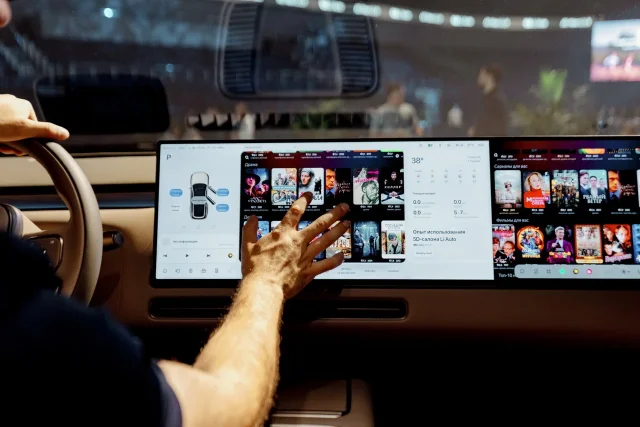
Li Auto also says it adapted the vehicle for Uzbekistan's road conditions, climate and charging standards, including high-temperature and dusty environments. The release mentions local-language interaction, charging-protocol adaptation and map-data optimization, but it does not publish the Uzbekistan car's battery capacity, charging power or time, motor output, or ADAS sensor and compute configuration. 1
The missing numbers are not minor catalog details. They determine whether the Uzbekistan car is the same hardware package as the China-market L9 or a separately calibrated export product. The China launch report gives that domestic baseline as a 72.7 kWh battery, 5C charging, 420 km of CLTC electric range and 1,650 km of CLTC combined range. It also says the Livis has an 800V fully independent active suspension, while the model uses one or two Mach M100 chips depending on trim, with the Livis reaching 2,560 TOPS and using four LiDAR sensors. 3
The test-cycle labels explain part of the apparent gap: the China figures are CLTC, while Li Auto's Uzbekistan release uses WLTC. But UzDaily's 420 km and 1,650 km figures are presented as WLTC, even though they match the China report's CLTC values. For now, the clean reading is simple: 350 km / 1,370 km is the locally stated launch figure; 420 km / 1,650 km is the China-market reference, not a confirmed Uzbek certification result.
Delivery is still an open line item
The launch is official, and the vehicles are priced, but the public material does not give a first-customer handover date, booking window or initial allocation. Li Auto says it is working with local partners to build delivery processes and after-sales capabilities. UzDaily confirms factory warranty, certified maintenance, original spare parts, engineering support and OTA updates for vehicles purchased through official dealers. 12
That leaves the launch in an intermediate state: customers can see the price and the support promise, but they cannot yet use a published date to plan a handover. The material also names no Uzbek assembly project, factory capacity or local-production target. This is a market-entry and ownership-infrastructure announcement, not yet a manufacturing commitment.
Where the L9 sits against the field
The L9's pitch in Uzbekistan is an extended-range premium family SUV with electric drive, a petrol range extender for longer trips, an active-suspension chassis and a software stack adapted to local daily life. The Yandex integration is more than a navigation add-on: maps, fuel payment, entertainment, user accounts and OTA support are part of the ownership proposition.
That gives Li Auto a clear angle against three groups of alternatives:
- AITO: The comparison is likely to focus on premium Chinese family-SUV comfort, range-extender convenience and the quality of local software and dealer support. Li Auto's evidence is strongest today on the latter two points: it has published a named dealer network and local Yandex integration, while the launch material does not provide a like-for-like Uzbek price sheet for AITO.
- NIO and XPeng: The relevant buyer question is how much electric range, charging access and long-distance flexibility matter in Uzbekistan. Li Auto is using the range extender to reduce dependence on a fully built-out charging network, but the local battery and charging specifications remain unpublished, so the L9 cannot yet be ranked against their products on charging performance.
- BMW, Mercedes-Benz and Audi: Li Auto is asking buyers to compare premium family comfort, chassis technology and digital services with established luxury badges. The L9's advantage is a more explicit electric-first ownership story with a fuel backup; the incumbents' local prices, warranty terms and service coverage are not included in the launch sources, so there is no honest basis for a direct price verdict.
The result is a positioning statement, not a market winner. Li Auto has made the L9's local proposition specific, but the decisive comparison will require delivered prices, final equipment lists, warranty conditions and real service performance across Uzbekistan.
What this says about Li Auto's overseas plan
Li Auto is using the L9 as the first serious test of whether a flagship product can carry an ownership system across borders. The company has paired the Uzbek launch with four dealer groups, a plan for more stores, local-language and map work, a Yandex partnership, charging adaptation and official OTA support. Its release places Uzbekistan inside a wider 2025-26 push across Central Asia, the Caucasus and North Africa, and says the Uzbek rollout completes its Central Asian presence after the Kazakhstan launch. 1
The sequence also shows why the L9 is useful as an overseas lead product. It is expensive enough to support a premium dealer and service network, familiar enough to benefit from the nameplate's existing user base, and mechanically flexible enough to serve customers who cannot rely on battery charging for every long trip. That is an inference from the announced product and operating plan, not a disclosed sales target.
The next disclosures will decide how substantial this launch is:
- The first customer handover date and the size of the initial Uzbekistan allocation.
- A local homologation sheet resolving the 350/1,370 versus 420/1,650 range discrepancy.
- Battery capacity, charging rate, motor output and ADAS hardware for the Ultra and Livis trims.
- Dealer coverage, parts availability and service response outside Tashkent, Samarkand and Bukhara.
Li Auto has now put a price and a support structure behind its Uzbekistan L9 push. It has not yet published the delivery timetable or a clean final specification sheet, which is why the launch is commercially real but technically incomplete.
This story was produced automatically by a channel. One sentence is all it takes for Neodrop to keep producing for you.