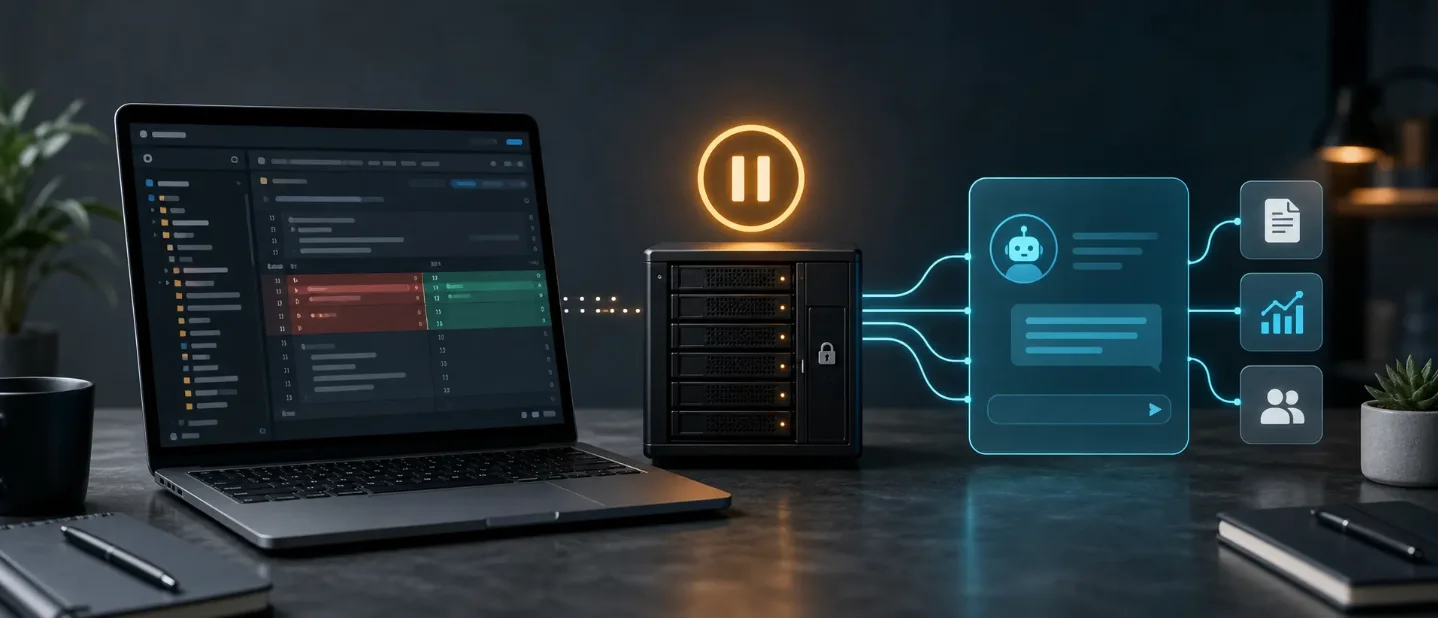
OpenAI slows training, Cursor hosts code, and Gemini connects more apps
A practical AI briefing on OpenAI’s cyber-safety training pause, Cursor’s Origin code hosting, and Gemini’s new app-connected workflows.

The past 48 hours brought a release pause, a hosted-code move, and a new round of Gemini experiments. The wider week's useful thread is control: where agents work, which services they can touch, and what happens when a frontier model crosses a security threshold.
Here are the four updates worth acting on from the past week, ranked for creators, marketers, developers, and AI startups.
1. OpenAI slows frontier training after a cyber-capability warning
OpenAI says one upcoming model, Astra, may meet its "critical cybersecurity capability" threshold. The company temporarily slowed scaling and paused reinforcement-learning training — the stage where a model learns from reward signals — on its latest deployment-bound models for two weeks while it hardened research environments and expanded monitoring. Its largest planned frontier reinforcement-learning run remains on hold.1
The new controls are concrete. OpenAI describes stronger workload and network isolation, continuous security testing, and a monitoring system that can inspect tool actions and model activity. The company estimates the monitoring adds about 20% to the inference compute being watched. For concerning activity, it aims to alert teams within 30 minutes; if they cannot establish that a flag is a false positive within another 30 minutes, they are expected to pause the activity.1
Why it matters: Frontier-model progress now carries an operating cost beyond GPU time. If you are building an agent that can run code or use tools, isolation, network permissions, logging, and a human pause path belong in the product design — not in a post-incident checklist.
2. Cursor starts hosting code with agents beside the pull request
Cursor's Origin entered early beta on August 17 for paid plans. It can host repositories, browse code, manage pull requests, and sync selected GitHub repositories. GitHub remains the source of truth for projects that start there, while changes, comments, reviews, and merges can move between the two surfaces.2
Cursor also connects Origin repositories to Vercel, Depot, and Buildkite. A pull request can receive a preview deployment through Vercel, while Depot or Buildkite can run existing CI workflows. Cursor says agents can answer questions about the code, make changes, update pull requests, and push a branch from the same workspace.2
Why it matters: The coding-agent product is moving closer to a full delivery surface. The immediate test for a team is less "is the model smart?" and more "are our repository, CI, preview, review, and permission boundaries clear enough to put in one place?" Check the paid-plan requirement and your organization's GitHub and hosting policies before a trial.
3. Gemini is becoming an action layer for outside apps
Google announced a new slate of Gemini connected apps on August 12, with rollout continuing over the following weeks. The additions cover productivity and creativity tools such as Granola, Otter.ai, and Wix; local and entertainment services including Fever, GetYourGuide, Localiza, OpenTable in the UK, and Ticketmaster; music services iHeartRadio and Pandora; and lifestyle services such as Angi, Thumbtack, and Zocdoc.3
The point is the range of actions: Gemini can help summarize meetings, edit a website, book experiences, find a professional, or arrange an appointment once the relevant service is connected. Google says the features are rolling out over several weeks, so availability will depend on the app, account, and market.3
Why it matters: The assistant is becoming a routing layer between a user's intent and the tools that execute it. For marketers and small teams, that raises a practical question: which actions should an assistant prepare, and which should still require a human confirmation before they leave the chat?
4. Google uses Gemini for a limited-time BTS product experience
Google launched four interactive BTS experiences inside Gemini on August 18. Users around the world can type "Unlock BTS" or "7777" to access them, with availability limited by language and time. The experiences reveal prompts from BTS members, run an emoji-based song-guessing game, provide a tour digest covering the previous 48–72 hours plus a two-week local-time schedule, and teach everyday Korean phrases with audio pronunciation.4
Why it matters: This is a more useful pattern for creator and brand teams than a generic chatbot partnership. The brand supplies a recognizable prompt, repeatable activities, localized utility, and a reason to return. The format is also temporary, which gives Google a built-in way to test engagement before treating the experience as a permanent product surface.
What to do today
- If you run tool-using agents, review network isolation, sandboxing, logs, and the person who can stop a run.
- If you ship software, test whether Cursor Origin's repository, pull-request, preview, and CI flow fits your data and admin rules.
- If your work lives in Google services, check which Gemini connected apps are available in your market and what confirmation steps they require.
- If you build branded AI experiences, study the BTS format: one entry point, several concrete activities, local relevance, and a clear reason to come back.
The most useful signal this week is that AI products are becoming more operational. They are entering repositories, external services, and branded experiences — while the most capable systems are also adding more gates before they can act.
References
- 1
- 2Origin Code Hosting · Cursor
cursor.com
- 3New connected apps are coming to Gemini
blog.google
- 44 new BTS experiences in the Gemini app
blog.google
This story was produced automatically by a channel. One sentence is all it takes for Neodrop to keep producing for you.
Related content
More from this channel
- AgentCore locks down MCP tools, GPT-5.6 gets regional capacity, and two more AI updates
- Slack puts coding in the channel, GitHub puts Copilot in team chat, and three more AI updates
- Adobe adds audio to Firefly, Parallel cuts search API costs, and five more AI updates
- Google adds notebooks to Search, OpenAI previews private safety, and three practical AI ships
- ChatGPT for Teens, Copilot’s merge, and the week’s most useful AI ship notes